


More news on this day
Ottawa Macdonald–Cartier International Airport experienced a fresh wave of disruption this week, as regional carriers Jazz, Porter and Air Canada canceled 36 flights on high-demand routes connecting Toronto, Montreal and Boston, stranding passengers across Eastern Canada and the U.S. Northeast.
Get the latest news straight to your inbox!
Ripple Effects Across Ottawa’s Busiest Corridors
Publicly available flight tracking and airport data indicate that the bulk of the cancellations centered on Ottawa’s core shuttle-style corridors to Toronto and Montreal, with additional knock-on disruption affecting Boston services. Many of the affected flights were short-haul links that business travelers and government workers rely on for same-day trips between regional hubs.
Information compiled from airport schedules and independent trackers shows that a cluster of flights operated by Jazz on behalf of Air Canada, alongside services run by Porter, were withdrawn from the timetable over the course of the day. The cancellations hit both Toronto Pearson and Billy Bishop Toronto City Centre connections from Ottawa, as well as key services to Montreal–Trudeau and Boston Logan.
While exact passenger numbers are not yet available, historical statistics suggest that these routes typically carry hundreds of travelers per day during the workweek. With 36 individual flights removed, industry observers note that the disruption would have affected a significant share of Ottawa’s short-haul traffic for the period in question.
Travel analysis sites and consumer-rights platforms report that the Ottawa disruptions formed part of a wider pattern of recent volatility at major Canadian hubs, where short-haul shuttle flights are often the first to be consolidated when operations come under pressure.
Operational Strain at Jazz, Porter and Air Canada
Regional operator Jazz, which flies under the Air Canada Express brand, appears to have borne a substantial portion of the cancellations on routes linking Ottawa with Toronto and Montreal. Under its capacity purchase arrangement, Jazz operates flights scheduled and marketed by Air Canada, meaning that crew availability, aircraft positioning and network decisions are closely intertwined between the two companies.
Recent public discussions among travelers and aviation watchers have highlighted recurring problems on Ottawa to Toronto City Centre services operated for Air Canada, including clusters of same-day cancellations attributed to crew scheduling challenges. Flight-status histories show instances where multiple Jazz-operated flights on the YOW–YTZ route were scrubbed within a single day, forcing passengers onto later departures to Toronto Pearson instead.
Porter, which has expanded aggressively from Ottawa and Toronto toward U.S. cities including Boston, was also caught up in the latest round of disruption. Flight data for Ottawa–Boston services marketed by Porter and codeshare partners show cancellations that removed options for travelers connecting between Eastern Ontario and New England, further tightening capacity on an already concentrated corridor.
Industry commentators note that when multiple regional carriers adjust their schedules at the same time in a shared market, the resulting gaps can quickly cascade through the network. Passengers who lose an Ottawa–Toronto or Ottawa–Montreal leg may also miss onward connections to larger hubs across North America and Europe.
Passenger Frustration and Crowded Terminals
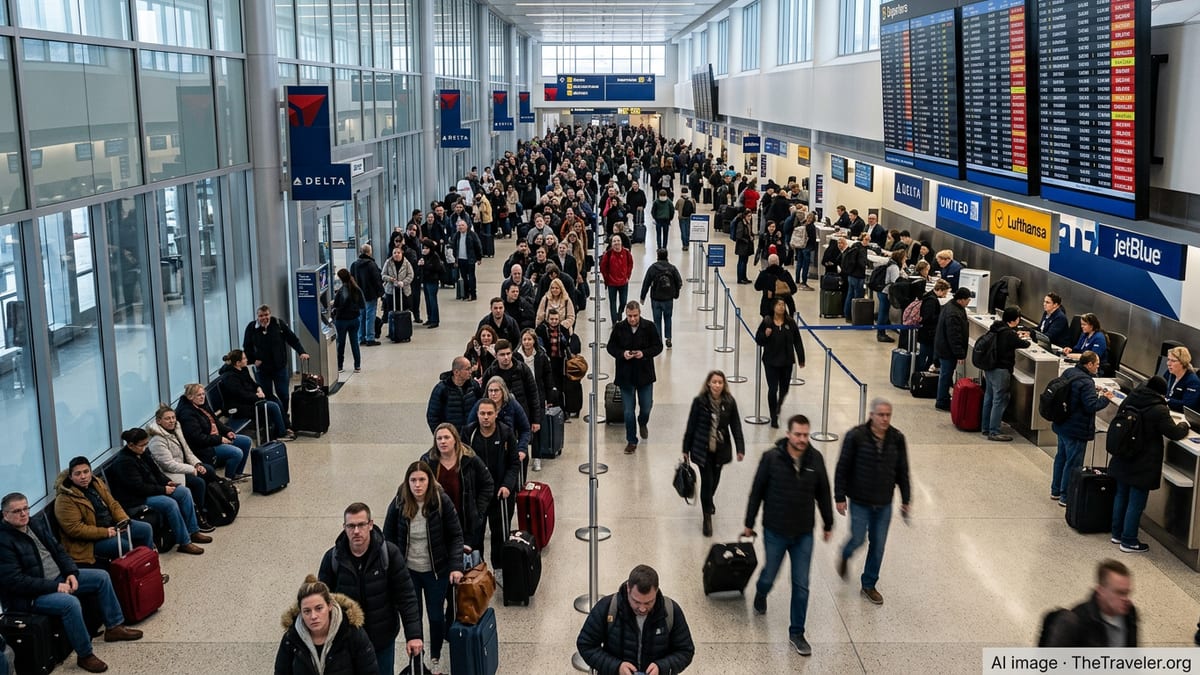
Reports from recent disruption days at Canadian airports suggest that passengers caught in such waves of cancellations often face long lines at service desks and crowded departure halls, as they compete for limited rebooking options. With short-haul flights like Ottawa–Toronto and Ottawa–Montreal already running at high load factors, a single canceled departure can leave an entire planeload of travelers scrambling for seats on subsequent flights.
Travel forums and social media posts from prior Ottawa disruption events describe travelers being rerouted from Billy Bishop Airport to Toronto Pearson, or shifted from direct flights to multi-stop itineraries. Similar patterns are likely when 36 flights across a small set of city pairs are canceled within a compressed timeframe, as airlines look to consolidate passengers onto fewer departures and larger aircraft where possible.
Observers also point out that many travelers on these routes are connecting to time-sensitive business meetings, government sessions or international flights. Even short delays can have outsized consequences, and full cancellations often turn same-day trips into overnight stays, especially when hotel availability is tight around major events or holiday periods.
Consumer advocates warn that repeated episodes of disruption erode confidence in regional air travel, prompting some passengers to switch to trains or cars for trips between Ottawa, Toronto and Montreal when weather and schedules allow.
Weather, Staffing and Network Complexity Under Scrutiny
Airlines operating in Canada routinely cite a mix of severe weather, air traffic control constraints and staffing limitations as key drivers of cancellations. Recent winters have brought episodes in which Ottawa-bound flights were grounded due to freezing rain and poor visibility, even when some other carriers continued operations on the same routes, fueling debate over risk thresholds and fleet capabilities.
At the same time, publicly available commentary from aviation insiders has highlighted persistent crew-scheduling challenges, particularly on specialized routes such as those into Billy Bishop Toronto City Centre. Operating from that downtown airport requires additional pilot qualifications and training, and analysts note that any shortage of suitably certified crew can quickly translate into last-minute cancellations.
Network complexity adds another layer of vulnerability. Regional carriers like Jazz and Porter feed passengers into larger hubs, making them sensitive to disruptions elsewhere in the system. A delay or aircraft rotation issue in one city can ripple into Ottawa hours later, tightening turnaround times and leaving airlines with limited margin when adverse weather or airspace congestion appears.
Industry data from recent months show that Canadian airlines have periodically trimmed high-frequency shuttle services between major cities in response to these operational pressures, prioritizing larger aircraft and longer-haul routes that are harder to consolidate on short notice.
What Travelers Through Ottawa Can Do Now
Travel experts advise passengers using Ottawa Macdonald–Cartier International Airport to build in additional buffer time when planning same-day trips to Toronto, Montreal or Boston, particularly during peak travel seasons or when storms are forecast. Monitoring flight status through airline apps and third-party trackers before leaving for the airport can offer early warning if schedules begin to unravel.
Publicly available guidance from air passenger rights organizations stresses the importance of documenting disruptions, keeping boarding passes and confirmation emails, and seeking written explanations for cancellations. In some circumstances, Canadian and international regulations may entitle travelers to refunds or compensation, especially when cancellations are linked to issues within the airline’s control rather than extreme weather.
Analysts also suggest that travelers consider routing flexibility where possible, such as being willing to depart from either Toronto Pearson or Billy Bishop, or switching between Ottawa’s direct flights to Montreal and other nearby hubs. While such strategies cannot eliminate the risk of disruption, they can increase the chances of finding an alternative seat when widespread cancellations remove multiple departures from the schedule.
As Jazz, Porter and Air Canada work through another wave of operational challenges, frequent travelers on the Ottawa, Toronto, Montreal and Boston corridors are watching closely to see whether current turbulence in the regional network will ease, or whether high-frequency shuttle routes will remain a pressure point in Canada’s air travel system.