


More news on this day
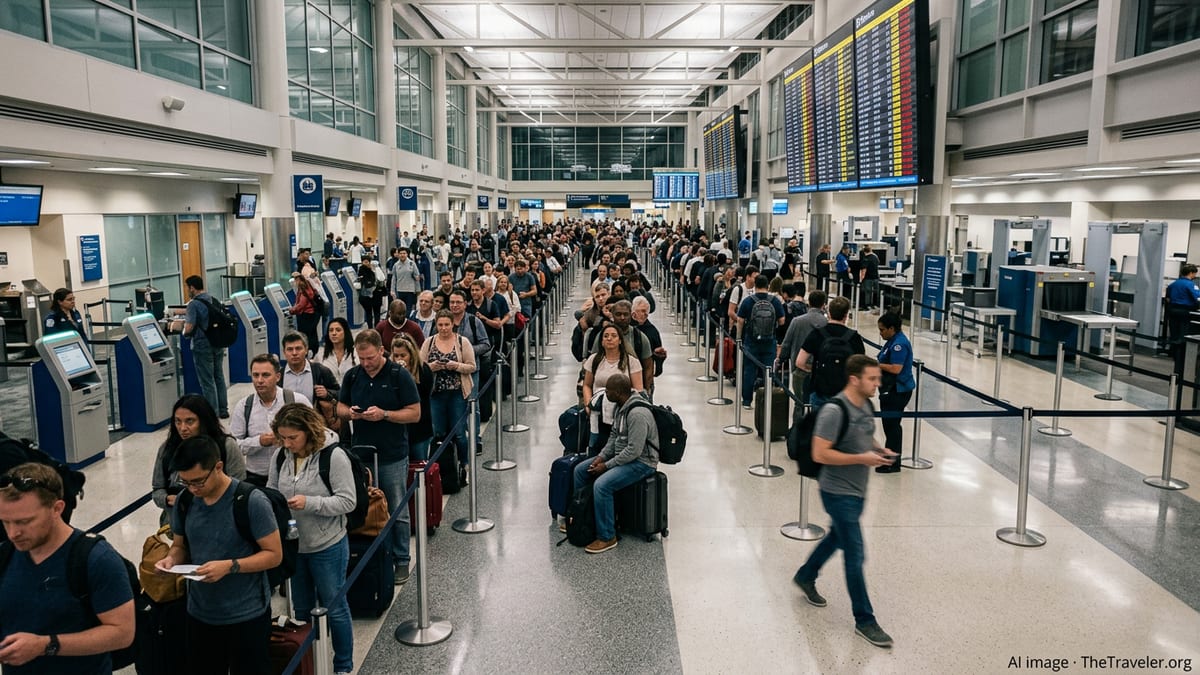
Air passengers in the United States are being urged to brace for potential flight delays and crowded airports as the July 4 holiday rush converges with World Cup 2026 match days in several major host cities, creating one of the most complex travel periods of the year.
Get the latest news straight to your inbox!
Holiday Crowds and Tournament Timetable Collide
Independence Day in 2026 falls on a Saturday, a calendar quirk that travel analysts say is likely to stretch the peak getaway period across two full weekends and much of the surrounding week. Transportation data published in recent months indicates that the July 4 window is already on track to rival the busiest travel days seen around Thanksgiving and Memorial Day in recent years.
At the same time, the expanded 48 team World Cup is deep into its schedule, with knockout round matches running from late June through mid July and games staged in and around some of the nation’s largest air travel hubs. Official tournament calendars show fixtures in U.S. host cities throughout the Independence Day period, including high profile ties in New York New Jersey, Dallas, Atlanta and other metropolitan areas that traditionally see heavy summer demand.
Industry forecasts suggest that the overlap will not only increase passenger volumes but also compress demand into similar time bands, as fans, holidaymakers and business travelers converge on the same airports during morning and late afternoon departure banks. That pattern raises the risk of rolling delays when thunderstorms, crew scheduling issues or temporary air traffic restrictions ripple through the system.
While exact passenger counts for the holiday weekend are still being updated, aviation observers note that U.S. airports have repeatedly broken daily screening records since 2023, signaling limited spare capacity in terminal operations and security lines when extraordinary events such as a home World Cup are layered on top.
World Cup Host Cities Face Extra Airspace Constraints
The World Cup’s footprint across North America is larger than any previous edition, with 16 stadiums in 16 cities from Vancouver and Seattle to Miami and Mexico City. Match schedules published by FIFA and independent trackers confirm that U.S. venues in New Jersey, Texas, Georgia, California and other states are all active in late June and early July, including on July 4 itself.
Federal aviation planning documents for the tournament describe a system of special air traffic procedures around host cities on match days, similar in concept to those used for Super Bowls and other major events. These advisories outline temporary flight restrictions, preferred arrival and departure routes, and sequencing tools designed to manage concentrated flows of commercial flights, charter operations and private aircraft transporting teams, sponsors and fans.
Although the measures are intended to maintain safety and orderly traffic, they can also reduce flexibility for air traffic controllers at peak times. When combined with summer convective weather in regions such as the Northeast corridor and the central United States, even minor disruptions can propagate quickly, especially at already busy hubs like New York area airports, Dallas Fort Worth, Atlanta and Houston.
Some World Cup host airports are also primary gateways for domestic leisure destinations, meaning a single weather delay or ground stop related to tournament congestion could affect passengers headed for beaches, national parks or family gatherings far from any stadium.
July 4 Weekend Could Test Airline and Airport Capacity
Airline schedules filed for the summer season show robust capacity on popular domestic routes into and out of major World Cup hubs, reflecting both anticipated soccer demand and the usual seasonal uptick in leisure travel. Industry analysts note that carriers have been adding flights and upgauging aircraft on trunk routes linking cities such as New York, Miami, Los Angeles and Dallas, a strategy that boosts seat supply but also tightens operational margins when planes and crews are heavily utilized.
Airport operators in several host cities have highlighted ongoing construction, terminal adjustments and security enhancements tied to World Cup preparations, which, while beneficial in the long term, can temporarily complicate passenger flows. Publicly available planning materials describe expanded checkpoint lanes, temporary wayfinding changes and adjusted pickup and drop off zones at certain facilities, all of which may lengthen the time needed to navigate airports during peak periods.
Travel experts caution that staffing levels at airlines, ground handling companies and federal agencies have improved since the sharp shortages seen in 2022 and 2023, but remain sensitive to illness waves, storms and other shocks. With planes expected to fly near capacity approaching July 4, any flight cancellations or significant delays may leave travelers with fewer rebooking options, leading to longer waits in terminals and potential overnight disruptions.
Weather adds another layer of uncertainty. Early season outlooks for the eastern United States point to the possibility of intense heat and scattered strong storms in early July, a combination that can slow ground operations, trigger ramp closures and force aircraft to circle or divert, compounding congestion driven by World Cup traffic.
What Travelers Can Expect at Key US Gateways
Several of the busiest U.S. World Cup venues sit in regions that already rank among the most delay prone in the country. New York area airports near MetLife Stadium, which is scheduled to host the World Cup final on July 19, routinely top federal delay statistics during summer thunderstorm patterns. Dallas, Atlanta and Houston handle large volumes of connecting traffic that can magnify the effect of any local constraints during tournament match days.
On the West Coast, Los Angeles and the San Francisco Bay Area are preparing for group and knockout matches while balancing typical summer flows to Hawaii, Mexico and domestic vacation markets. Reports on host city preparations describe investments in public transit links to stadiums and temporary transportation plans intended to keep match day road traffic away from airport access routes, but observers note that localized congestion remains likely at certain times.
In the Pacific Northwest and upper Midwest, host cities such as Seattle and Kansas City may see a sharper than usual spike in international arrivals as overseas fans route through regional hubs rather than traditional gateways alone. This shift could add pressure to customs and immigration processing during windows when international flights, domestic holiday services and tournament charters all converge.
Smaller regional airports that connect into World Cup hubs may also feel indirect effects. When major airports experience ground delays or arrival metering during match days, feeder flights are often rescheduled, held or canceled to keep overall traffic manageable. For travelers starting their journeys in secondary cities, this can mean missing onward connections even if local weather is clear.
Planning Ahead to Reduce Delay Risk
Travel organizations and aviation analysts are encouraging passengers who must fly around July 4 to build in extra time and consider routing choices carefully. Morning departures are often highlighted as less vulnerable to knock on delays than late day flights, particularly in regions prone to afternoon storms. Selecting nonstop routes where possible can also reduce exposure to disruptions at intermediate hubs that may be affected by World Cup related constraints.
Passengers heading to or transiting through World Cup host cities are being advised to monitor airline notifications closely and to check airport specific guidance issued ahead of tournament match days. Public information from airports and aviation authorities typically outlines any temporary changes to terminal access, security procedures or recommended arrival times that could affect holiday journeys.
Those with flexible plans may opt to travel outside the most intense peaks, shifting departures to early in the week before July 4 or to midweek days between major knockout fixtures. Travel pricing data for past holidays suggests that these off peak periods not only reduce the likelihood of extended waits but may also offer more competitive fares and better seat availability.
For the millions of travelers who will still pass through U.S. airports during the overlap of July 4 and the World Cup, the coming weeks are expected to bring a steady stream of operational updates from airlines, airports and transportation agencies. Observers say the combined test will offer an early preview of how the country’s aviation system handles a month long, globally significant sporting event layered on top of one of the busiest domestic travel holidays of the year.