


More news on this day
More than 1,000 transit passengers have been left stranded at Jakarta’s Soekarno-Hatta International Airport after a wave of flight suspensions and cancellations linked to volcanic ash disrupted one of Southeast Asia’s busiest aviation hubs.
Get the latest news straight to your inbox!
Flight suspensions at Southeast Asia’s second-largest hub
Jakarta’s Soekarno-Hatta International Airport, which recent aviation data ranks as Southeast Asia’s second-largest airport by scheduled seat capacity after Singapore Changi, has become the focal point of a new bout of travel turmoil following an eruption of Indonesia’s Anak Krakatau volcano.
Publicly available notices from the airport operator and aviation authorities show that flight operations at Soekarno-Hatta were suspended for several hours and then heavily curtailed as ash clouds drifted across key air corridors. Services to and from major regional gateways such as Singapore, Kuala Lumpur and Bangkok were among those affected as airlines cut or rerouted operations for safety reasons.
Reports from regional media indicate that hundreds of flights were touched by the disruption in early September, including outright cancellations, lengthy delays and diversions to other Indonesian airports. The knock-on effect quickly cascaded through Southeast Asia’s dense network of short-haul connections, leaving a particularly sharp impact on travellers using Jakarta purely as a transfer point.
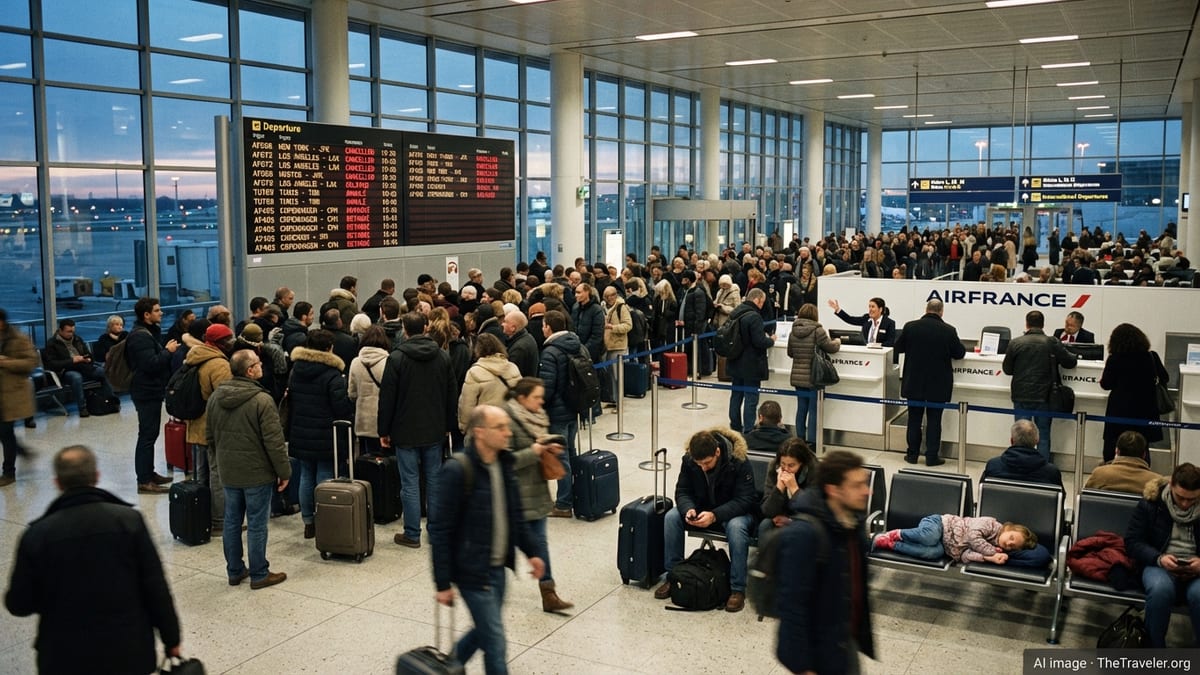
By late in the day, airport terminal concourses were described as overcrowded, with long queues forming at airline transfer and ticketing counters as passengers tried to secure replacement itineraries or refunds. For many transiting travellers, the sudden suspension of onward flights meant unexpected overnight stays in Jakarta, often with limited clarity on when services would resume.
More than 1,000 transit passengers left in limbo
Based on aggregated figures from airline statements and local news coverage, more than 1,000 transit passengers were left stuck at Soekarno-Hatta during the heaviest period of disruption. Many were mid-journey on itineraries linking Australia, the Middle East or North Asia with secondary Southeast Asian cities, using Jakarta as an intermediate hub.
Several carriers temporarily suspended or sharply reduced Jakarta operations on the day of the eruption, including regional low-cost and full-service airlines that funnel large numbers of transfer passengers through the Indonesian capital. Publicly available advisories from at least one Vietnamese low-cost carrier show multiple round-trip services between Ho Chi Minh City, Hanoi and Jakarta cancelled outright in response to the volcanic ash, removing further options for passengers seeking to rebook.
Transit passengers are particularly exposed in such scenarios, because their legal status and entitlements depend on ticket conditions and airline policies. While some travellers with through-tickets were accommodated on later services or rerouted via alternative hubs such as Singapore or Kuala Lumpur, others reportedly faced long waits before learning whether accommodation, meal vouchers or refunds would be offered.
With many flights fully booked in the days following the initial shutdown and some carriers trimming schedules until ash conditions stabilised, spare capacity on alternative routes was limited. Fare data referenced by regional broadcasters showed prices on remaining seats between key Indonesian cities and overseas hubs rising sharply within hours, further complicating efforts by stranded flyers to purchase new tickets independently.
Why Soekarno-Hatta’s status magnified the disruption
The scale of the disruption has drawn attention to Soekarno-Hatta’s evolving role in Southeast Asia’s air network. Industry analyses based on scheduled seat capacity place the Jakarta gateway just behind Singapore Changi in the regional rankings, underscoring its importance as a transfer point for both domestic and international itineraries.
Jakarta’s hub status is built on a dense web of connections linking Indonesia’s vast archipelago with the wider region. In normal conditions, this allows travellers to connect from smaller Indonesian cities onto long-haul or regional services with a single itinerary. When a hub like this experiences sudden flight cuts, the impact radiates outward, stranding not only origin-and-destination passengers but also those connecting from places with limited alternative links.
Volcanic activity adds a further complicating factor for Indonesia compared with many other markets. Ash particles can pose a serious threat to jet engines and airframe safety, which is why aviation authorities move quickly to close or restrict airspace when plumes approach busy corridors. Even a brief suspension can result in a backlog that takes days to clear, particularly at large airports handling millions of passengers each month.
Analysts note that recent growth in seat capacity at Jakarta, combined with high seasonal travel demand, has left little buffer in the system when weather or geological events occur. The latest incident highlights how a single airport’s operating constraints can affect itineraries across multiple countries almost immediately.
Knock-on effects across Southeast Asia’s air network
The disruption at Jakarta did not occur in isolation. Southeast Asia’s aviation market is closely interconnected, and the sudden cuts to services at one of its leading hubs had immediate repercussions at airports from Singapore and Kuala Lumpur to Yogyakarta and Denpasar.
Flight trackers and airline updates cited by regional outlets showed that carriers based outside Indonesia, including major international and low-cost operators, cancelled or consolidated flights that typically shuttle passengers between Jakarta and other key hubs. Some travellers connecting onward to Europe, Australia or Northeast Asia via Jakarta found themselves rebooked through alternative gateways when possible, adding hours or even days to their journeys.
Indonesian domestic travel was also affected as airlines adjusted schedules and repositioned aircraft to manage the ash-related restrictions. Passengers trying to connect from secondary cities to Jakarta in order to pick up international flights sometimes discovered that the domestic legs of their itineraries were delayed or withdrawn, even when overseas segments later resumed.
Beyond immediate inconvenience, the event has fed into a broader discussion about resilience in Southeast Asia’s air transport system. Industry commentary has pointed to the need for flexible rerouting options, coordination between neighboring hubs and clearer information channels for passengers when large-scale disruptions unfold at a single airport.
What stranded travellers experienced on the ground
Accounts compiled by local and regional media describe crowded terminals, limited seating and long queues at customer-service desks as more than 1,000 stranded passengers sought answers about their journeys. Some travellers with longer layovers reported spending much of their transit time in line instead of resting or accessing airport amenities, uncertain whether their rebooked connections would operate.
Publicly shared images from the airport showed snaking lines at transfer counters in Soekarno-Hatta’s busiest terminals, as airline staff worked through backlogs of rebooking requests and compensation claims. With arrival and departure boards changing frequently, many passengers relied on airline apps and social media feeds for real-time updates while waiting.
A key frustration highlighted in coverage of the incident was the variability in how different airlines handled stranded transit customers. While some provided hotel accommodation and meals for passengers facing overnight delays, others focused on rebooking without additional support, leaving travellers to arrange and fund their own stays in Jakarta while waiting for the next available flight.
The episode has renewed calls from passenger-rights advocates and travel commentators for clearer regional standards covering care and compensation during major operational disruptions that originate from natural events such as volcanic eruptions. For now, however, travellers passing through Southeast Asia’s largest hubs remain dependent on the specific policies of the airlines they fly.