


More news on this day
Israel has begun operating repatriation flights from the United Arab Emirates to bring home hundreds of travelers stranded after a FlyDubai service from Dubai to Tel Aviv was suspended following an attempted cockpit attack earlier this week.
Get the latest news straight to your inbox!
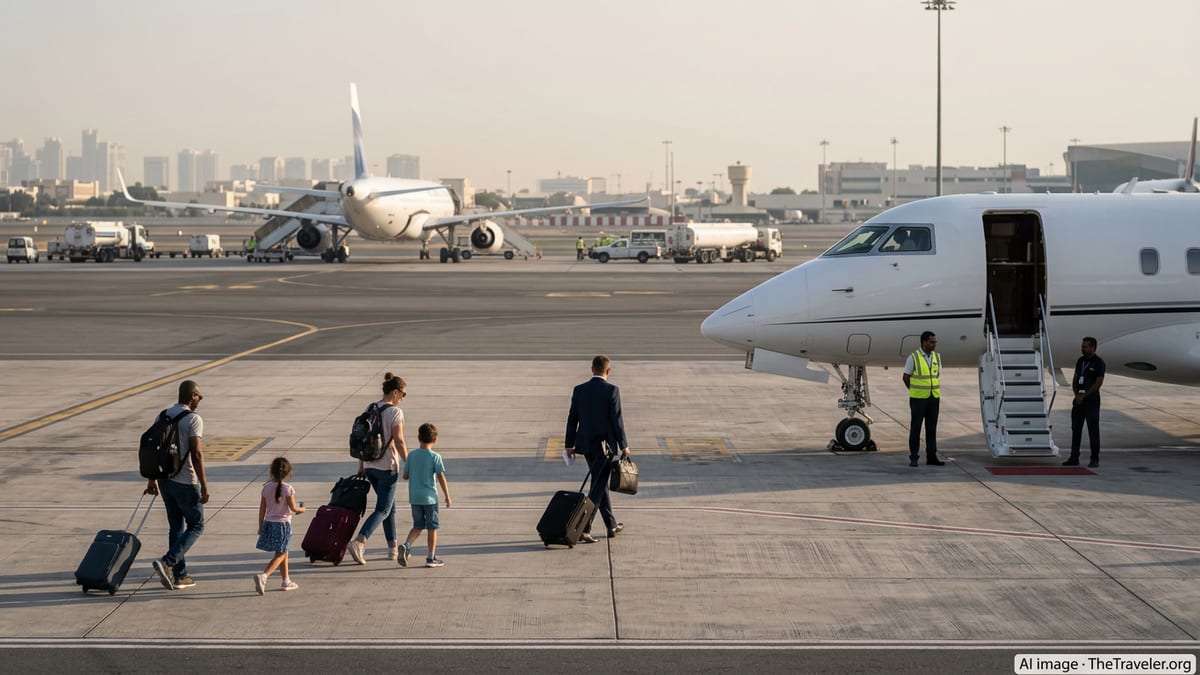
Special flights approved after FlyDubai suspends Israel route
Published coverage indicates that Israeli airlines have received approval to run one-way repatriation services from Dubai back to Tel Aviv after FlyDubai halted its Israel operations in the wake of the September 30 incident aboard Flight FZ1073. That flight, en route from Dubai to Tel Aviv, was diverted to Tabuk in northwestern Saudi Arabia after the co-pilot allegedly stabbed the captain, triggering a rapid descent and emergency procedures.
According to reports from Israeli and regional media, FlyDubai subsequently suspended flights to and from Israel while authorities in the United Arab Emirates opened an investigation into whether the cockpit attack constituted terrorist activity. The decision left significant numbers of Israeli holidaymakers and business travelers in Dubai and other Emirates without their previously booked return flights.
In response, Israel’s Transportation Ministry and Civil Aviation Authority cleared domestic carriers El Al, Arkia and Israir to operate limited, government-approved repatriation flights from UAE airports back to Ben Gurion. These flights are being sold as one-way tickets to passengers whose original journeys were disrupted, with priority reportedly given to those whose return dates have already passed.
Travel industry executives cited in Israeli media have estimated that each day of suspended FlyDubai services could leave around 1,700 Israelis in the UAE without a direct air link home, underscoring the urgency behind the special operations.
First Arkia flight departs Dubai as repatriation effort begins
The first of the new repatriation services departed Dubai late Friday local time, operated by Israeli leisure airline Arkia and bound for Tel Aviv’s Ben Gurion Airport. Public broadcasters and local outlets in Israel reported that the flight was among the earliest services authorized after talks between aviation regulators in Israel and the UAE cleared a narrow operational path for the stranded travelers.
Coverage from Israeli newsrooms indicates that the Arkia aircraft carried passengers whose original FlyDubai return segments had been canceled or indefinitely postponed. Many had been in Dubai for vacations coinciding with the Jewish holiday period, a peak travel time on the Israel–UAE corridor since the signing of the Abraham Accords normalization agreements in 2020.
Reports also highlight that, in at least one case, Emirati authorities initially requested that checked luggage for Israel-bound passengers be transported separately on a cargo aircraft, adding another logistical complication to the already delicate arrangements. This requirement led to last-minute adjustments for airlines and passengers, including warnings to pack essential medication, documents and valuables in carry-on bags.
Despite the complexities, the first Arkia service landed at Ben Gurion in the early hours of Saturday, marking a visible step toward easing the backlog of travelers. Images carried by Israeli outlets showed passengers arriving in Tel Aviv with minimal baggage and describing lengthy waits in Dubai as aviation officials negotiated flight permissions.
Israeli carriers adjust schedules and routes amid uncertainty
Publicly available information shows that Israel’s main airlines are modifying regular schedules in order to accommodate the special Dubai–Tel Aviv sectors. El Al had initially signaled that it would operate “rescue” flights, but subsequent reports indicated that at least some of its planned services were canceled or postponed due to unresolved regulatory conditions and coordination issues with Emirati authorities.
By contrast, Arkia and Israir have pressed ahead with a smaller number of confirmed services, focusing on passengers who purchased packages through Israeli tour operators or who hold return tickets on suspended FlyDubai flights. Travel industry reports suggest that aircraft originally assigned to European leisure routes have been reassigned to cover the urgent UAE rotations, compressing capacity on some Mediterranean routes in the short term.
For passengers, the changes translate into a patchwork of options. Some travelers are being rebooked directly onto the repatriation flights, while others are being offered itineraries that combine a special Dubai–Tel Aviv segment with ground transfers via neighboring countries. Earlier crises in the region have seen Israelis routed through airports such as Aqaba in Jordan or Taba in Egypt before crossing land borders back into Israel, and some tour operators are again preparing contingency plans of this kind.
Fare levels for the repatriation flights have not been comprehensively published, and local coverage indicates that pricing is being closely watched by regulators and consumer advocates. Officials have stated in prior crises that carriers granted special authorization are expected to avoid excessive surcharges when transporting stranded citizens, although no detailed tariff schedule has yet been made public for the current operation.
Heightened security and ongoing investigations on the Dubai–Tel Aviv corridor
The repatriation flights are taking place against a backdrop of heightened scrutiny of the Dubai–Tel Aviv air corridor. According to regional news reports, the UAE has launched a formal probe into the events aboard FlyDubai Flight FZ1073, including how a co-pilot later identified as an Omani national came to be assigned to a route carrying large numbers of Israeli passengers.
Open-source aviation data shows that the aircraft signaled successive emergency squawks before diverting to Tabuk, where it landed safely and passengers disembarked. Published accounts from those on board describe a sudden, steep descent before crew members and passengers entered the cockpit, restrained the attacker and stabilized the flight. The case has renewed attention on cockpit security, mental health screening for aircrew and protocols for mixed-nationality crews on politically sensitive routes.
Israeli coverage indicates that security agencies have dispatched personnel to Dubai to coordinate aviation security around the special flights and to assist local authorities with passenger screening and information-gathering. While neither Israeli nor Emirati investigators have released a full timeline, both sides have acknowledged that the incident has implications for broader regional aviation cooperation that extend beyond the immediate FlyDubai route.
Travel advisories issued in Israel in the days following the attack have urged citizens already in the UAE to maintain regular contact with tour operators or airlines and to register with consular services, while stopping short of a blanket recommendation to avoid travel to the Emirates. The launch of repatriation flights suggests that, at least for now, authorities are prioritizing the safe return of those already abroad rather than imposing long-term restrictions on tourism to Dubai.
What stranded travelers should know right now
For Israeli travelers still in the UAE, publicly available guidance emphasizes the importance of confirming booking status through airlines or travel agents before heading to the airport. Given the limited number of repatriation flights and the fluid nature of approvals, reports indicate that same-day schedule changes remain possible.
Travel industry sources cited in Israeli media recommend that passengers ensure that their mobile contact details are correctly registered with their airline or tour provider so that they can receive last-minute text messages regarding flight times, airport check-in windows and baggage rules. In particular, passengers are being advised to keep essential items in their cabin baggage in case checked luggage is delayed or flown on separate cargo services.
Observers note that the current disruption highlights both the benefits and vulnerabilities of the fast-growing Israel–UAE travel market. Since commercial flights between Tel Aviv and Dubai began in late 2020, tens of thousands of Israelis have visited the Emirates each month during peak seasons, attracted by short flight times, visa-free entry and extensive hotel infrastructure. The FlyDubai incident and the resulting repatriation operation now serve as a test of how quickly the two countries and their airlines can restore a sense of normality on one of the region’s most politically symbolic routes.