


More news on this day
Global satisfaction with air travel reached a record 87% in 2026, according to new survey results from the International Air Transport Association, underscoring that passengers are broadly happier with their journeys even as they press for more digital tools and smoother border procedures heading into 2027.
Get the latest news straight to your inbox!
Record satisfaction as demand stays strong
IATA released the findings of its 2026 Global Passenger Survey on 28 October in Macao, reporting that 87% of respondents were satisfied with their overall air travel experience, the highest level recorded in the dataset. The survey draws on more than 10,000 responses from travelers in over 200 countries, covering the full journey from booking through border control.
The new figure extends a multi year upward trend. IATA’s 2025 Global Passenger Survey highlights and Knowledge Hub materials had already shown satisfaction at 86% in 2025, itself a record at the time. The 2026 result therefore marks a further one percentage point increase even as global demand for air travel remains elevated compared with pre pandemic years.
The 2026 data also confirms that high satisfaction is not confined to one part of the globe. Regional results published by IATA show overall satisfaction scores ranging from 84% in Europe to 90% in Asia Pacific and the Middle East, with Africa at 89%, North America at 85% and Latin America and the Caribbean at 85%.
What a “better” journey looks like for passengers
Behind the headline number, the survey breaks down satisfaction across individual touchpoints in the journey. IATA’s 2026 highlights presentation indicates that booking, searching for travel options and reaching the final destination all record satisfaction levels of 86%, the highest among measured stages. Airport arrival, payment and check in also perform strongly, with scores in the low to mid 80s.
These results suggest that many of the elements travelers interact with first, including online search tools, booking platforms and payment systems, are now functioning smoothly for most passengers. Higher satisfaction at airport arrival and check in points to clearer wayfinding, increased use of self service kiosks and bag drops, and more predictable security wait times in many markets, although experiences still vary by airport.
On time performance and boarding also score relatively well, with satisfaction in the high 70s or low 80s, according to the IATA presentation. On board experience sits just under that level. For travelers, this combination generally translates into fewer surprises across the typical trip, supported by more reliable digital communication from airlines and airports when things do go wrong.
Digital, biometrics and AI move into the mainstream
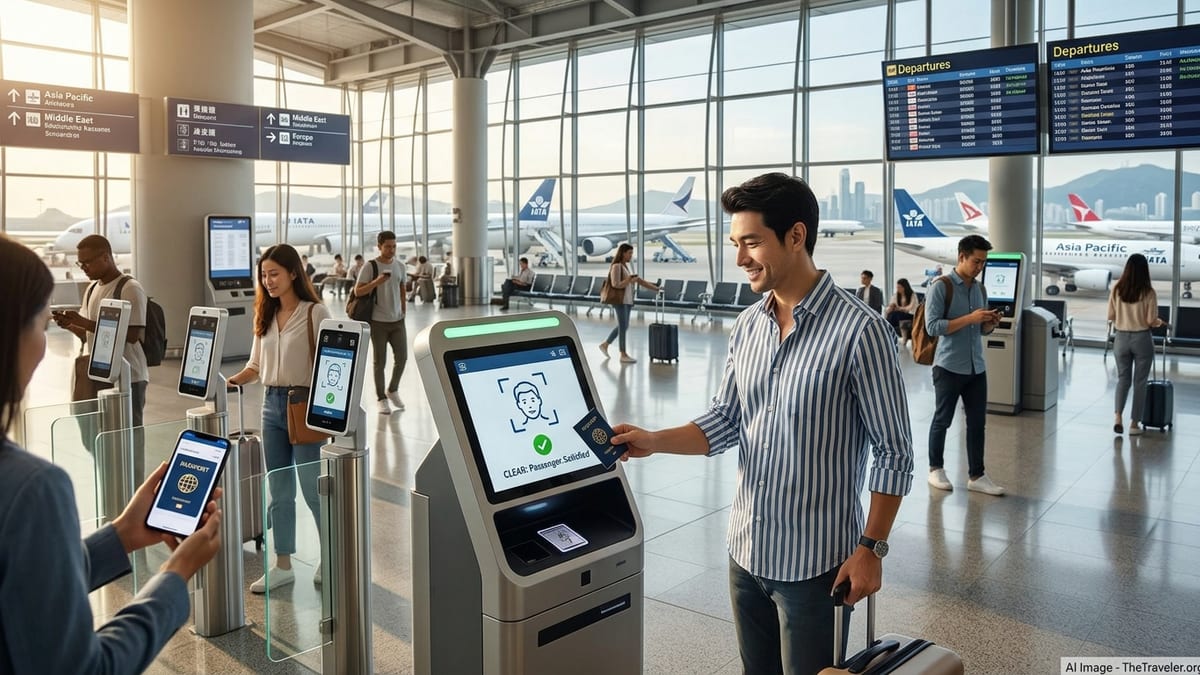
The 2026 Global Passenger Survey places particular emphasis on the rapid spread of digital and biometric tools. Globally, IATA reports that 58% of passengers used biometric identification at some point in their airport journey over the past 12 months, up from 50% in 2025 and significantly higher than in 2022. Among those who have tried biometrics, 87% say they are satisfied with the experience.
Passengers also show strong interest in digital identity. According to the IATA release, 84% of surveyed travelers are interested in using a digital passport for online check in instead of a physical document, and 78% would be willing to share biometric data if it allowed them to skip presenting a passport or boarding pass at airport checkpoints. Interest in these tools is strongest in Asia Pacific and the Middle East, but it is high across all regions.
AI is emerging as another part of the travel planning toolkit. IATA’s regional table indicates that nearly half of passengers surveyed globally have used AI for trip planning, with usage above 50% in regions such as Asia Pacific and Africa. For travelers, this increasingly means itinerary suggestions, fare comparisons and disruption information generated or filtered by AI powered apps rather than traditional search alone.
Border controls remain the weak link
Despite the record overall satisfaction, the survey highlights persistent friction at the end of many journeys. IATA’s 2026 touchpoint data show that border control and immigration record the lowest satisfaction score at 70%, with baggage collection next at 72%. Dissatisfaction at border control reaches 12%, the highest level among all measured stages.
Entry rules and visa requirements are a central factor. The 2026 Global Passenger Survey finds that 43% of respondents have been discouraged from traveling to at least one destination because of immigration requirements, up from 33% in 2025. Complexity of rules is cited most often, alongside cost and processing times. These barriers are reported across all regions, with particularly high shares in Africa and Asia Pacific.
The contrast between strong scores for digital booking and check in, and weaker ratings for baggage handling and border control, points to uneven modernization. While many airports and airlines have invested heavily in biometric corridors, e gates and app based disruption management, the survey indicates that consular processes, document checks and physical queues at arrival are still catching up, often involving multiple government agencies and legacy systems.
What travelers can expect heading into 2027
Although IATA has not yet published 2027 Global Passenger Survey data, the 2026 results outline a clear direction for the coming year. For most passengers, the typical journey is likely to become more digital, with a higher chance of encountering biometric boarding, app based rebooking and real time baggage status at larger hubs, even as these tools remain less common at smaller airports.
At the same time, the findings suggest that travelers planning international trips for 2027 should continue to pay close attention to entry conditions. Visa rules, electronic travel authorizations and health related documentation can still affect whether a trip is practical, and the survey indicates that immigration complexity is increasingly influencing destination choices.
IATA positions the 2026 Global Passenger Survey as guidance for airlines, airports and governments on where to focus next. For travelers, the main takeaway is that overall satisfaction with air travel has never been higher, but the quality of the experience still depends heavily on how individual airports, carriers and border authorities respond to the growing demand for seamless digital journeys and simpler entry processes.