


More news on this day
Europe’s railways are often presented as a low carbon success story, yet new analyses of the continent’s freight and passenger fleets show that diesel locomotives still make up a majority of the rolling stock, underscoring how far the sector must go to align with the European Union’s net zero climate goals.
Get the latest news straight to your inbox!
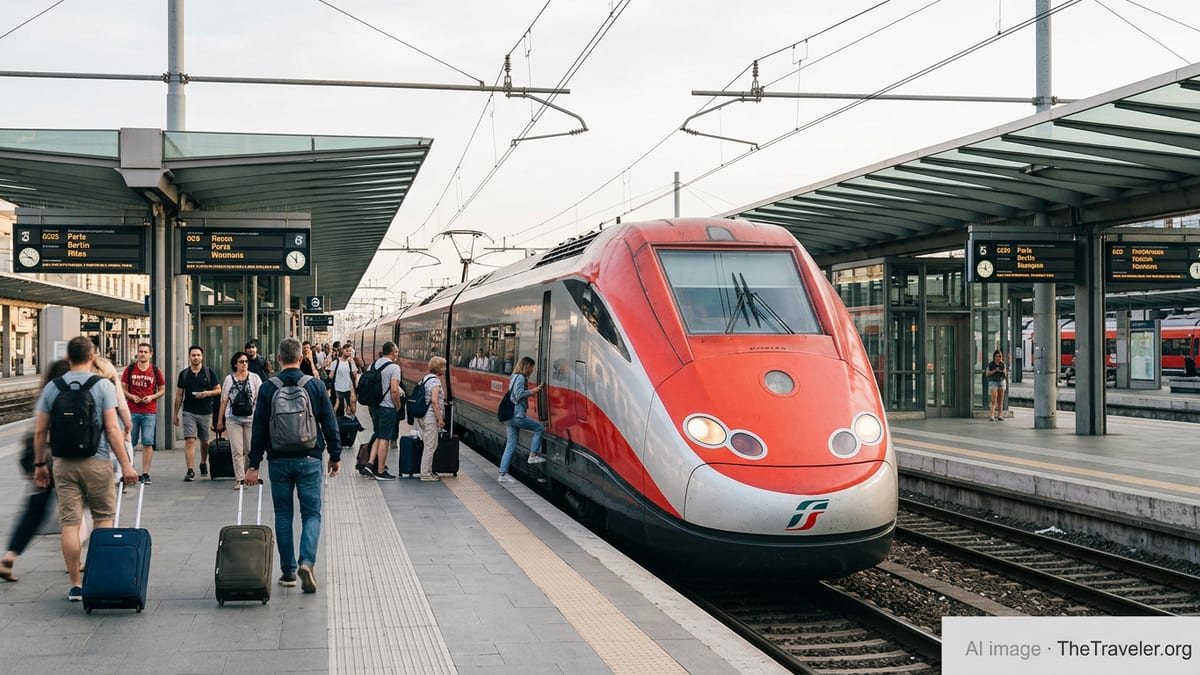
A largely electrified network, but a diesel-heavy fleet
Across the European Union, close to 60 percent of the rail network is now wired for electric traction, and around 80 percent of rail traffic already runs on these electrified main lines, according to data compiled by the European Alternative Fuels Observatory and other public sources. At network level, rail is the most electrified mode of land transport in Europe, well ahead of road and inland shipping.
Yet fleet statistics tell a different story. An overview of European freight locomotives published by independent regulators and infrastructure bodies indicates that just under half of the mainline locomotives in operation are electric, while about 51 percent of the fleets directly operated by railway companies are still diesel powered. Leasing companies, which own a growing share of modern locomotives, report somewhat cleaner portfolios but still show more than a third of their engines running on diesel.
These headline figures vary significantly by country and segment. In Switzerland and a handful of other markets, mainline traffic is effectively fully electrified, while in the Baltic states and parts of Central and Eastern Europe, freight operators still rely almost entirely on diesel traction. Shunting and last‑mile operations are particularly dependent on diesel units, many of them several decades old.
The result is a striking mismatch: even as Europe celebrates milestones in track electrification, a legacy fleet of thousands of diesel locomotives continues to provide essential capacity, especially for freight, keeping the sector’s direct use of fossil fuels stubbornly high.
Why diesel persists on the rails
Analysts point to several structural reasons why diesel locomotives remain entrenched in Europe’s rail system. The first is incomplete and uneven electrification. Large parts of secondary and regional lines, as well as key freight corridors and cross‑border links, still lack overhead catenary. Operators that need to serve both electrified and non‑electrified routes prefer diesel traction to avoid costly locomotive changes or complex multi‑system operations.
Operational flexibility is another factor. Freight locomotives are often expected to haul trains across multiple national networks and infrastructure standards. For shunting yards and industrial sidings, where track layouts can change frequently, investing in fixed electrical infrastructure is technically complex and financially difficult to justify. A single diesel unit can access almost any track, regardless of whether it is wired.
Economics also play a role. Many of the diesel units in service are fully depreciated and relatively inexpensive to operate from a narrow balance‑sheet perspective, even if they are more carbon intensive over their lifetime. In contrast, new electric or alternative‑drive locomotives require high upfront investment, and operators in competitive freight markets are often reluctant to take on additional capital expenditure without clearer long‑term policy signals or financial incentives.
Finally, technology options for zero‑emission operation away from overhead wires are still maturing. Battery‑electric and hydrogen fuel cell locomotives are beginning to appear in pilot projects and small‑scale orders, but large‑scale commercial deployment remains limited. Until these alternatives can match diesel on range, power and cost for heavy freight and long regional runs, many operators see diesel as a necessary bridge technology.
Emissions footprint and the net zero gap
From a climate perspective, the dominance of diesel locomotives in Europe’s fleets is increasingly at odds with the EU’s binding commitment to reach climate neutrality by 2050. While rail accounts for only a small share of the transport sector’s overall energy use and greenhouse gas emissions, diesel traction is responsible for the vast majority of the rail sector’s direct fossil fuel consumption.
Studies drawing on data from the EU rail research partnership show that diesel locomotives typically convert only around 40 percent of the energy in their fuel into useful traction, compared with significantly higher effective efficiencies for electric trains drawing power from a decarbonising grid. As a result, tonne‑kilometre for tonne‑kilometre, diesel‑hauled freight can emit several times more carbon dioxide than an equivalent electric service on the same route.
Air pollutant emissions are another concern. Although successive EU emission standards for non‑road mobile machinery have tightened limits on nitrogen oxides and particulates from new diesel locomotives, large numbers of older engines remain in daily service. Research in several member states has documented that real‑world emissions from these units can exceed values measured under stationary test conditions, particularly during intensive shunting, acceleration and idling.
Publicly available information from national rail environment reports suggests that overall emissions from rail have been broadly stable or falling in recent years, thanks to growing use of renewable electricity, efficiency measures and modest modal shift from road. However, without a accelerated phase‑down of diesel traction, experts warn that rail risks using up a disproportionate share of the transport sector’s remaining carbon budget, especially if freight volumes grow as encouraged by EU mobility strategies.
Policy pressure and investment plans
Brussels is gradually tightening the screws on fossil fuel use in transport, and rail is no exception. Under the European Green Deal, the EU aims to double high‑speed rail traffic and substantially increase rail freight’s market share by 2030 and 2050. Achieving these goals while still relying heavily on diesel would make it difficult for member states to hit their economy‑wide emissions targets.
The EU has already set progressively stricter pollutant standards for new diesel locomotives and railcars, and emissions from large railway operators fall under the bloc’s emissions trading architecture and climate legislation in several countries. Funding streams under the Connecting Europe Facility, cohesion policy and national recovery plans are increasingly linked to decarbonisation, pushing infrastructure managers to prioritise additional electrification and digital signalling upgrades.
Several member states have gone further with their own pledges. Some western European governments have signalled target dates for removing diesel passenger trains from their networks, while state‑owned operators in major markets are beginning to retire older diesel fleets and experiment with biofuels, synthetic fuels and hybrid traction. Germany, Italy, France and others have launched programmes for additional overhead wiring on key freight and regional corridors, although timelines stretch into the 2030s.
Industry associations and think tanks argue that aligning the rail sector with net zero will require binding milestones for phasing down diesel traction, clearer long‑term carbon price expectations and more predictable funding for both infrastructure and rolling stock renewal. Without these, they warn, operators may continue to sweat ageing diesel assets rather than invest in cleaner alternatives.
Technologies on the track to replace diesel
While diesel still dominates the locomotive count, a wave of cleaner technologies is beginning to reshape the European rolling stock market. Dual‑mode locomotives that can operate under electric wires and switch to onboard diesel engines on unelectrified stretches have seen strong uptake in western Europe, offering a transitional solution that reduces diesel running hours on electrified routes.
Battery‑electric locomotives and multiple units, designed to recharge under catenary and then run on stored energy beyond wired sections, are moving from prototypes into early commercial service in several member states. These units are particularly promising for regional passenger services and light freight on routes with intermittent electrification, where full infrastructure upgrades may not be economically justified.
Hydrogen fuel cell trains, initially pioneered on regional lines, are also being tested as a zero‑emission option for non‑electrified corridors, with a growing number of pilot projects across Germany, France, Italy and other countries. However, their long‑term climate benefit depends on the availability of low‑carbon hydrogen at competitive prices and on the development of refuelling infrastructure along key routes.
Alongside these traction technologies, rail operators are deploying digital driver‑assistance systems, eco‑driving training and timetable optimisation tools to reduce fuel burn and emissions from existing diesel fleets. Some are blending in advanced biofuels or using hydrotreated vegetable oil in modern engines as a short‑term measure, though sustainability concerns around feedstocks limit the scalability of this approach.
Taken together, these innovations indicate that technical pathways to replace diesel are emerging, but analysts stress that technology alone will not deliver net zero. The decisive factors will be the pace of network electrification, the speed of fleet renewal and the strength of policy incentives driving operators to switch away from fossil fuels.