


More news on this day
Train services across the Netherlands are running again after a near day-long disruption centered on Utrecht, restoring key domestic and international links but leaving travelers facing residual delays and renewed questions over the rail network’s resilience.
Get the latest news straight to your inbox!
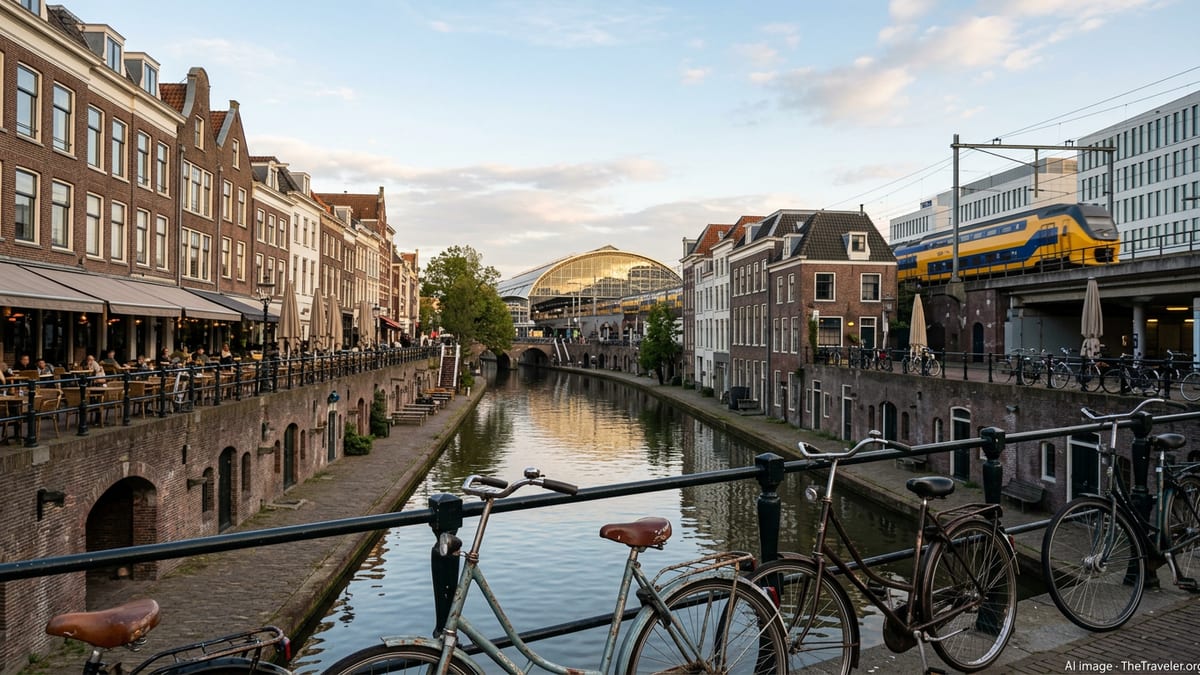
Network recovers from one of year’s longest outages
Publicly available information from Dutch rail monitoring and media outlets indicates that connections to and from Utrecht Centraal, the country’s busiest rail hub, were severely affected by a disruption that stretched for nearly 16 hours, making it one of the longest outages on the network so far this year. Services gradually came back online once the underlying technical issues were resolved, allowing trains to move through the junction again and restoring core north south and east west routes.
The stoppage rippled well beyond Utrecht, as intercity and regional trains were cancelled or rerouted across large parts of the Randstad and central Netherlands. Many passengers experienced extended travel times, missed connections and crowding on the limited trains that were able to run, particularly during the morning and evening peaks.
By the time regular schedules reappeared on journey planners, most long distance and commuter services were operating again, though with lingering delays. Rail operators urged travelers to check timetables shortly before departure, as rolling stock and crew were still out of position after the long interruption.
Operational data and news coverage suggest that despite the disruption’s scale, safety systems functioned as intended, with trains brought to a standstill while signalling and power problems were investigated and resolved.
Knock-on effects for domestic and cross-border travel
The Utrecht outage added further strain to a rail system already coping with earlier incidents in June and ongoing infrastructure work near Rotterdam. Reports on recent service updates show that maintenance and repair projects in the Rotterdam area have triggered repeated timetable adjustments, replacement buses and diversions on routes to key cities such as Gouda, Dordrecht and Delft.
The combination of the Utrecht disruption and the rail constraints around Rotterdam created a complex picture for travelers moving between major Dutch cities and onward to Belgium, France and Germany. International passengers in particular had to navigate altered connections, longer journey times and, in some cases, reservations shifted to alternative departures.
Travel news from international operators indicates that some cross border trains serving the Netherlands were already running on modified schedules because of earlier fire damage to infrastructure near Rotterdam. The near day long interruption around Utrecht further reduced available capacity, limiting options for rebooking and complicating contingency plans for both leisure and business travelers.
Tourism observers note that while aviation and long distance coach services can absorb some displaced demand, many visitors to the Netherlands and neighboring countries rely on rail as a primary mode of transport, especially for multi city itineraries.
Travelers face delays but avoid widespread strandings
Despite the severity of the outage, reports from Dutch and international media do not point to large numbers of passengers being stranded on trains for extended periods. In most cases, services were held at stations or brought back to platforms once it became clear that traffic could not resume quickly, allowing travelers to seek alternative options.
Many commuters chose to work remotely or delay journeys after early morning alerts signaled major problems on the network. Others shifted to regional buses, urban transit or car sharing, particularly in the wider Utrecht and Randstad regions where multiple transport modes overlap.
Timetabling tools and social media feeds showed a gradual thaw rather than an abrupt return to normality, with partial services restored on some lines while others remained blocked. This staggered recovery kept pressure on station staff and information channels as passengers looked for updated departure boards and clear guidance on the fastest remaining routes.
For visitors unfamiliar with the Dutch system, the disruption highlighted the importance of real time journey apps, platform announcements and multilingual information during large scale incidents, especially at major interchange stations that handle a mix of domestic and international travelers.
Focus on resilience after winter and heatwave stresses
The Utrecht incident comes in a year in which the Dutch rail network has already been tested by extreme weather and infrastructure issues. Analysis published on July 2 indicates that the first half of 2026 saw fewer overall disruptions than the previous year, but that January’s heavy snowfall produced a record number of outages in a short period, including the near 16 hour breakdown affecting Utrecht connections.
More recently, late June heatwave conditions prompted reduced timetables, extra inspections and speed restrictions on some routes, as track and rolling stock were placed under stress. Heat related measures, combined with large scale maintenance projects, had already trimmed available capacity before the latest outage struck.
Industry observers argue that these incidents collectively underscore how sensitive dense rail networks can be to a mix of aging assets, complex junctions and more frequent extreme weather. Each disruption can have effects that extend far beyond the immediate problem area, particularly when it involves hubs like Utrecht Centraal that knit together regional, national and international flows.
Policy debates within the Netherlands are increasingly focused on how to harden the system against such shocks, including investment in modern signalling, power systems and backup capacity, along with clearer passenger rights and communication standards when large scale failures occur.
What passengers can expect in coming days
With trains moving again through Utrecht and surrounding corridors, rail users in the Netherlands can expect a gradual normalization of schedules, but not an immediate return to flawless operations. Rolling stock rotations, crew changes and ongoing work near Rotterdam and other bottlenecks mean that scattered delays and occasional cancellations are likely to persist in the short term.
Regular travelers are being advised in public updates to build in extra time, especially for tight connections or airport transfers. For international journeys, particularly those involving links to high speed services to Belgium, France or Germany, trip planners recommend confirming seat reservations and monitoring departure information closely on the day of travel.
Despite the recent setbacks, performance statistics for the first half of the year suggest that overall reliability on the Dutch network remains broadly comparable with previous years, even as the system grapples with heavy demand and more volatile weather. For visitors and residents alike, the near day long outage around Utrecht serves as a reminder that even well developed rail systems can experience significant interruptions, and that flexible plans and up to date information are essential parts of modern European rail travel.