


More news on this day
Rail passengers across South Devon are facing significant disruption after a serious fire badly damaged Paignton railway station, closing the coastal terminus and affecting Great Western Railway services along the English Riviera line.
Get the latest news straight to your inbox!
Fire severely damages key coastal terminus
Publicly available information from rail operators indicates that a major fire broke out at Paignton railway station on Tuesday 22 July 2026, causing what has been described as significant damage to the site. The blaze has affected parts of the station complex and surrounding railway infrastructure, including signalling equipment.
Updates from Great Western Railway and journey planning services state that the station has been closed while assessments and safety checks take place. Imagery published by local media outlets shows smoke and flames around the station area, with fire crews working at the scene and cordons in place around Station Square.
Reports from regional news outlets describe multiple fire appliances attending the incident, with teams drawn from across South Devon. Coverage suggests that the fire was brought under control later on Tuesday, but damage to operating systems and structures has left the station unable to reopen for passenger services.
There have been no widely reported serious injuries linked to the incident, but the closure of one of the Riviera Line’s busiest destinations is already having a substantial impact on local travel and the wider visitor economy at the height of the summer season.
Services suspended to Paignton as rail network adjusts
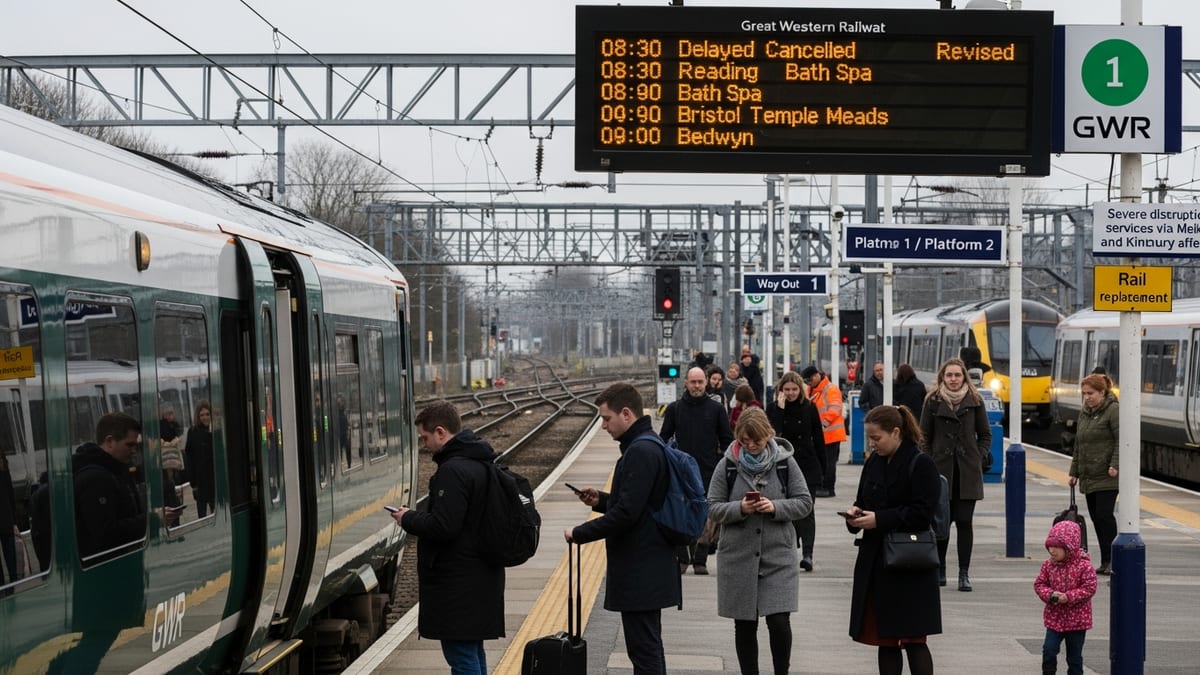
Great Western Railway’s live travel updates state that no trains are currently running to or from Paignton station. Regular Exmouth to Paignton stopping services are being curtailed and are instead starting and terminating at Newton Abbot, with a limited shuttle operating between Newton Abbot, Torre and Torquay.
Journey information platforms show that services which would normally continue to Paignton from London Paddington and other long-distance origins are being revised to terminate at Torquay. Passengers are being advised to check live departure boards and journey planners before travelling, with disruption expected to continue for some time while repairs are carried out.
Information posted by National Rail and rail operators highlights that signalling damage and the impact on station-side infrastructure are key constraints on restoring the usual timetable. While the main line remains open further north, the final section into Paignton is effectively out of use until safety-critical systems can be inspected and repaired.
Replacement transport is being arranged on some routes, but capacity is limited and journey times are longer than usual. Travellers heading for holiday accommodation, local attractions and onward bus connections are being encouraged to allow additional time and to consider alternative nearby stations where possible.
Impact on tourism and the English Riviera economy
Paignton railway station is a central gateway to the English Riviera, serving the town’s seafront, nearby beaches and attractions across Torbay. The closure comes during one of the busiest periods of the year, when trains normally bring in large numbers of domestic holidaymakers and day trippers.
Business groups and tourism bodies have previously highlighted the importance of direct rail links in supporting the local visitor economy. While formal assessments of the latest disruption are not yet available, local commentary suggests concerns about short-term impacts on hotels, guesthouses, attractions and hospitality venues that depend on reliable access by public transport.
Passengers arriving instead at Newton Abbot or Torquay face additional transfers by bus, taxi or car to reach Paignton and surrounding resorts. This added complexity may deter some short-break visitors, particularly those travelling without a car or with limited mobility, at least until a clearer picture emerges of when full services can resume.
Despite the disruption, other parts of the South Devon rail and bus network remain operational, and local transport providers are expected to adjust timetables and capacity where possible to help keep visitors moving around the bay.
Inspection, repairs and questions over timescale
Rail industry updates indicate that specialist engineers are now assessing the extent of the fire damage at Paignton, with particular focus on signalling equipment, electrical systems and station structures. Initial indications from operator statements suggest that disruption is expected to continue beyond the immediate 24-hour period following the incident.
Restoring services into a terminal station typically involves a sequence of safety checks, detailed inspections and phased repairs. In cases where signalling and control systems are affected, additional testing and regulatory processes may be required before any passenger trains are permitted to operate again.
Local media coverage notes that the Paignton area has been the focus of wider regeneration and transport projects, including improvements around Torbay Road and Station Square. The latest incident is likely to prompt further discussion about the resilience of key transport hubs and the balance between heritage station fabric and modern safety requirements.
For now, the priority for rail operators and infrastructure managers is to stabilise the site, complete investigations into the cause, and develop a repair plan that can safely return trains to Paignton while minimising ongoing disruption to the region’s residents and visitors.
Advice for passengers planning to travel
Passengers intending to travel to or from Paignton over the coming days are being urged, through operator notices and journey planners, to check the latest information before setting out. With all services currently suspended into the station, travellers may need to adjust plans at short notice.
Alternative options include using services to Newton Abbot or Torquay and completing journeys by local bus or taxi. Some tickets are being accepted on different routes in the region according to operator updates, although specific arrangements may vary by time of day and destination.
Those with advance bookings, particularly for long-distance services connecting with the English Riviera, are being advised in published guidance to review refund and exchange policies. Rail companies typically offer flexibility when significant disruption is caused by incidents such as fires affecting infrastructure.
As the peak summer holiday period continues, further updates on the condition of Paignton station and the likely timescale for reopening are expected to play a crucial role in shaping travel plans to one of Devon’s best-known seaside resorts.