


More news on this day
American travelers are being urged to reevaluate trips to China after the United States reintroduced a wrongful detention warning, citing recent cases in which U.S. citizens have been arrested and held for extended periods under opaque legal processes.
Get the latest news straight to your inbox!
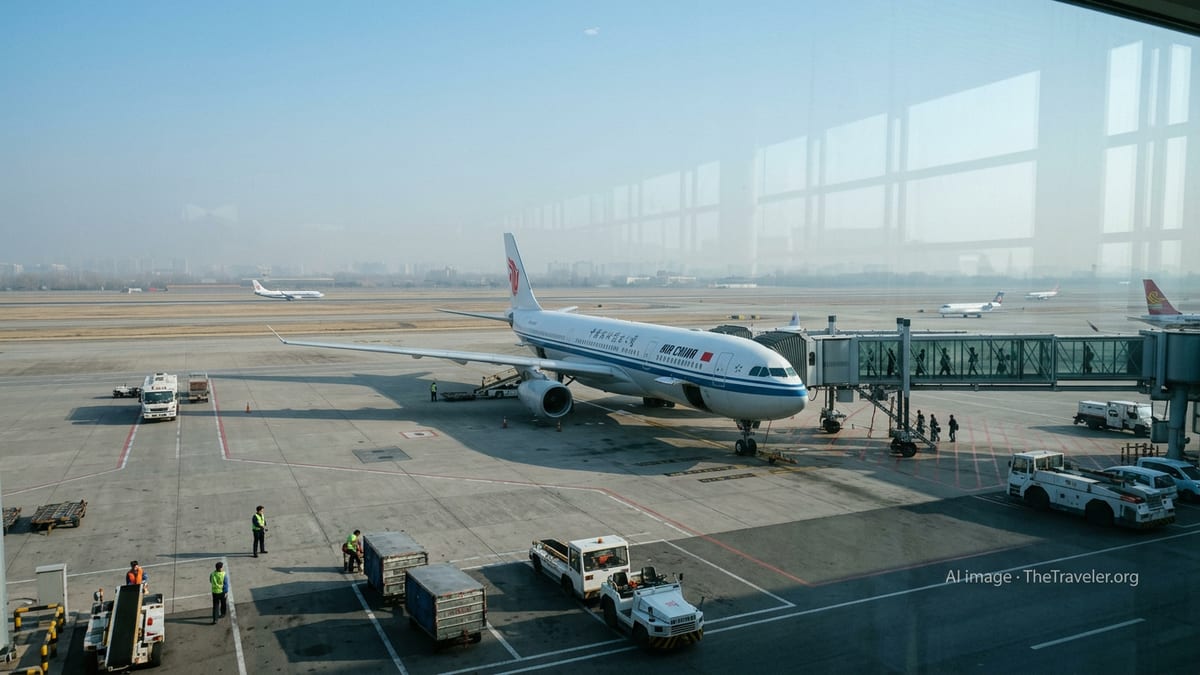
New warning added to China travel advisory
Publicly available information from the U.S. government shows that China’s country page on the federal travel advisory system was updated on September 4, 2026, to include a “D” risk indicator for wrongful detention. The overall advisory for mainland China remains at Level 2, meaning travelers are told to exercise increased caution, but the added label signals an elevated threat that foreign nationals may be detained without due process for extended periods.
According to the advisory language, U.S. citizens in China may face exit bans, questioning, and detention, with limited transparency about the allegations or timelines involved. The information notes that the risk can arise from what Chinese officials regard as national security concerns, a category that can encompass academic work, business activity, or contacts with foreign organizations.
The warning further explains that if a U.S. citizen chooses to enter mainland China on non-U.S. travel documents and is detained, local authorities may not be obligated to notify American consular officials. That situation can leave detainees and their families with few options to secure legal support or outside communication during the critical early stages of a case.
China had previously carried the wrongful detention indicator before it was removed in 2024 following the release of several Americans. Recent developments, including the detention of additional U.S. scholars, prompted the label’s return in 2026, according to coverage by international and U.S.-based outlets that monitor the advisory system.
Recent high-profile cases highlight long detentions
Reports from advocacy groups and news organizations describe multiple Americans who have been held in China for prolonged periods. Chinese American seismologist Chen Youlin was detained in November 2024 during a personal trip to Beijing and has remained in custody for nearly two years without a public trial, according to information shared by an advocacy group working with his family and cited in Associated Press coverage.
In 2026, Myanmar-born American scholar Min Zin, known for research on China’s role in the Myanmar conflict, was detained in Yunnan province after traveling for what was presented as academic cooperation, according to detailed reporting from policy-focused organizations and independent media. U.S. officials later designated his case as a wrongful detention after reviewing the circumstances of his arrest.
Earlier analyses by the James W. Foley Foundation have noted that China has accounted for a significant share of Americans classified as wrongfully detained abroad. The foundation’s reports also document the use of exit bans and incommunicado detention systems that can keep individuals out of contact with lawyers and family, sometimes for months at a time.
Chinese authorities typically state that these cases are handled in accordance with domestic law and reject the characterization of detentions as wrongful. However, the length of confinement, the secrecy surrounding evidence, and the political sensitivity of many investigations have fueled concern among rights advocates and policymakers in the United States and other countries.
China remains a major but more complicated destination
Despite the new warning, China continues to draw foreign visitors for business, tourism, and study. Major cities such as Beijing, Shanghai, Shenzhen, and Guangzhou remain important hubs for technology, manufacturing, and finance, while cultural sites including sections of the Great Wall, the Forbidden City, and Xi’an’s terracotta warriors remain on many travelers’ wish lists.
Flight connections between the United States and China have increased compared with the lowest point of the pandemic era, and carriers are rebuilding routes through key gateways like Los Angeles, San Francisco, Seattle, and New York. At the same time, the advisory’s language on wrongful detention and exit bans suggests a more complex risk calculation for Americans considering both short-term and long-term stays.
Business travelers, academics, and journalists are singled out in publicly available guidance as groups that may face heightened scrutiny under national security laws. References to the enforcement of new and revised legislation, including broader state secrets and counterespionage rules, indicate that routine professional activity can sometimes be interpreted as a threat to security or state interests.
Travel and risk consultants advise corporate clients to factor legal and regulatory exposure into their route planning and duty-of-care obligations. While tourism numbers are slowly recovering, many companies and universities are reassessing which staff members travel to China, how frequently, and under what safeguards.
What the warning means for American travelers
The wrongful detention indicator does not prohibit Americans from visiting China, but it signals that the U.S. government views the risk as significant and potentially long lasting. According to guidance available on official channels, the United States has limited ability to intervene when another country applies its own laws, even if a case is later assessed as unjust or politically motivated.
U.S. government resources urge travelers who still choose to visit China to enroll in the Smart Traveler Enrollment Program so that they can receive security updates and so that consular staff can attempt to make contact more quickly in an emergency. The same sources recommend that travelers prepare contact information for legal counsel, strictly follow local laws and regulations, and avoid activities that might be interpreted as political organizing, data collection, or unauthorized research.
The information emphasizes that Chinese authorities may regard electronic communications, mapping, photographing infrastructure, or discussing sensitive topics with local contacts as grounds for national security investigations. In practice, that means Americans traveling for business or academic work are encouraged to review what documents, devices, and data they carry into the country and to consider whether any of it could draw unwanted attention.
Relatives of Chinese citizens, dual nationals, and U.S. citizens of Chinese descent are also highlighted in various briefings as potentially facing additional scrutiny or pressure, especially in cases involving civil or commercial disputes. Exit bans related to business conflicts, debts, or family law disputes have been documented in public reports and can effectively keep a person from leaving China for months or longer, even without formal criminal charges.
Other destinations flagged for wrongful detention risks
China is not the only popular or historically frequented destination where Americans are warned of possible wrongful detention. The State Department’s broader list of high-risk areas identifies several countries where U.S. citizens may face harassment, arbitrary law enforcement, or detention linked to political tensions with Washington.
Russia, which remains a cultural and tourism draw for some visitors, is currently listed at Level 4 with a clear “do not travel” advisory that cites a significant risk of wrongful detention among several security concerns. Public guidance specifically warns that U.S. citizens may be singled out by security services, face intense questioning, or be detained on allegations such as spying or spreading disinformation.
Cases widely covered in international media, including the ongoing detention of Wall Street Journal reporter Evan Gershkovich and the lengthy imprisonment of other Americans on disputed charges, have underscored the hazards of travel to Russia for journalists, former military personnel, and individuals with public profiles. A recent case involving a former U.S. Marine who spent more than four years in Russian custody before being released in 2026 further illustrates how long such detentions can last.
Travel experts note that advisories for other countries also mention wrongful or arbitrary detention risks, even if they do not receive as much attention as China or Russia. For U.S. travelers planning future trips, reviewing the latest advisory level and any detention-related indicators has become an essential step, particularly when considering destinations where political or security tensions with the United States are high.