


More news on this day
With Typhoon Champi forecast to bring strong winds and heavy rainfall to northern Taiwan between October 23 and 24, travelers in Taipei are being urged to review updated safety information and prepare for possible transport and attraction closures.
Get the latest news straight to your inbox!
Typhoon Champi Targets Northern Taiwan
Forecast data from regional meteorological services indicates that Typhoon Champi, a strong system in the western Pacific, is tracking toward northern Taiwan, with its closest approach expected on Friday, October 23, 2026. Publicly available advisories show sea warnings already in effect, with land warnings covering much of Taiwan’s main island as the storm draws nearer. The greatest impact window for Taipei is projected from late Friday into Saturday, October 24, bringing periods of torrential rain and gale force gusts.
Taipei’s municipal emergency platform reports that Champi’s center was located to the east of Taiwan on the evening of October 22, continuing on a west northwest path. City forecasts point to sustained heavy rain bands and wind gusts reaching high Beaufort levels across the capital and surrounding hills, heightening the risk of localized flooding, falling debris, and landslides in mountain districts.
International tracking from agencies that monitor tropical cyclones across the northwest Pacific shows Champi maintaining significant intensity as it nears Taiwan, even as the exact landfall point remains uncertain. Model outputs highlight a high probability of severe weather impacts in the greater Taipei area, though the storm’s core could pass either just offshore or across northern Taiwan before curving toward the Ryukyu Islands and Japan.
AIT Taipei Advisory and Key Messages for U.S. Travelers
The American Institute in Taiwan functions as the de facto United States mission on the island and is responsible for issuing security and emergency information for U.S. citizens. When tropical cyclones threaten Taiwan, its Taipei office typically amplifies alerts in coordination with broader U.S. consular messaging, drawing heavily on bulletins from Taiwan’s Central Weather Administration and local authorities. Current publicly accessible materials for U.S. travelers emphasize advance preparation, close monitoring of forecast updates, and readiness to adjust travel plans on short notice during major storms.
In line with longstanding guidance, American travelers in Taipei during Champi’s passage are advised to track local weather warnings from official Taiwanese channels, identify safe indoor shelter options, and ensure they have sufficient food, water, medications, and power banks to remain indoors for at least 24 to 72 hours if conditions deteriorate. Advisory language also notes that strong typhoons can disrupt municipal services, increase the risk of power interruptions, and trigger short-notice changes to public transport timetables, particularly for above-ground rail segments and bus routes.
Information sheets associated with prior typhoon seasons underline that when a typhoon poses a significant threat to Taiwan, messages are distributed through official U.S. platforms, often highlighting recommended preparedness steps for U.S. citizens. While each storm is different, the core messages repeated year after year remain consistent: avoid nonessential travel during peak impact, stay informed through trusted weather sources, and keep travel documents, emergency contacts, and essential items readily accessible in case conditions suddenly change.
Transport Disruptions: Flights, Metro, and Local Attractions
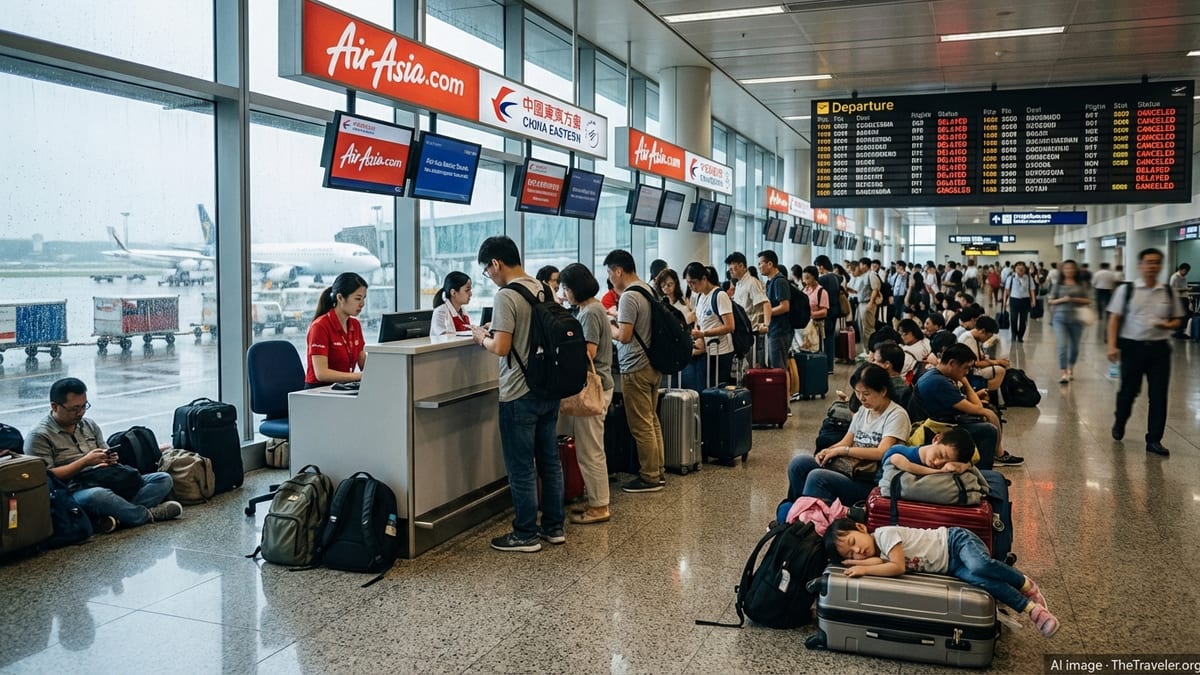
The approach of Champi is already affecting air travel to and from Taiwan. Airline notices published on October 22 show international carriers adjusting schedules for flights into Taoyuan International Airport and Taipei Songshan Airport around October 23, including cancellations or rescheduling on routes between Taipei and major regional hubs. Some operators have issued travel waivers for passengers booked to or from Taipei between October 20 and 24, allowing itinerary changes without typical penalties during the storm window.
Domestic aviation is also expected to face significant disruption. Local media coverage on October 22 relays that Taiwan’s internal routes, particularly those connecting Taipei with eastern and offshore islands, are vulnerable to cancellations once typhoon warnings are raised, as cross-island and island-hopping services often operate with smaller aircraft more sensitive to strong winds and low cloud ceilings. Travelers with inter-island connections should anticipate the possibility of extended delays or overnight stays on the main island.
Within Taipei itself, the metro operator has outlined contingency measures for October 23 in statements carried on the city’s disaster-preparedness portal. Elevated sections of the MRT network and certain at-grade stretches are subject to speed reductions or service suspensions if wind speeds cross defined safety thresholds, while underground lines are expected to remain comparatively resilient. Passengers are being directed to check real-time apps, station displays, and customer service hotlines for updates before starting their journeys on Friday and Saturday.
Attraction closures are also starting to appear in local announcements. Taipei’s municipal channels report that the Maokong Gondola, Taipei Children’s Amusement Park, and Taipei Arena will suspend operations on October 23 because of Champi’s approach. Tourists planning to visit these sites are being encouraged to reorganize itineraries toward indoor museums, shopping centers, or to bring forward sightseeing to earlier on October 22 where conditions still permit safe movement around the city.
Practical Safety Guidance for Visitors in Taipei
Updated travel advisories from several governments emphasize that typhoon season in Taiwan typically stretches from early summer through October, with the highest concentration of storms in late summer and early autumn. Even as Champi arrives late in the season, guidance for visitors remains the same: remain flexible and prioritize safety over fixed schedules. Travelers currently in Taipei should secure loose items on hotel balconies, avoid coastal promenades and riverside parks during high winds, and refrain from typhoon sightseeing at harbors or mountain lookouts.
Flood-prone sections of Taipei, particularly near rivers and low-lying underpasses, can accumulate water quickly when outer rain bands stall over the city. Publicly available information from the city’s hydraulic and flood-control offices urges residents and visitors alike to keep an eye on rising water levels, respect temporary barriers and closures, and avoid driving or walking through pooled water where depth and current are hard to judge. Taxi and ride-hailing services may become scarce when conditions worsen, so travelers are advised to plan to stay in place well before the strongest winds arrive.
Basic preparedness can make a stay in Taipei during a typhoon considerably safer and less stressful. Emergency-management materials shared via the city’s “Disaster Prevention Taipei” resources recommend assembling a compact kit with bottled water, non-perishable snacks, flashlights, spare batteries, power banks, a small first-aid supply, and any required prescription medications. Visitors should also write down key local phone numbers and address details in case mobile devices lose power or connectivity during short-term outages.
Planning Ahead for Upcoming Travel to Taiwan
For travelers who have not yet departed for Taiwan, the developing situation around Champi is a timely reminder to build more flexibility into travel plans during the typhoon season. Government travel pages for Taiwan encourage visitors to purchase travel insurance that clearly covers weather-related disruptions, including flight cancellations and forced itinerary changes, and to review airline waivers that may apply when major storms threaten the island.
Those scheduled to arrive in Taipei between October 23 and 24 are encouraged to monitor airline notifications closely, checking both departure and arrival airports for updates. If an airline begins proactive rebooking or offers a free date change, acting early often provides the widest choice of alternative flights and connection options. Travelers with tight onward connections from Taipei, such as next-day long-haul departures, may want to consider shifting itineraries by several days to avoid cascading delays as carriers work through backlogs after the storm passes.
For visitors planning trips later in the autumn or next year, Champi’s approach provides a case study in how rapidly conditions can change in the northwest Pacific. Using official Taiwanese weather forecasts as a primary reference, building in buffer days before critical commitments, and staying aware of local emergency procedures in Taipei can help ensure that a future visit remains both safe and enjoyable, even when the forecast includes the possibility of a powerful typhoon.