


More news on this day
Passengers on a packed London commuter service described scenes of chaos, severe injuries and choking smoke after a rush hour collision that some initially feared was a terrorist explosion.
Get the latest news straight to your inbox!
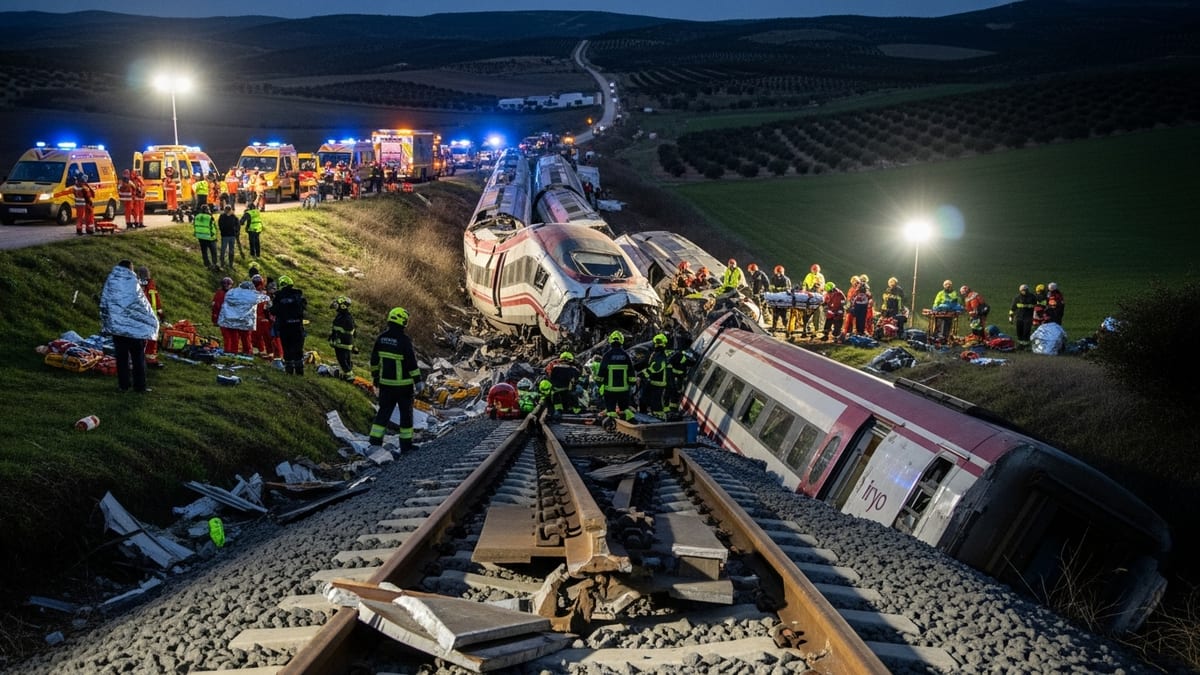
Confusion and panic in packed carriages
Reports from the scene indicate that the incident unfolded without warning as a busy commuter train was travelling through London, leaving passengers with little time to react. Witness accounts collected by multiple British news outlets describe a sudden, violent jolt that threw people from their seats, with some riders saying they felt as if the entire carriage had been lifted off the tracks.
Several passengers told local media that the impact was so loud and forceful that they briefly believed a bomb had detonated on board. In the immediate aftermath, smoke and dust reportedly filled some sections of the train, obscuring visibility and heightening fears of a deliberate attack before the scale of the crash became clear.
Amid the confusion, commuters described shouting, crying and frantic efforts to find loved ones and colleagues who had been travelling together. People reached for mobile phones to contact emergency services, while others attempted to force open doors or move toward what they hoped were safer parts of the train.
Witnesses said the cramped conditions of the rush hour service made it difficult to move, and some passengers were trapped in twisted metal and buckled seating until rescue teams arrived to begin evacuations.
Serious injuries reported among trapped passengers
According to early casualty reports, a number of passengers sustained serious injuries, including suspected broken legs and other fractures, after being thrown against interior panels, seats and handrails. Some riders were unable to stand or walk, and fellow commuters used makeshift stretchers, coats and belts to stabilise limbs and support those in visible distress while waiting for professional medical help.
Several individuals reported by British broadcasters were left temporarily unable to speak, either from shock or suspected head and facial injuries. Others appeared disoriented, struggling to understand what had happened or to provide their names to responders moving through the carriages.
Images and footage shared on social media, verified and described by national outlets, showed passengers sitting on the floor of dimly lit carriages and along a nearby platform, many with cuts, bruises or bloodstained clothing. Some were seen comforting one another as they waited to be assessed and transported to hospital.
Medical staff at nearby facilities were placed on heightened readiness, according to published coverage, with additional trauma teams called in to receive casualties from the site. Non life threatening injuries such as whiplash, sprains and minor lacerations were also widely reported among those able to walk away from the train unaided.
Emergency response and rail disruption
Publicly available information shows that multiple emergency services were dispatched within minutes of the first calls, including fire crews, paramedics and specialist rescue units trained to work in confined rail environments. Accessing the crash site required teams to move along tracks and through partially damaged carriages while assessing structural risks.
Crews began by prioritising those with obvious severe injuries, stabilising them and coordinating stretcher evacuations to waiting ambulances. Others able to walk were guided in small groups along the line or through connecting walkways to safe assembly points, where they received initial medical checks, blankets and water.
The crash led to extensive disruption across part of London’s rail network, with services suspended or heavily delayed while safety inspections and evidence gathering took place. Commuters were advised to seek alternative routes, and local streets around nearby stations experienced heavier traffic as replacement buses and private vehicles converged on the area.
Rail operators announced that services would remain limited until damaged infrastructure and rolling stock could be fully assessed and cleared, with engineers examining track, signalling equipment and overhead power lines affected by the crash.
Investigations focus on cause and safety systems
According to coverage across British media, specialist investigators have opened a formal inquiry into the crash, focusing on the sequence of events that led to the collision and the performance of the railway’s safety systems. Data recorders from the train, often likened to aviation black boxes, are expected to provide detailed information on speed, braking and signalling in the moments before impact.
Investigators are also expected to examine maintenance records, driver scheduling and any reports of previous signalling or equipment faults on the line. Interviews with crew members, control room staff and passengers will help build a fuller picture of visibility, communications and decision making during the critical period.
Rail safety experts quoted in British coverage note that modern signalling systems are designed to prevent collisions by managing train separation and speed, making any significant crash on a busy urban network a matter of serious concern. The findings of the investigation are likely to influence future investment and operational changes, particularly on routes carrying large numbers of daily commuters.
Industry analysts suggest that, depending on the outcome, the incident could prompt renewed scrutiny of capacity pressures, infrastructure upgrades and the resilience of contingency plans when systems fail or become overloaded.
Passenger trauma and broader travel concerns
Beyond the immediate physical injuries, commentators have highlighted the psychological impact on those caught up in the crash, particularly passengers who initially believed they were experiencing a terrorist attack. Mental health specialists contacted by British newspapers note that sudden, violent events in enclosed spaces can trigger lasting anxiety around public transport, loud noises or crowded environments.
Some commuters have already expressed concern on social media about returning to the same route, while travel forums feature accounts from riders reconsidering how they journey into central London. For a city that relies heavily on rail for daily movement, even a single high profile crash can amplify existing worries about safety on busy lines.
Travel observers point out that London’s rail system, like those in many major cities, has seen sustained growth in passenger numbers over recent years, increasing pressure on timetables, staffing and maintenance windows. The latest incident is likely to add urgency to debates over funding, modernisation and the balance between capacity expansion and the upkeep of existing assets.
For now, those who were on board describe a sense of relief at having escaped a situation they initially interpreted as something far worse, even as they and their families begin to process the shock and disruption that followed the crash.