


The Garden State Parkway is not just a highway. For most New Jersey road trips, it is the spine that connects New York commuters, Pine Barrens day trippers, and families streaming toward Wildwood or Cape May. Plan it well and the Parkway speeds you from city to shore with convenient rest areas, scenic marsh views, and easy connections. Misjudge tolls, exits, or weekend traffic and the same road can drain your budget, derail your timing, and sour the start or end of your vacation.
Get the latest updates straight to your inbox!
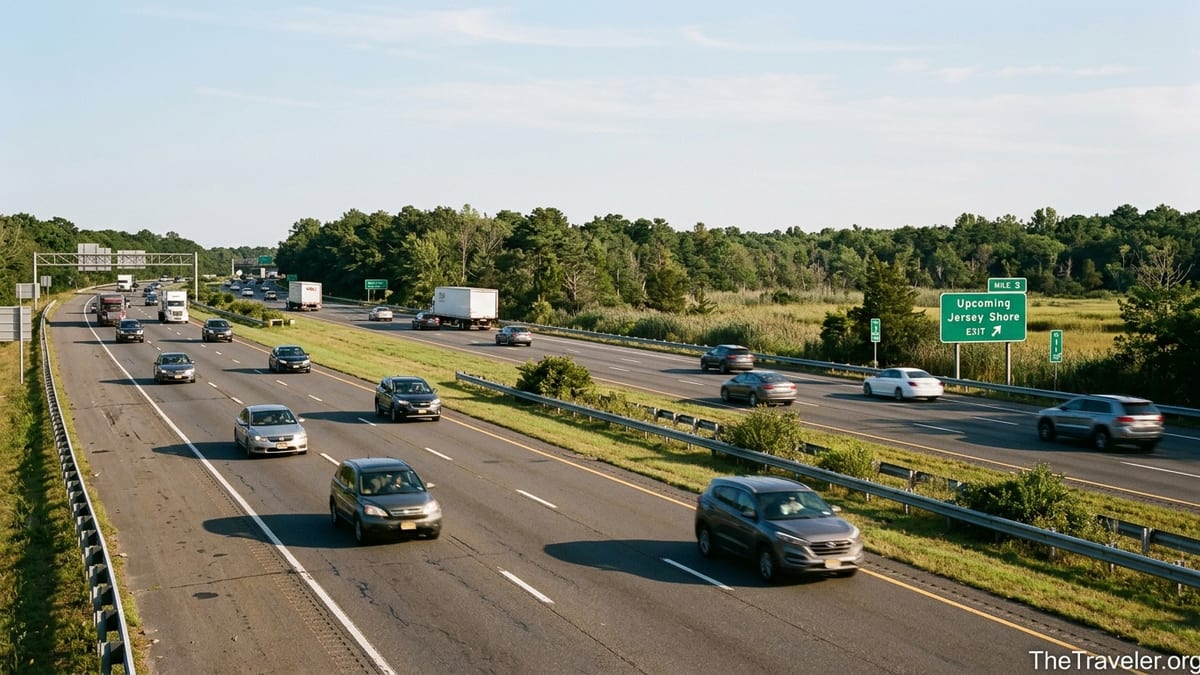
Why the Garden State Parkway Matters So Much
Stretching from the New York State line near Montvale all the way to Cape May at the southern tip of New Jersey, the Garden State Parkway is one of the busiest toll roads in the United States. Operated by the New Jersey Turnpike Authority, it was designed as a limited access parkway tying together suburbs, cities, and the entire Jersey Shore corridor. In practice, that means if you are flying into Newark or New York and driving to Asbury Park, Ocean City, Wildwood, or Cape May, you will almost certainly spend hours on this road.
How you handle that time can make or break your trip. A smartly timed run from Newark Liberty International Airport to Asbury Park might take about an hour, with only a handful of short toll stops. The same route on a Saturday in July, hitting late-morning traffic near Woodbridge and again around the shore exits, can balloon to two hours or more and burn far more fuel creeping in stop and go congestion.
Because the Parkway is so central to New Jersey travel, small planning choices have big consequences. Deciding whether to use E-ZPass, which service area to target for lunch, or which exit to choose for Seaside Heights instead of Point Pleasant can save you money, stress, and time. Treat the Parkway as part of your destination planning, not just the road between places.
For road trippers used to western interstates or long stretches of rural highways, the density of exits and toll plazas on the Parkway can also be surprising. There are frequent opportunities to get on and off, but also frequent chances to get confused or pay more than you expected. Understanding its structure before you roll out goes a long way toward a smoother New Jersey adventure.
Understanding Tolls So They Don’t Blow Your Budget
The Parkway uses a mix of barrier toll plazas across all lanes and smaller ramp plazas at certain exits. Instead of getting one ticket and paying once at the end, as on the New Jersey Turnpike, you pay flat tolls in segments. In 2024 schedules published by the New Jersey Turnpike Authority, barrier tolls like Cape May, Great Egg, Somers Point and others show typical passenger car cash tolls in the low single digits per plaza, with amounts generally a little lower for E-ZPass in some categories and higher for trucks. That might sound modest, but a full drive from Montvale to Cape May can easily involve a dozen or more paid points depending on how and where you enter and exit.
The biggest game changer is E-ZPass. With an E-ZPass transponder, you roll through dedicated lanes at highway speed where express lanes exist, or at least avoid fumbling for cash at traditional booths. For many drivers, especially those renting a car, the key question is whether to accept a rental company’s toll package. These add convenience but often come with daily service fees that can exceed the tolls themselves. If your trip is confined mostly to the Parkway and you expect just a handful of tolls each day, it may be cheaper to pay cash, provided you are comfortable dealing with occasional unmanned coin or automated lanes.
For example, a family driving from northern New Jersey to Wildwood for a long weekend might pass the Barnegat, New Gretna, Great Egg, and Wildwood related toll points on the way down, with individual cash rates commonly under 5 dollars each. Across a round trip, those charges can add up into the tens of dollars, but for a three day rental, a toll program that charges a daily fee on top of tolls can end up costing significantly more. Checking your route on a map, counting the likely toll plazas, and estimating at a couple of dollars per plaza gives you a rough sense of what you will actually pay.
Seniors and frequent users should know that New Jersey offers certain E-ZPass discount plans, such as reduced off peak rates on the Parkway for eligible older drivers registered in the state. Casual visitors will not usually qualify, but it is worth checking if you have family in New Jersey who can add your vehicle to an existing plan for an extended visit. Regardless, having any E-ZPass tag, from any participating state, generally makes the Parkway feel much less stressful.
Timing Your Drive: When Traffic Makes or Breaks You
On a quiet Tuesday in October, the Parkway can feel like a fast, attractive ribbon of asphalt through wetlands and pine forest. On a sunny Saturday in late July, particularly between Woodbridge and the Manasquan River Bridge, it transforms into a slow moving procession of beach coolers and surfboards. Getting the timing right is one of the most important factors in whether the Parkway is a pleasant cruise or a source of frayed nerves.
North of the Raritan River, near the junctions with Interstate 95, Route 9, and the New Jersey Turnpike, the Parkway functions as a commuter artery into Newark and New York. Morning rush toward the north and evening rush toward the south can clog the highway on weekdays, especially around the Union, Irvington, and East Orange interchanges. If you are leaving Newark airport or Jersey City for the shore on a summer Friday, aim either for an early departure before 2 p.m. or a later one after the heaviest outbound commuter traffic, usually past 7 p.m., though patterns can vary.
Farther south, weekend traffic becomes more tied to leisure travel. Between exits in the 80s and 100s, which serve Toms River, Brick, Belmar, Asbury Park, and other coastal towns, volume swells sharply on Friday evenings and Saturday mornings in peak season. Travelers heading to Seaside Heights might find exit 82 for Route 37 bumper to bumper by 10 a.m. on a sunny Saturday. In contrast, leaving for the same destination at 7 a.m. often means sailing through near free flow conditions.
Weather also plays a surprisingly large role. Many New Jersey families practice an informal rule: if the forecast is marginal, they delay their trip or leave early. A cool or overcast Saturday in June can cut traffic significantly, turning a typically slow one and a half hour drive from northern Monmouth County to Cape May into a brisk run. Checking both the forecast and live traffic maps the morning of your departure can save more time than almost any other decision you make about the Parkway.
Mastering Exits, Service Areas, and Real-World Stops
Unlike some long distance highways with evenly spaced, full service plazas, the Parkway’s rest areas are grouped and named, and not every section has the same amenities. North to south, you will encounter the Montvale service area near the New York line, Brookdale in Bloomfield, Cheesequake near Sayreville, Forked River in Ocean County, and Ocean View south of Atlantic City, among others. Recent projects have refurbished several of these facilities and, notably, the New Jersey Turnpike Authority has renamed many to honor New Jersey Hall of Fame inductees, such as actor James Gandolfini at Montvale and author Toni Morrison at Ocean View.
For a family driving from Manhattan to Wildwood, a realistic pattern might be a coffee stop at Brookdale, a fuel top off and lunch at Forked River, and a bathroom break at Ocean View. Brookdale and Cheesequake are popular with commuters and tour buses, so lines can be long at peak hours. Forked River, by contrast, is a crucial last chance fuel and restroom stop before the relatively long, rural stretch through the southern Pine Barrens. Missing it on a busy weekend can mean limited options until you reach the smaller towns nearer Atlantic City.
The exit structure demands attention, too. Parkway exits are numbered by mile marker, so higher numbers are farther north and lower numbers farther south. If you are aiming for Asbury Park, you will typically use exits in the low 100s, such as the Asbury Park toll plaza area around mile 104. Seaside Heights visitors usually leave around exit 82, while Atlantic City bound drivers target exits in the 30s and Cape May travelers head all the way toward the teens and single digit exits. Always double check the local road you need after your exit, because many shore towns share similar sounding names and rely on connecting state routes like 35, 9, or 47.
One practical example is the choice between stopping at Cheesequake versus pushing on to Forked River. A driver leaving Newark around 10 a.m. on a Sunday in August might see Cheesequake absolutely packed with tour buses and families, making parking and quick food runs difficult. In that case, it can be wiser to skip it, keep a moderate fuel cushion, and aim for Forked River around mile 76, which often feels calmer and more oriented toward long distance travelers heading to Long Beach Island and farther south.
E-ZPass, Cash, and Rental Cars: Getting Toll Payments Right
For out of state visitors, toll payment logistics are often the most confusing part of using the Parkway. The Parkway still accepts cash at many booths, and some entrance and exit ramps use exact change machines or low staffed toll points. However, over the last several years, the New Jersey Turnpike Authority has steadily de-emphasized coin systems, even removing automatic coin machines from mainline barrier toll plazas, and is planning a full conversion to all electronic tolling in coming years as part of a broader capital program. That future shift will rely on E-ZPass and license plate billing rather than handing cash to an attendant.
If you are driving your own vehicle from another E-ZPass state, such as New York, Pennsylvania, or Massachusetts, simply mount your existing transponder and you are ready. Your home account will recognize New Jersey transactions just as it would at home, and in many cases you get a lower electronic rate compared with cash. Always make sure your license plate is correctly listed on your account before you travel, as New Jersey can use plate reading systems in some lanes to reconcile E-ZPass use.
Rental cars pose trickier questions. Many major companies operating out of Newark Liberty and other New York metro airports offer toll programs that automatically pay your Parkway charges but add daily service fees that can run several dollars per rental day. If you plan only a short hop down the Parkway once at the beginning of your trip and once at the end, it may be cheaper to decline the program and pay cash. On the other hand, if you will be using multiple toll facilities across New Jersey and neighboring states, the convenience may justify the cost, especially if you are nervous about coin operated exit ramps or missing a toll plaza and receiving a mailed bill later.
Some regular travelers address this by owning a personal E-ZPass tag they bring on trips, then simply registering the rental car’s license plate for the week on their online account. That approach often yields electronic toll discounts and avoids rental company fees, but it requires discipline in adding and removing plates before and after travel. Whatever method you choose, decide before you reach your first Parkway toll plaza, not in the moment as you approach a lane decision at 55 miles per hour.
Shore Towns, Scenic Detours, and When to Leave the Parkway
Part of the Parkway’s appeal is its role as a gateway to the Jersey Shore. From the entertainment piers in Point Pleasant Beach to the Victorian streets of Cape May, countless towns lie a few miles east of the roadway. The choice of where to get off the Parkway influences not just your arrival time but also the flavor of your trip.
A classic example is the debate between Seaside Heights versus Point Pleasant for a day trip from North Jersey. Both are reachable via the Parkway, but Point Pleasant is often accessed by exiting in the low 90s around Brick and connecting via local roads, while Seaside Heights is more naturally reached at exit 82 onto Route 37. If you leave the Parkway too early because you spot an unfamiliar sign, you can end up crawling through suburban traffic lights, wasting both fuel and beach time. Using a navigation app that shows live traffic on local connectors can help you avoid common choke points, especially in late afternoon when everyone leaves the beach at once.
Farther south, many travelers to Ocean City, Sea Isle City, Wildwood, and Cape May use a combination of Parkway exits and local routes like 52, 55, and 47. A driver aiming for Ocean City might exit in the 30s, cross the marshes on a causeway, and find themselves downtown within minutes, while a detour for gas at the wrong exit can add half an hour of wandering through unfamiliar strip malls. Before leaving home, identify the exact exit number and follow up route for your primary destination and one backup beach town. If weather or crowds make your first choice unappealing, that second option is often just one more Parkway exit away.
Do not overlook the Parkway itself as part of the scenic experience. South of Toms River, the road glides through the Pinelands with long stretches of forested median and occasional glimpses of tidal marshes and inlets. Taking a short detour to a state park like Island Beach State Park via Seaside or Allaire State Park near the Manasquan River can turn a routine drive into a mini nature getaway. Just remember that popular parks can fill up early on prime summer days, and entrance lines can back up onto local roads connecting to Parkway exits.
Safety, Speed, and Stress Management on a Busy Toll Road
The Garden State Parkway is notorious among local drivers for its variable speeds. The posted limits change in different segments, often around 55 or 65 miles per hour, but actual traffic can swing from crawling congestion to aggressive passing. For visitors used to quieter rural interstates, the density of vehicles and lane changes near interchanges can be intimidating. Building in extra time reduces the temptation to keep up with the fastest cars and lets you stay in the right or center lanes at a comfortable pace.
Toll plazas are another common stress point. As you approach a barrier, overhead signs will indicate cash, E-ZPass only, or mixed lanes. Changing lanes abruptly at the last second is both dangerous and a frequent cause of fender benders. Before each plaza, scan the signage early and commit to a lane, even if it means a slightly slower line. If you accidentally enter an E-ZPass lane without a transponder, do not slam on the brakes. Proceed safely, and later check the New Jersey Turnpike Authority’s guidance on how out of state drivers can resolve missed tolls by mail.
Stopping only at official service areas or clearly signed exits is another smart safety habit. The Parkway runs through a mix of industrial zones, suburbs, and isolated forest. Pulling onto a narrow shoulder to check a map or argue with your navigation app puts you uncomfortably close to high speed traffic. Instead, use the predictable spacing of service plazas to plan breaks. Even short ten minute stops every hour or two can reset your concentration during a long run from the New York area to Cape May.
Finally, factor in weather and visibility. Summer thunderstorms can roll in quickly, turning clear skies into blinding downpours around the Raritan or Driscoll bridges. In those moments, many drivers slow sharply, creating rolling waves of braking. Increasing your following distance, using headlights early, and avoiding sudden lane changes will help you navigate these situations calmly. If conditions deteriorate, it is better to exit to a nearby service area such as Cheesequake or Brookdale and wait out the storm than to push on in marginal visibility.
The Takeaway
The Garden State Parkway has an outsized influence on how travelers experience New Jersey. It links nearly every major shore town, cuts through key commuter corridors, and serves as the default route for visitors arriving by air or driving in from neighboring states. Treating it as just another highway often leads to surprises in the form of unexpected toll totals, stressful lane choices near plazas, and frustrating delays near popular exits.
With modest preparation, the same road becomes a powerful asset. Understanding how tolls are structured, deciding in advance whether to rely on E-ZPass or cash, timing your trip around the worst weekend surges, and targeting specific service areas for fuel and food all pay off immediately. Pair that with realistic expectations about speed, careful lane discipline at toll plazas, and a clear plan for which exits serve your chosen shore towns, and you turn the Parkway into a smooth, even scenic, backbone of your New Jersey road trip.
In a state where distances are short but traffic is dense, every small advantage counts. Take an hour to study the Parkway before you go, and you are far more likely to arrive in Asbury Park, Ocean City, Wildwood, or Cape May with your nerves intact, your budget under control, and your vacation spirit fully intact.
FAQ
Q1. Do I need E-ZPass to drive on the Garden State Parkway?
E-ZPass is not required but is strongly recommended. You can still pay many tolls with cash, especially at staffed plazas, but E-ZPass lets you use faster lanes, simplifies payment, and often results in smoother traffic flow. For frequent visitors or those driving long distances along the Parkway, having a transponder from any participating state is a significant convenience.
Q2. How much will I pay in tolls for a typical shore trip?
Exact amounts vary by entry and exit points, but a round trip from northern New Jersey to a central shore town like Seaside Heights or Asbury Park typically runs to several toll plazas, with individual cash tolls usually in the low single digits each. In practice, a weekend round trip for a passenger car might total in the tens of dollars, not counting any additional toll roads you use before or after the Parkway.
Q3. Are there rest areas with food and gas on the Parkway?
Yes. Full service areas such as Montvale, Brookdale, Cheesequake, Forked River, and Ocean View offer fuel, restrooms, and a rotating cast of fast food and coffee options. They are spaced so that on a typical north to south drive you can stop every hour or so. Hours and specific vendors can change, so treat them as convenient refueling and restroom stops rather than destinations in their own right.
Q4. What is the best time to drive to avoid Parkway traffic in summer?
To avoid the heaviest congestion, aim for early morning departures, especially on Saturdays, or later evening drives on Fridays and Sundays. Midday on sunny summer weekends between the New York metro area and the shore exits is often the most congested. Checking live traffic on a navigation app before you leave can help you choose a less crowded window.
Q5. Can I pay Parkway tolls if I accidentally use an E-ZPass only lane without a transponder?
If you inadvertently drive through an E-ZPass only lane, do not stop or reverse. Cameras will record your license plate, and in many cases you will receive a mailed notice or bill. Depending on your state and the specific plaza, there may be options to pay online within a set period. It is better to resolve it later than to create a hazard at the toll plaza.
Q6. Which exits should I use for popular shore towns like Seaside Heights or Cape May?
Seaside Heights is most commonly reached via the Parkway near exit 82 onto Route 37, while Cape May is served by exits in the teens and low single digits near the Parkway’s southern end, connecting to local roads such as Route 47 and 109. Always confirm the exact exit number and follow up route for your destination before you depart, since many shore towns share similar names and rely on the same local highways.
Q7. Are there scenic stretches or viewpoints on the Garden State Parkway?
Yes. South of Toms River, long portions of the Parkway run through the Pine Barrens with forested medians and glimpses of tidal marshes. Bridges near the Raritan and farther south offer broad views over rivers and bays. While there are few dedicated scenic overlooks, pairing your drive with short detours to state parks or coastal causeways can give you memorable views very close to the Parkway.
Q8. Is the Garden State Parkway safe to drive at night?
The Parkway is generally well lit near urban areas and major interchanges and sees heavy use even after dark. Night driving is common for travelers heading home from the shore. As with any busy highway, stay alert for changing speeds, give trucks extra space, and rely on official service areas if you feel tired. Avoid pulling over on narrow shoulders except in emergencies.
Q9. How do rental car toll programs work on the Parkway?
Most major rental companies operating near New Jersey offer toll programs that automatically pay Parkway charges using built in transponders, then bill your credit card for tolls plus a daily service fee. These fees can add up quickly on short trips. If you expect only limited Parkway use, you may prefer to decline the program and pay cash, or use your own E-ZPass tag if your rental agreement allows it.
Q10. Are there alternatives to the Parkway for reaching the Jersey Shore?
Yes. Depending on your starting point, you can use routes such as U.S. 9, Route 18, Route 35, or Route 55 combined with local roads to reach many shore towns. These alternatives can be slower but sometimes less stressful during peak Parkway congestion. However, they often have more traffic lights and local traffic, so the Parkway remains the most direct main artery for many trips.