

More news on this day
Passengers in Santiago were forced to evacuate through a smoke-filled tunnel after a train caught fire between stations on Metro de Santiago’s Line 5, disrupting service across part of the Chilean capital’s busiest urban rail network.
Get the latest news straight to your inbox!
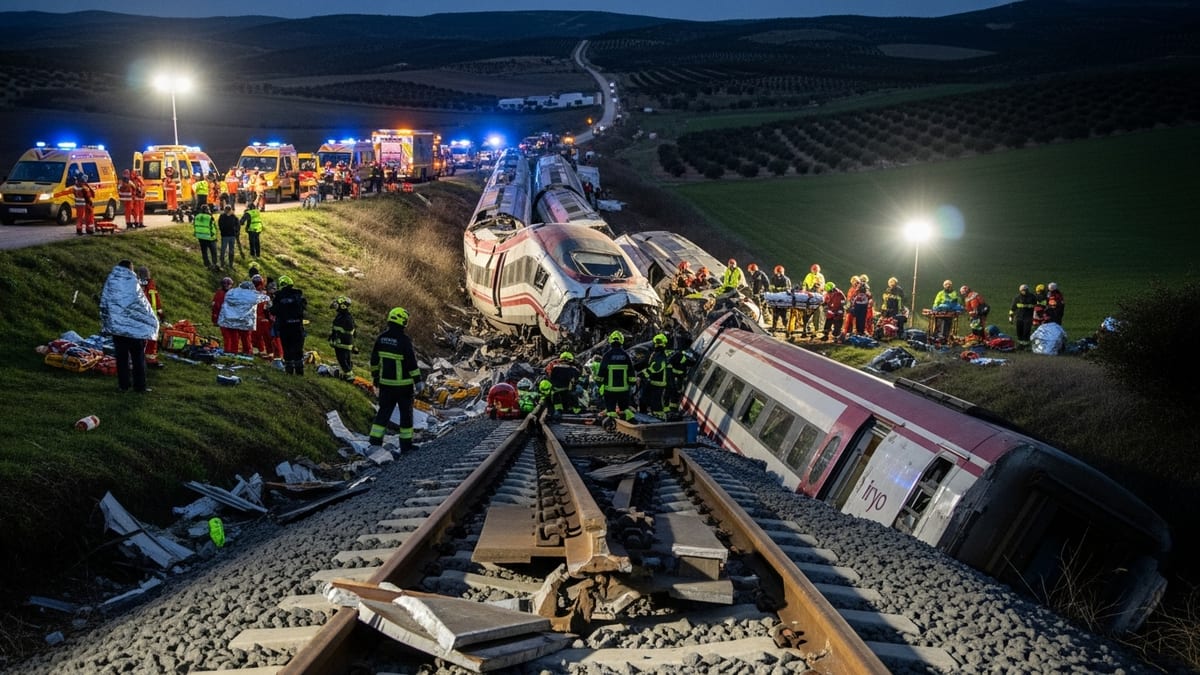
Fire erupts between stations on Line 5
The incident occurred on the afternoon of July 27, when a westbound Line 5 train reported smoke and flames while moving through the tunnel near Santa Isabel station, just southeast of central Santiago. Video circulating on Chilean media shows thick smoke billowing from a train stopped inside the tunnel and drifting toward platforms.
Published coverage indicates that the fire originated in one of the train’s cars and quickly intensified, damaging at least one carriage. The affected train was brought to a halt in the underground section, leaving passengers to wait in darkened, smoke-affected conditions before an evacuation was organized.
Reports from local outlets describe scenes of confusion as riders attempted to move away from the affected car while emergency procedures were initiated. Some passengers later shared images of dense smoke inside the tunnel and of people advancing along the track bed toward station exits.
Initial information from Metro de Santiago, as relayed in local media, described the event as a serious but contained incident that did not spread to other trains or lines. The operator characterized the blaze as a localized problem affecting a single trainset on Line 5.
Evacuation through tunnel and station platforms
According to publicly available information, the stopped train was positioned between Santa Isabel and adjacent stations on Line 5, forcing at least part of the evacuation to take place inside the tunnel itself. Passengers were guided along the track area toward the nearest station platforms and emergency exits.
People who were inside the train reported a strong smell of burning and limited visibility as smoke accumulated in some cars. Shared accounts suggest that doors were eventually opened so riders could move from the affected carriage into safer cars, and then down to the ballast to walk toward the station.
Local coverage highlights that the tunnel environment, reduced lighting, and the presence of smoke contributed to a tense atmosphere during the evacuation. Some passengers later questioned the speed and clarity of the instructions they received, while others emphasized that fellow riders helped one another to move calmly toward the exits.
Emergency crews, including firefighters and medical teams, were deployed to the affected stretch of Line 5 and to nearby stations. Available reports indicate that several people were assessed for possible smoke inhalation or stress-related symptoms, but there were no immediate reports of fatalities linked to the incident.
Service closures ripple across central Santiago
The fire triggered an extensive operational response across the eastern segment of Line 5. Metro de Santiago announced, through its official communication channels and relayed by national media, the closure of multiple stations while emergency teams worked in the tunnel and on the burned train.
Santa Isabel and several neighboring stations were temporarily taken out of service, affecting thousands of commuters during a busy weekday period. Replacement surface transport, including buses and ride-hailing services, saw an uptick in demand as passengers sought alternative routes through the city.
Reports indicate that the closures extended over several hours as crews ventilated the tunnel, inspected electrical and signaling equipment, and assessed the integrity of the damaged rolling stock. As conditions stabilized, service was gradually restored along Line 5, although at least one station remained closed into the following day for additional checks and cleaning.
By July 28, according to Chilean broadcast and online coverage, Line 5 was largely operational again, with modified stopping patterns around the most affected section. Metro users were advised to plan for potential delays and to monitor real-time updates from the operator.
Preliminary causes and technical focus of investigation
Publicly available statements summarized by local media indicate that the operator is focusing its investigation on a possible technical failure aboard the train, potentially linked to electrical or mechanical components beneath the carriage floor. Early hypotheses mentioned in press reports suggest that an onboard malfunction rather than external interference may have ignited the blaze.
Specialist teams are examining the burned car to determine the precise origin and behavior of the fire, including whether cable insulation, traction equipment, or other systems contributed to the rapid spread of smoke. They are also reviewing how the train’s onboard protection systems responded and whether any automatic alarms or shutdowns were triggered before the train was brought to a stop.
Metro de Santiago’s maintenance and safety records for the affected trainset are expected to form a central part of the inquiry. Engineering staff are reported to be checking whether recent inspections, component replacements, or software updates might be relevant to understanding the incident.
Authorities with oversight of urban transport in Santiago are following the investigation through official channels, while transport analysts in Chilean media have noted that the outcome could influence priorities for fleet renewal, tunnel ventilation upgrades, and staff training on emergency procedures.
Passenger safety and confidence in Chile’s metro network
The incident has renewed public discussion in Chile about risk management in underground transport and the readiness of metro systems to handle emergencies inside tunnels. Commentators in national outlets have pointed to the challenges of evacuating dense crowds from confined spaces that can fill quickly with smoke.
Safety specialists interviewed in local coverage emphasize that rapid detection of fire, clear communication with passengers, and effective ventilation are critical factors in reducing risks during such events. The Santiago case is being compared with past incidents in other major metro systems, where delays in evacuation or unclear guidance have been linked to higher casualty figures.
For regular riders, the images of a burning carriage and smoke-filled tunnel may raise fresh concerns about daily commuting. At the same time, transport observers note that serious fires of this type remain rare relative to the enormous number of passenger journeys completed on the network each day.
As investigations advance, attention is expected to focus on any specific lessons that can be translated into practical improvements, including clearer emergency signage, periodic public information campaigns, and potential adjustments to evacuation protocols. How swiftly and transparently these measures are communicated may prove important in maintaining passenger confidence in one of Latin America’s most heavily used metro systems.