


More news on this day
Peru-bound passengers at Hartsfield-Jackson Atlanta International Airport have reported days of disruption and sleepless nights after a late-night flight cancellation left them stranded with limited rebooking options and little access to their checked luggage.
Get the latest news straight to your inbox!
Overnight cancellation upends travel plans to Peru
According to recent local coverage, a group of travelers heading from Atlanta to Lima saw their itinerary collapse when a late-night departure was abruptly canceled following a reported mechanical issue with the aircraft. The affected flight was part of the growing schedule connecting Hartsfield-Jackson Atlanta International Airport with Jorge Chávez International Airport in Lima, a route that has become increasingly popular for both tourism and family visits.
Passengers described being instructed to leave the aircraft area and return to the terminal, where they were told that immediate alternative flights to Peru were not available. With seats on subsequent departures already heavily booked during the busy June travel period, many travelers reported being offered rebookings several days later or itineraries requiring complex connections through other hubs.
The sudden loss of a single long-haul rotation had a cascading effect on itineraries involving onward travel within Peru to destinations such as Cusco and Arequipa. Trip disruption extended beyond missed hotel nights, as travelers also faced forfeited domestic segments and prepaid excursions in the country.
Camped in the terminal as bags stay locked in the system
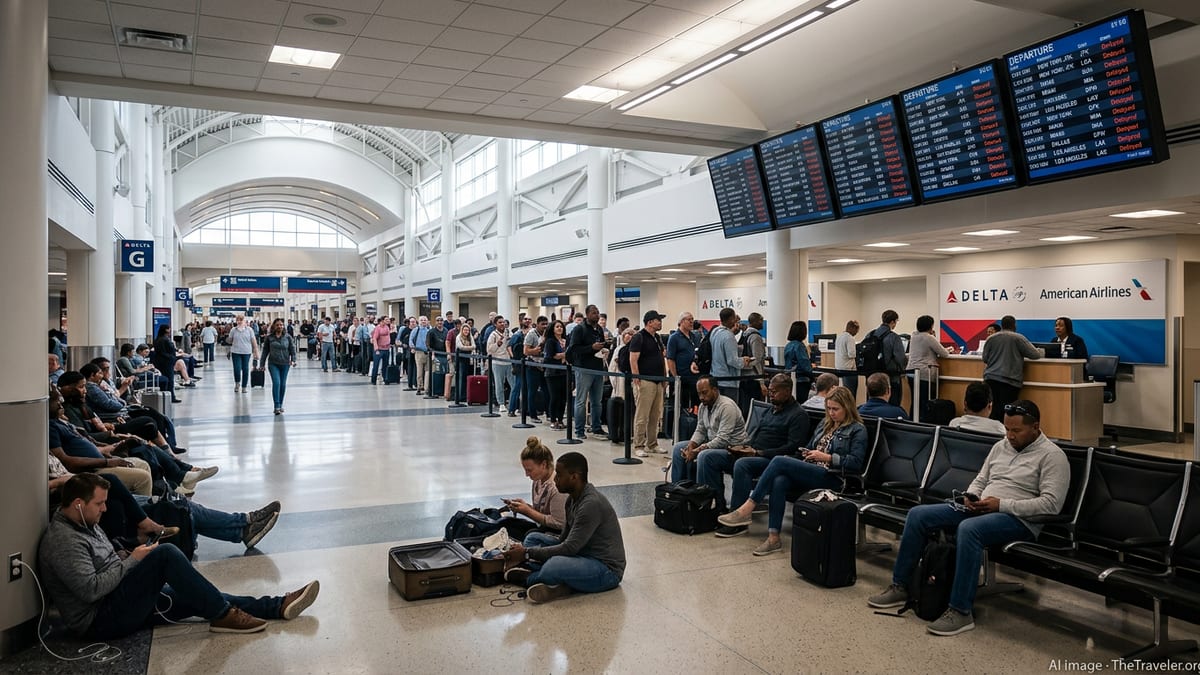
Reports from the airport indicate that dozens of passengers spent multiple nights inside the terminal, attempting to sleep on chairs and floors near the check-in and gate areas while awaiting new itineraries. With rebooking lines stretching for hours during the initial disruption, many travelers said they turned to airline apps and call centers to search for alternatives, often finding that the next available seats to Lima were days away.
One recurring frustration involved access to checked baggage. Publicly available accounts from stranded travelers suggest that bags remained in the airline’s system while passengers weighed whether to wait for an eventual rebooked flight or purchase new tickets on other carriers. The lack of immediate access to luggage left some without clothing changes, toiletries, or medication during their unplanned stay in Atlanta.
Social media posts and local reporting depict crowded gate areas, weary families with children, and travelers improvising sleeping arrangements in quiet corners of the concourses. For visitors who had planned short vacations in Peru, the delays in Atlanta effectively consumed most of their travel window.
Atlanta’s broader congestion magnifies the disruption
The Peru-bound disruption comes as Atlanta faces wider operational strains that have made irregular operations more painful for connecting passengers. Recent coverage of Hartsfield-Jackson describes repeated bouts of crowding, unpredictable security wait times, and a series of weather- and operations-related delays affecting multiple carriers during the early summer travel period.
National aviation tracking data in recent weeks has frequently placed Atlanta among the airports with the highest number of delays and cancellations in the United States. When large carriers at major hubs adjust schedules because of storms, mechanical issues, or crew availability, long-haul international services are particularly vulnerable to last-minute cancellations, in part because they require specific aircraft and specialized crew.
Industry analysis notes that once a transcontinental or long international flight from a hub like Atlanta is lost from the schedule, there may be few immediate options for repositioning aircraft and crews. This can leave travelers bound for destinations such as Lima with limited choices, especially if they are relying on a single daily departure.
Limited remedies leave travelers searching for alternatives
Publicly available information from consumer agencies highlights that passengers in the United States whose flights are canceled by an airline and who choose not to travel are generally entitled to a refund of the unused portion of their ticket. However, compensation for meals, hotels, and other incidental expenses in such situations is not mandated by law and instead depends on airline policies and the cause of the disruption.
Stranded Peru-bound travelers in Atlanta reported a patchwork of assistance, with some receiving hotel and meal vouchers while others said they were advised to make their own arrangements and seek reimbursement later. For travelers without the financial flexibility to purchase new tickets on competing airlines or to pay for several nights of lodging in Atlanta, remaining in the terminal was often the only realistic option.
Travel forums and passenger advocacy groups emphasize that during mass disruption events, available seats on rival carriers quickly disappear or become prohibitively expensive. Travelers attempting to salvage Peru itineraries have described stitching together alternative routings via Miami, Houston, Dallas, or Mexico City, frequently involving overnight stays and tight connection windows.
What Peru-bound flyers can learn from the Atlanta chaos
Travel analysts say the recent Atlanta episode underscores how fragile long-haul plans can be when they depend on a single flight in or out of a major hub. For routes like Atlanta to Lima, passengers are advised to monitor aircraft status, sign up for airline and travel-alert notifications, and consider itineraries that provide longer connection windows, particularly during peak summer and hurricane seasons.
Experts in consumer air travel recommend that international travelers keep essential items, a change of clothes, and any required medication in carry-on bags in case of extended delays or a sudden cancellation. They also encourage passengers to review airline contract-of-carriage information in advance, so that they understand what assistance may be available if a long-haul service is unexpectedly scrubbed.
For those still aiming to reach Peru after the Atlanta disruption, the coming days will likely involve a mix of rebooked departures, rerouted connections through other North and South American hubs, and, in some cases, fully abandoned trips. The episode serves as a timely reminder that even in an era of dense global networks, a single canceled overnight flight can leave hundreds of travelers waiting in a terminal far from their intended destination.