


More news on this day
The Philippines and Paraguay have signed a landmark visa-free travel agreement alongside new cooperation frameworks in Manila, a move widely viewed as a catalyst for closer links between Southeast Asia and South America at a time of shifting global alliances.
Get the latest news straight to your inbox!
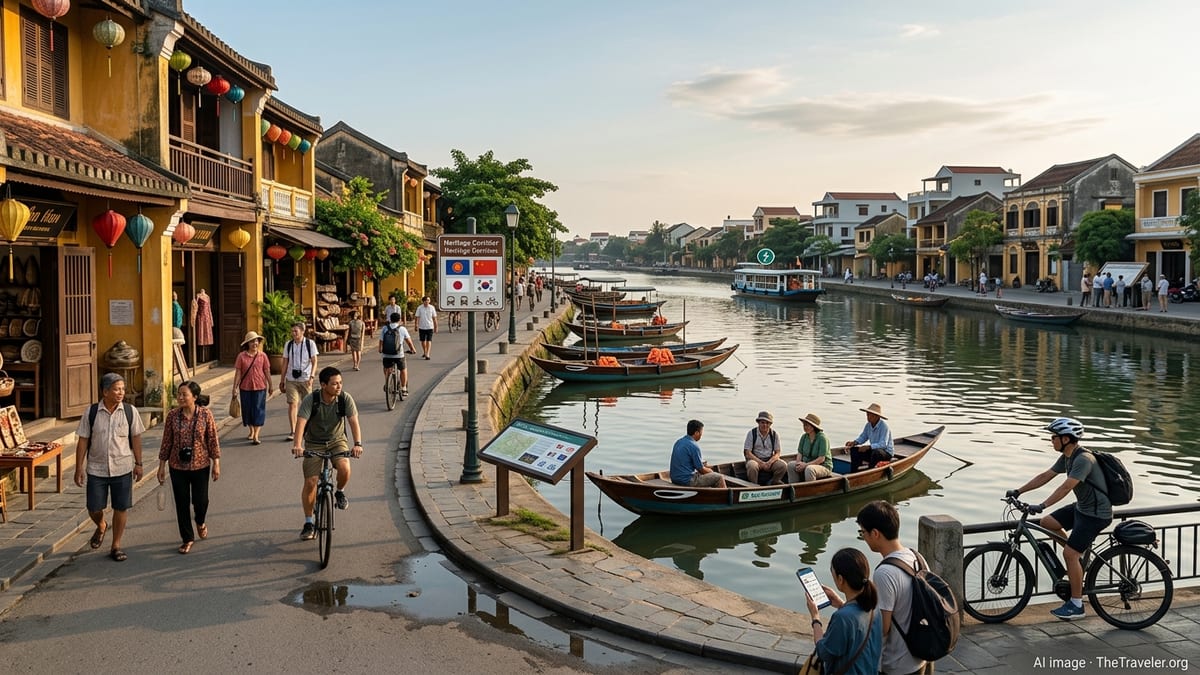
Historic Visa Waiver Marks New Era in Mobility
The newly signed Visa Waiver Agreement for ordinary passport holders between the Philippines and Paraguay removes the need for short-stay visas for citizens of both countries, signaling a significant liberalization of people-to-people exchanges. Publicly available information indicates that the deal was concluded in Manila on May 11, 2026, during the first state visit to the Philippines by a sitting Paraguayan president.
The arrangement builds on earlier unilateral openings. Paraguayan authorities had already allowed Filipino tourists visa-free entry for limited stays, while Philippine regulations list Paraguay among countries whose nationals may enter the Philippines visa free for up to 30 days under existing executive measures. The new reciprocal agreement upgrades that patchwork into a formal, treaty-level understanding that gives travelers from both sides greater predictability.
Policy analysts note that such visa waivers are becoming a key tool for middle powers seeking to expand their diplomatic footprint without extensive security commitments. For Manila, broader mobility for Filipino travelers is also seen as a way to enhance the value of the Philippine passport, with each new agreement strengthening the perception of the country as a trusted, outward-looking partner.
For Asunción, the pact fits into a strategy of deepening ties with Asian markets while maintaining a relatively small diplomatic network. The visa-free deal lowers barriers for Paraguayan businesspeople and tourists looking to connect with Southeast Asia, where the Philippines serves as an English-speaking, services-oriented gateway.
State Visit Reinforces Strategic Convergence
The visa waiver was one of several agreements concluded during Paraguayan President Santiago Peña’s two-day visit to Manila from May 10 to 11, 2026. Reports indicate that the visit, hosted by President Ferdinand Marcos Jr., included the signing of a memorandum of understanding on diplomatic training cooperation between the Philippine Department of Foreign Affairs and Paraguay’s foreign ministry.
According to published coverage, both sides also highlighted plans to expand trade in food products and agricultural commodities. The Philippines has raised interest in exporting tuna, sardines, milkfish and other processed food to Paraguay, while Asunción is positioning itself as a reliable supplier of beef, pork, poultry and grain to help address food security concerns in Southeast Asia’s growing consumer markets.
The visit carried symbolic weight beyond the immediate agreements. Bilateral diplomatic relations date back to 1962 but have historically been low-profile, with Paraguay represented in Manila and the Philippines accredited to Paraguay from its embassy in Buenos Aires. The first-ever state visit by a Paraguayan president underscores a shared interest in elevating a previously modest relationship into a more strategic partnership.
Observers point out that personal diplomacy between leaders has become an important factor in reshaping ties across regions. The Manila talks were framed as the start of a more sustained engagement, with both governments expected to follow up on sector-specific initiatives in energy, logistics, and manufacturing in the coming months.
ASEAN and Mercosur: Bridging Two Regional Hubs
The timing of the breakthrough has heightened its geopolitical resonance. Paraguay is assuming the rotating presidency of Mercosur, South America’s main trade bloc, in the first half of 2026, while the Philippines is preparing to chair the Association of Southeast Asian Nations in the same year, according to official documents and regional policy reports.
This overlap of leadership roles gives Manila and Asunción a rare window to promote cross-regional agendas. Government statements and think-tank analyses suggest that both sides see potential in using their concurrent presidencies to encourage closer consultation between ASEAN and Mercosur on trade facilitation, food security and infrastructure connectivity.
Paraguay has also signaled interest in engaging more deeply with ASEAN’s Treaty of Amity and Cooperation, which provides a diplomatic code of conduct for dialogue partners. Media reports in the Philippines indicate that Asunción is exploring pathways to associate more closely with the treaty, a move that would anchor its engagement with Southeast Asia in established regional norms.
For ASEAN, the budding partnership offers another channel to diversify economic and political linkages beyond traditional partners in North America, Europe and Northeast Asia. Analysts argue that closer interaction with Mercosur members could help ASEAN economies hedge against supply chain disruptions by opening alternative sources of food, energy and raw materials.
Economic and Tourism Upside for Both Sides
The impact of the visa-free regime is expected to be gradual but meaningful. Travel industry observers note that direct tourist flows between the Philippines and Paraguay are currently small, limited by distance, costs and the lack of direct flights. Even so, the removal of visa hurdles is seen as a necessary first step in stimulating niche tourism, student exchanges and business missions.
Filipino travelers with existing itineraries in South America now face one less bureaucratic barrier when adding Paraguay to multi-country trips. On the Paraguayan side, the agreement makes it easier for entrepreneurs, investors and students to explore opportunities in the Philippines, which serves as a hub for business process outsourcing, education and creative industries across ASEAN.
Trade officials and economic commentators point to complementary strengths. Paraguay’s role as an exporter of beef, poultry, soy and other agricultural products aligns with rising food demand in Southeast Asia, while the Philippines can offer processed foods, services exports and potential investments in logistics and manufacturing. Both countries have highlighted the maquila industry in Paraguay and special economic zones in the Philippines as platforms where joint ventures might emerge.
Business chambers in both nations are expected to organize exploratory missions and matchmaking events, taking advantage of the simplified entry rules. Even modest increases in trade and travel can lay the groundwork for broader cooperation in education, culture and technology over the medium term.
Implications for Philippine Diplomacy and Global Ties
The Philippines has been steadily broadening its network of partnerships as part of a wider foreign policy recalibration. Regional indexes and policy studies cited in local media describe Manila as pursuing a more active role as a middle power, seeking not only security ties with traditional allies but also economic and diplomatic linkages with emerging partners across the globe.
The accord with Paraguay highlights this diversification strategy. By engaging a South American state that maintains distinct positions in global debates, including its continued recognition of Taiwan, the Philippines reinforces its image as an agile player capable of working with a range of partners while upholding its own priorities within ASEAN.
For Paraguay, deeper ties with an ASEAN member offer a platform to reach one of the world’s fastest-growing regions without depending solely on larger Asian economies. Analysts suggest that successful cooperation with Manila could serve as a proof of concept for broader South America–Southeast Asia engagement, encouraging other Mercosur and ASEAN members to explore similar initiatives.
As implementation of the visa-free regime and related agreements begins, attention will turn to concrete outcomes: traveler numbers, trade volumes and follow-on accords in areas such as education or renewable energy. The early steps taken in Manila indicate that both the Philippines and Paraguay intend to convert a historic diplomatic moment into a durable bridge between their regions.