


More news on this day
Positioned at the crossroads of Central and Eastern Europe, Poland has leveraged three decades of rapid transformation to become a key European Union economy, a frontline NATO state and an increasingly visible travel destination.
Get the latest news straight to your inbox!
Geography, Population and Place in Europe
Poland is a Central European country bordered by Germany to the west, the Czech Republic and Slovakia to the south, Ukraine and Belarus to the east, and Lithuania and the Baltic Sea to the north. Its territory spans lowland plains, post‑glacial lakes and river valleys, with the Carpathian and Sudetes ranges forming its southern mountain frontier. The Baltic coastline is anchored by major ports and shipyards, reinforcing Poland’s strategic role in north European trade routes.
Eurostat data for 2025 indicate that Poland’s population is just under 37 million, making it one of the European Union’s larger member states by both territory and population. Demographic reporting highlights a relatively young workforce compared with some Western European peers, but also a long‑term trend of population ageing and outward migration that is reshaping regional labour markets.
The country is administratively divided into 16 regions, many of which correspond broadly to historic lands such as Mazovia, Lesser Poland and Silesia. This structure underpins decentralised investment in transport, education and tourism infrastructure, as local authorities promote distinctive cultural identities, industrial heritage and natural landscapes to visitors and investors.
Poland’s accession to NATO in 1999 and the European Union in 2004 consolidated its geopolitical realignment after the Cold War. Publicly available information from European and transatlantic institutions underscores the country’s role as a security hub on the alliance’s eastern flank and as a significant beneficiary of cohesion and recovery funds that support infrastructure, green transition projects and regional development.
Political Landscape and Governance Trends
Poland is a parliamentary republic with a president as head of state and a prime minister leading the government. Political competition has been marked in recent years by a contest between conservative and centrist forces, reflecting broader debates on judicial reforms, media pluralism and the separation of powers. Country assessments published by research institutes describe the 2023 parliamentary elections as a turning point, bringing a new centrist coalition to office after eight years of rule by a nationalist‑conservative party.
The new governing coalition has pledged to recalibrate relations with European partners and to address rule‑of‑law disputes that had strained ties with Brussels. According to published coverage, steps have been taken to adjust controversial disciplinary mechanisms for judges and to restore some institutional checks and balances, although detailed legal and constitutional changes remain a matter of domestic debate and ongoing legislative work.
Observers also point to an active civil society and high voter turnout in recent elections as indicators of public engagement in the democratic process. At the same time, reports note persistent polarisation between urban and rural areas and between different age groups, which shapes public discussion on social policy, media freedom and environmental regulation.
Externally, Poland pursues a foreign policy oriented towards deeper engagement in the European Union and NATO, while maintaining close coordination with neighbouring Baltic states and Nordic partners on security, energy interconnections and support for Ukraine. The country is also expanding ties with markets further afield, using trade promotion agencies and investment frameworks to attract manufacturing, business services and technology investors.
Economic Performance and Structural Shifts
Poland has experienced one of the strongest growth trajectories in Central and Eastern Europe since the 1990s, evolving into a diversified, high‑income economy. World Bank and OECD assessments describe it as the largest economy in the region, with gross domestic product surpassing the one trillion dollar mark in 2025 in nominal terms and real growth averaging around three percent in recent years despite external shocks.
Manufacturing, including automotive components, household appliances and machinery, remains a cornerstone of exports, while business services and information technology have grown rapidly in major cities such as Warsaw, Kraków and Wrocław. European Commission and IMF documents highlight robust integration into EU value chains, relatively low unemployment and moderate income inequality by regional standards, supported by EU‑funded infrastructure and digitalisation projects.
Recent macroeconomic reports indicate that after a period of high inflation linked to global energy and food price shocks, consumer price growth has moderated toward single‑digit levels. Fiscal policy remains expansionary in the short term due to social transfers, defence spending increases and public sector wage adjustments, with international institutions encouraging a gradual consolidation path as growth stabilises.
Energy transition is emerging as a defining structural challenge. Poland still relies significantly on coal for electricity generation, but government strategies and EU climate commitments envisage an accelerated shift toward renewables, offshore wind in the Baltic, and expanded gas and interconnector infrastructure. Environmental agencies note improvements in reducing dependence on Russian gas and an increase in the share of renewable sources, yet also point to persistent air quality concerns in some urban and industrial regions.
Tourism Recovery and Travel Appeal
Tourism has re‑emerged as an important pillar of Poland’s service economy. According to recent tourism policy reviews, the sector’s total contribution to gross domestic product, including indirect effects, was estimated at nearly five percent in 2024, supported by both domestic travel and a rebound in international arrivals. Data compiled by European and national statistical offices show a steady rise in overnight stays and a growing share of visitors from neighbouring EU countries as well as long‑haul markets.
Poland’s appeal to travellers rests on its blend of historic cities, industrial heritage and natural landscapes. Urban centres such as Warsaw, Kraków, Gdańsk, Wrocław and Poznań attract visitors with restored old towns, museums dealing with twentieth‑century history, and contemporary cultural scenes. Beyond the cities, regions like Lesser Poland and Podkarpackie promote access to the Tatra and Bieszczady mountains, while the Masurian Lake District and the Baltic coast focus on water‑based recreation and family holidays.
National tourism strategies place increasing emphasis on sustainable development, promoting rail and cycling routes, protecting sensitive ecosystems and extending the visitor season beyond the summer peak. Environmental profiles published by European agencies highlight both the tourism value of forests, rivers and national parks and the pressures associated with climate change, water management and infrastructure expansion in some high‑traffic areas.
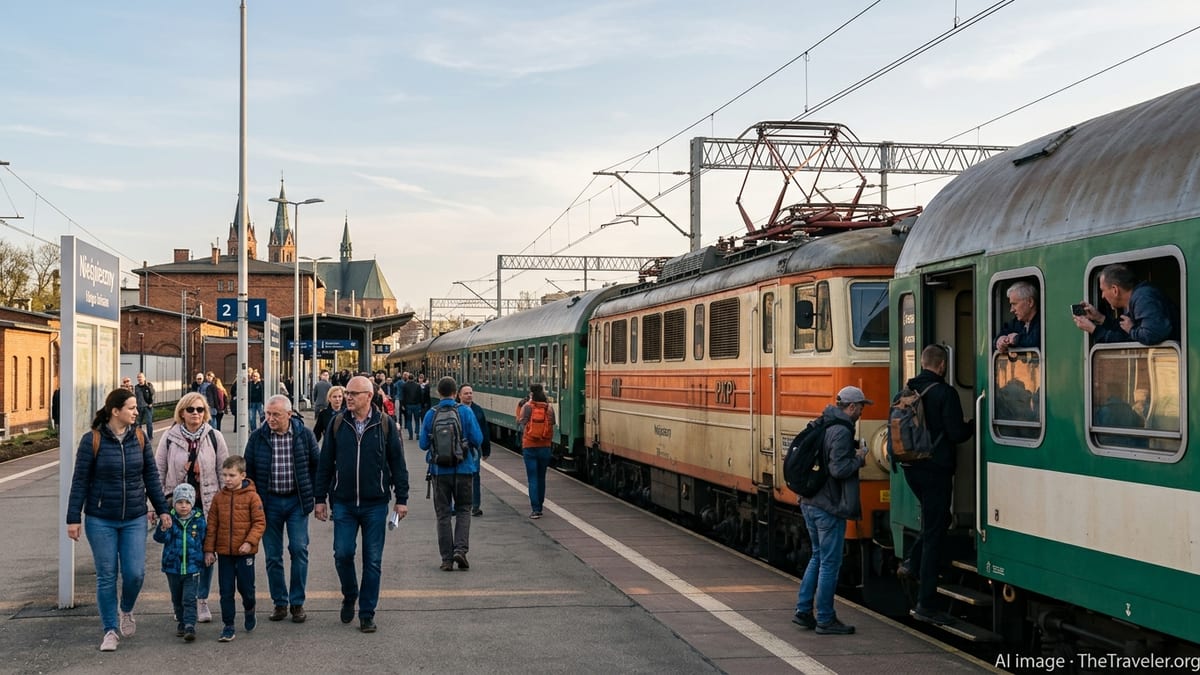
For international travellers, practical considerations include membership of the Schengen Area, which facilitates cross‑border movement with much of continental Europe, and a growing network of low‑cost and flag‑carrier air connections to regional airports. Public information portals stress the availability of modern rail links between major cities, a dense network of intercity buses and a wide range of accommodation, from budget hostels to boutique hotels and spa resorts.
Security Context and Regional Role
Poland’s position on the European Union’s eastern border shapes both its domestic priorities and its international profile. Since the full‑scale invasion of Ukraine in 2022, the country has been a central staging ground for humanitarian support and defence logistics, while simultaneously accelerating its own defence modernisation. Government budget documents and international commentary point to increases in defence spending, new procurement programmes and infrastructure upgrades along key transport corridors.
The security environment has also influenced infrastructure and energy planning. Projects to enhance cross‑border rail and road capacity with neighbouring EU states, diversify energy supplies through liquefied natural gas terminals and interconnect electricity grids are framed not only as economic initiatives but as measures that reinforce resilience against potential disruptions.
At the societal level, surveys and analytical reports suggest that public support for NATO membership and close cooperation with European partners remains high, even as there is active debate over burden‑sharing, migration policy and the pace of climate and digital transitions. This combination of security consciousness, economic integration and democratic contestation continues to define Poland’s evolving profile as both a regional power and a travel destination under close international observation.