


More news on this day
Stretching from the Baltic to the Pacific, Russia remains one of the world’s largest and most closely watched countries, combining vast natural resources, a highly centralized political system and a tourism sector adapting to conflict and sanctions.
Get the latest news straight to your inbox!
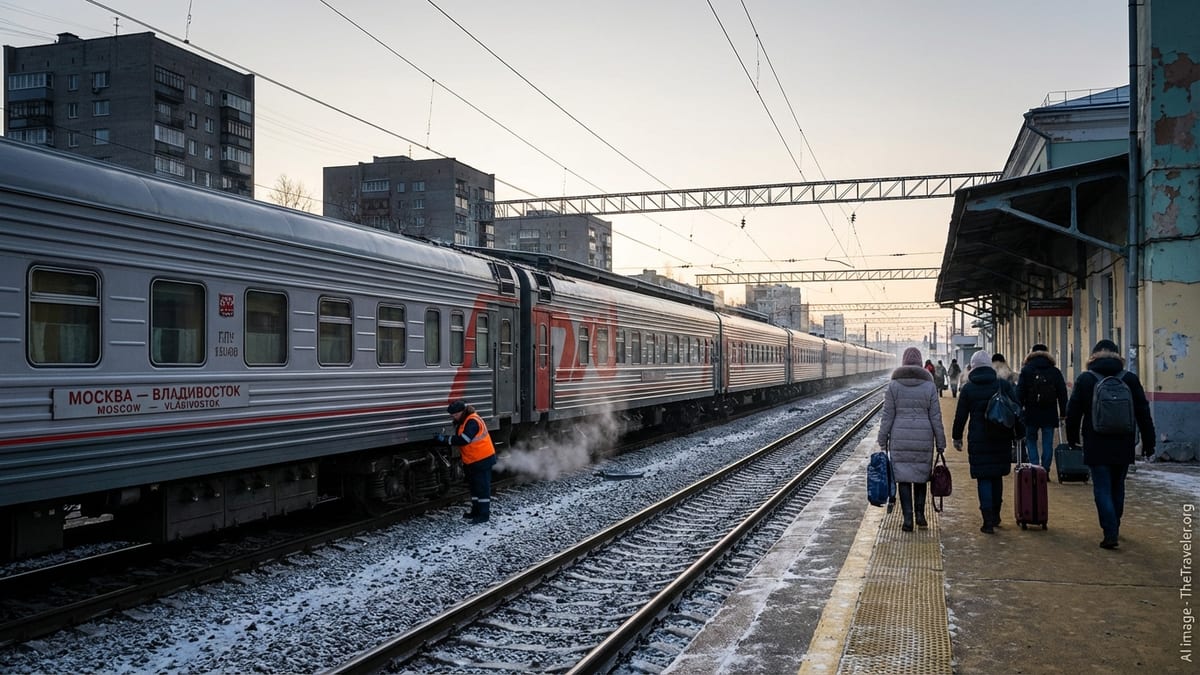
Geography and Demographics Across Eleven Time Zones
Russia is the world’s largest country by land area, covering more than 17 million square kilometers across Eastern Europe and northern Asia. It borders Europe in the west, China and Mongolia to the south, and reaches the Arctic Ocean in the north and the Pacific in the east. This geography underpins both its strategic influence and the logistical challenges of transport, infrastructure and regional development.
Publicly available statistical data indicate that Russia’s resident population is around 146 million people, with a high level of urbanization and major population centers concentrated in the European part of the country. Moscow and Saint Petersburg function as primary gateways for business, culture and what remains of international tourism, while many regions in Siberia and the Far East are sparsely populated despite their resource wealth.
The country is ethnically diverse, with ethnic Russians forming a clear majority and dozens of other groups including Tatars, Ukrainians, Bashkirs and peoples of the North Caucasus. Demographic trends point to a long-term pattern of population ageing, lower birth rates and net emigration, factors that influence labor supply, public finances and longer-term growth potential.
Climate conditions vary dramatically, from relatively mild and humid in parts of western Russia and along the Black Sea coast to extremely cold continental and subarctic climates in Siberia and the Far North. These contrasts continue to shape domestic travel patterns, with winter sports, Arctic cruises and summer seaside resorts all targeting different segments of the Russian and foreign visitor market.
Political System and Constitutional Changes
Russia is formally defined as a federal semi‑presidential republic, but analysts widely describe the political system as highly centralized around the presidency. The federal structure includes more than 80 regions and republics, yet key decisions in security, foreign policy and many areas of economic regulation are concentrated at the national level.
Constitutional reforms approved in 2020 significantly reshaped the country’s institutional architecture. Publicly available information shows that the amendments reset presidential term limits, making it legally possible for the current president to remain in office until 2036, while also expanding references to traditional values and the primacy of national law over certain international rulings. These changes have drawn sustained attention from observers who view them as consolidating long-term political continuity.
The party system is dominated by a pro‑government bloc that holds a large majority in the lower house of parliament, the State Duma. Opposition parties are represented but face regulatory, legal and media constraints that limit their ability to convert public discontent into electoral change. Election monitoring by independent researchers has frequently highlighted irregularities in turnout and vote-count patterns, particularly during national‑level contests.
Civil society organizations, media outlets and online platforms operate in a tightening regulatory environment marked by foreign agent and extremism legislation. These rules affect information flows for both residents and potential visitors, shaping how conditions inside the country are perceived abroad and influencing the international discussion around safety, legal risk and reputational considerations for travel and investment.
Energy‑Driven Economy Under Sanctions Pressure
Russia is categorized among the world’s largest economies when measured by purchasing power parity, with hydrocarbons and commodities at its core. Oil, natural gas, coal and metals provide a major share of export earnings and fiscal revenues, anchoring the federal budget and funding large-scale public spending. The energy sector is also closely linked to infrastructure corridors that connect Russia to Europe and increasingly to Asian markets.
Since the full‑scale escalation of the conflict in Ukraine in 2022, Western sanctions have restricted access to some technologies, financial markets and export destinations. Published coverage from international financial institutions indicates that the Russian economy avoided a deep and prolonged contraction, in part because of redirected energy exports to Asia, strong public spending related to defense and infrastructure, and import substitution efforts. However, analysts also point to elevated inflation, labor shortages and weaker long‑term growth prospects.
Recent estimates from foreign trade and economic research organizations suggest that real GDP growth was modest in 2025, with expectations for 2026 around the low single digits. Government spending tied to the war, social support measures and industrial policy programs has supported headline activity but also increased pressure on the budget and monetary policy, keeping interest rates relatively high compared with pre‑2022 levels.
For travelers and tourism businesses, these macroeconomic shifts have practical implications. Currency volatility affects the affordability of Russia for foreign visitors, while high domestic rates and rising costs influence hotel development, air connectivity and pricing for package tours. At the same time, Russia’s resource‑rich regions are seeking to diversify with new transport links and visitor products, from Arctic cruises to eco‑routes in Siberia and the Far East.
Tourism Landscape: Domestic Boom, Constrained Inbound Travel
Before the pandemic, Russia attracted millions of foreign tourists each year to destinations such as Moscow’s historic center, Saint Petersburg’s imperial palaces, the Golden Ring towns and Black Sea resorts. After the initial collapse in travel during 2020 and 2021, domestic tourism began to recover first, helped by government programs encouraging residents to holiday within the country and by limited options for international travel.
Sectoral studies by Russian market research firms report that the number of tourism trips inside Russia rose by around 10 percent in 2024, reaching more than 100 million journeys, with further growth into 2025. Business media and industry associations highlight renewed demand for traditional seaside resorts, ski areas in the North Caucasus and cultural itineraries around major cities, although pressure on transport capacity and accommodation quality remains an ongoing concern.
Inbound tourism has recovered more slowly and remains capped by sanctions, limited direct air links and heightened security vetting. According to figures cited in Russian news coverage, around 4.8 million foreign tourists visited the country in 2025, an increase on the previous year but still well below pre‑pandemic and pre‑conflict levels. Arrivals have shifted toward markets in Asia, the Middle East and parts of the former Soviet Union, while visitor flows from many Western countries have sharply declined.
Outbound tourism from Russia has also been reshaped. Travel industry reports indicate that international trips by Russian residents rebounded strongly in 2024 compared with earlier pandemic years, with destinations such as Turkey, the United Arab Emirates and a limited number of visa‑friendly or sanction‑neutral countries taking a larger share. However, recent domestic reporting points to signs of cooling demand in mid‑2026, reflecting higher travel costs, currency moves and security‑related disruptions to transport and fuel supply.
Practical Considerations for Future Travel
For international travelers considering Russia in the coming years, the operating environment is more complex than in the previous decade. Air connectivity from many Western hubs is reduced or routed through third countries, increasing travel times and often raising ticket prices. Visa regimes can be subject to change, and travelers are advised by their respective governments to stay informed about sanctions, financial restrictions and insurance coverage before booking.
On the ground, key urban destinations maintain extensive cultural offerings, from museums and theaters to culinary and design scenes that have adapted to changing import patterns and the exit of some foreign brands. Regional destinations emphasize nature and outdoor experiences, including Lake Baikal, Kamchatka’s volcanic landscapes and river cruises along the Volga and Yenisei, although access can be seasonal and infrastructure uneven.
Security assessments vary by country, with some travel advisories urging citizens to avoid non‑essential travel due to the ongoing conflict and the risk of arbitrary enforcement of local laws. Publicly available advisories generally recommend that travelers who do decide to visit register with consular services, monitor local media and be prepared for changes to flight schedules, payment systems and telecommunications access.
For the global tourism industry, Russia’s evolving profile illustrates how geopolitics, sanctions and domestic policy can rapidly remake a major destination’s connections to international travel flows. Whether Russia eventually regains a larger share of global arrivals will depend not only on its own infrastructure and marketing, but on the broader trajectory of its relations with key source markets and the security environment across the wider region.