


More news on this day
Ponant Explorations Group and the Woods Hole Oceanographic Institution are expanding their collaboration in the polar regions, unveiling a new Polar Ocean Image Collection, artificial intelligence whale detection tools and an expanded slate of expedition-based climate research programs aboard select expedition ships.
Get the latest news straight to your inbox!
New Polar Ocean Image Collection Targets the Frozen Frontiers
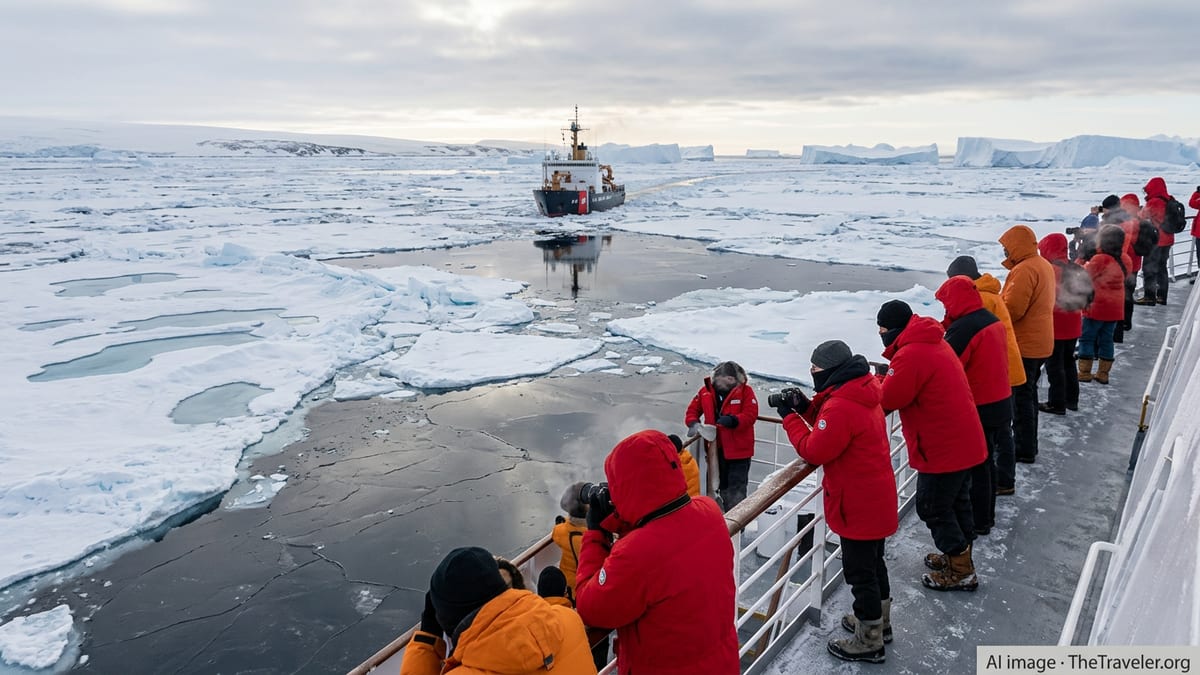
Publicly available information released in early May indicates that Ponant Explorations Group and Woods Hole Oceanographic Institution have launched a Polar Ocean Image Collection designed to spotlight the rapidly changing Arctic and Antarctic. The collection is integrated into the existing Ocean Image Bank curated by The Ocean Agency and is framed as a global resource for researchers, educators and media organizations focused on polar science and conservation.
Reports on the initiative describe more than 500 images contributed by over 30 photographers, including members of Ponant’s onboard photo teams. The imagery documents ice shelves, wildlife and fragile polar ecosystems that are difficult and costly to reach, leveraging Ponant’s six polar-operating vessels, among them the hybrid-electric icebreaker Le Commandant Charcot. Organizers indicate that photographers sailing on future voyages will continue to add material, turning the collection into a living visual record of the cryosphere.
The images are being made available for non-commercial use at no cost, positioning the Polar Ocean Image Collection as both an educational tool and an awareness campaign. Conservation groups, classroom teachers and newsrooms are expected to draw on the new polar imagery to illustrate research findings, climate reports and storytelling about environmental change in high-latitude regions.
The project is also being aligned with the United Nations Decade of Action for Cryospheric Sciences running from 2025 to 2034. According to published coverage, the partners view the image bank as a way to connect that global framework with on-the-water documentation of glaciers, sea ice and polar wildlife that are central to understanding climate-driven shifts in the ocean.
AI Whale Detection Systems Aim to Cut Ship Strikes
Alongside the image initiative, Ponant and Woods Hole Oceanographic Institution are rolling out artificial intelligence whale detection technology aboard selected expedition vessels. Press materials and trade coverage describe systems capable of identifying whales up to several miles away, using a combination of optical and thermal cameras paired with trained AI models.
The technology is intended to alert bridge teams to nearby marine mammals in time to adjust speed or course, reducing the risk of collisions in regions where whale populations are recovering yet remain vulnerable. Industry analyses frequently cite commercial shipping as a major contributor to documented whale strikes, and project backers are positioning the Ponant deployments as a test bed for wider adoption across global fleets.
Data from these AI detection systems will also be shared with scientists, expanding baseline information on whale presence, movement and behavior in remote polar waters. By operating in the Arctic and Antarctic shoulder seasons, Ponant’s ships can collect observations during periods when dedicated research vessels may be scarce, adding time-series records that are valuable for long-term conservation planning.
Project descriptions suggest that the same sensor suites and algorithms could extend to other megafauna, including seabirds and large fish species. The partners are indicating that insights from these trials could eventually inform broader wildlife management strategies and policy recommendations in sensitive shipping corridors.
Robotics and Expedition-Based Climate Research at Sea
The expanded collaboration also includes deployment of advanced robotics and scientific instruments on board Ponant ships as platforms of opportunity. Information released by Woods Hole Oceanographic Institution highlights the use of underwater vehicles such as the RESQ Robot, a compact, turtle-inspired system engineered for close-range, low-disturbance observation of marine animals and habitats.
Equipped with high-resolution cameras and acoustic imaging, these robots can document feeding behavior, migration and ecosystem health while minimizing stress to wildlife. Field tests on Le Commandant Charcot and other Ponant vessels are expected to generate detailed visual and acoustic datasets, complementing measurements from traditional oceanographic sensors installed on the ships.
Climate-focused work is central to the program. Woods Hole Oceanographic Institution has been developing new monitoring systems for Antarctic ice shelves and contributing to research on carbon cycling and ocean-based climate solutions. By embedding scientists and instruments aboard expedition cruises, the institute can run multi-year observational projects in places where logistical support is otherwise limited, while Ponant showcases these efforts as part of its science-led brand positioning.
Voyage itineraries are increasingly being designed around scientific priorities, with ship routes providing repeat access to key fjords, ice margins and open-ocean stations. Public information about the partnership emphasizes that these expeditions double as mobile laboratories where climate processes, from ice melt to ocean circulation, are documented in real time.
Guest Participation and Education on Future Polar Voyages
The collaboration is also reshaping the passenger experience on Ponant’s expedition vessels. Reports indicate that on select journeys, guests will be invited to submit their own images for potential inclusion in the Polar Ocean Image Collection, turning travelers into contributors to a shared scientific and educational resource.
Program outlines describe daily briefings, lectures and deck-side observations led by onboard scientists, photographers and naturalists. These sessions are expected to explore topics ranging from glaciology and marine biology to remote sensing and the ethics of climate intervention, tying what guests see outside the ship’s windows to the datasets being collected for research.
Looking ahead, an Antarctic voyage branded as “Antarctica: Ocean (Re)Imagined” and scheduled for December 2027 is being promoted as a showcase for the partnership. Ocean scientists from Woods Hole Oceanographic Institution are slated to join the itinerary, offering a deeper look at field methods, data interpretation and the wider role polar regions play in the global climate system.
By combining open-access imagery, AI-powered marine mammal protection and hands-on climate research, the Ponant and Woods Hole Oceanographic Institution collaboration is evolving from a conventional sponsorship into an integrated science platform. The initiative positions polar expedition cruising as both a window into the planet’s most vulnerable waters and a tool for advancing the knowledge needed to protect them.