


Port Everglades in Fort Lauderdale is one of the busiest cruise ports in the United States, and for first-time cruisers the sheer size and constant movement can feel overwhelming. With a little planning, though, it is one of the easiest ports to navigate. This guide walks you through what to expect, from finding your terminal and getting from the airport, to parking, hotels, rideshares, security and luggage tips, using real-world examples to help you plan a smooth embarkation and stress-free return home.
Get the latest updates straight to your inbox!
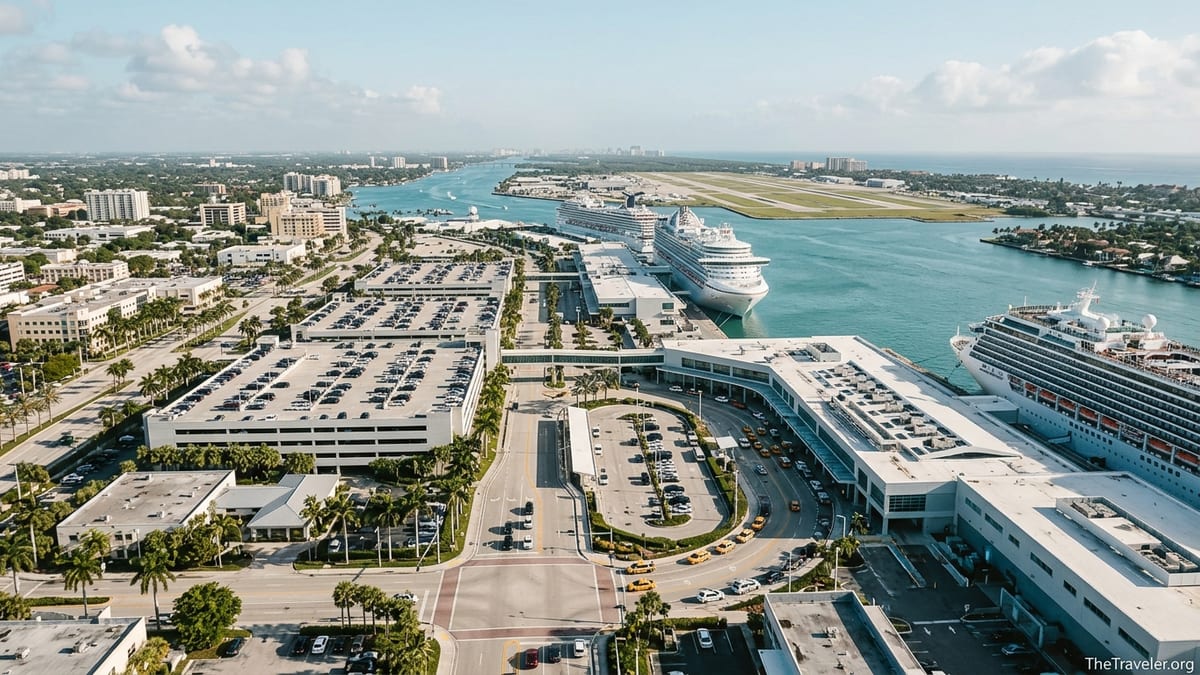
Where Port Everglades Is and How the Cruise Terminals Work
Port Everglades sits between Fort Lauderdale and Hollywood on Florida’s southeast coast, just south of downtown Fort Lauderdale and immediately east of Fort Lauderdale-Hollywood International Airport. Driving in, most cruise passengers use one of three main entrances at 17th Street, State Road 84 or the I-595 East / Eller Drive approach, each with a security checkpoint where adults are asked to show government-issued photo ID. The port sprawls across multiple basins and piers, so it is important to know your exact terminal number before you arrive.
The cruise area of Port Everglades is divided into two main clusters of terminals commonly referred to as Northport and Midport, plus a few additional berths further south. Major lines such as Royal Caribbean, Celebrity Cruises, Princess, Holland America, Carnival, MSC Cruises and Disney Cruise Line all use Port Everglades regularly, and each may be assigned different terminals depending on the ship and day. For example, Royal Caribbean often uses the large, modern Terminal 18 for its Oasis-class ships, while Celebrity frequently sails from Terminal 25 across the basin. Assignments can change as the schedule shifts, so always check your cruise documents or the cruise line’s app a day or two before sailing.
The terminal experience itself is straightforward but varies in age and design. Newer terminals like 18 and 25 have spacious check-in halls, escalators, large security screening areas and plenty of seating, while older buildings may feel more compact. All currently have standard cruise terminal amenities such as restrooms, check-in counters, security scanners and basic Wi-Fi. Because there can be several large ships in port on a single Saturday or Sunday, the port can feel extremely busy; arriving within your assigned check-in window is one of the simplest ways to avoid the longest lines.
First-time visitors are often surprised by how close the terminals sit to each other. In Midport, for instance, Terminal 19 is directly opposite Terminal 25 across the street, and it is possible to walk between several adjacent buildings once you are inside the secure area. That said, you should not plan on walking from one end of the port to the other with luggage; distances can be long, sidewalks inconsistent, and traffic heavy. If you discover you are dropped at the wrong building, it is usually faster and safer to ask a port staff member or police officer for directions to the correct terminal than to wander on your own.
Airport Access and Ground Transportation
One of Port Everglades’ biggest advantages is how close it is to Fort Lauderdale-Hollywood International Airport. The airport is roughly 4 miles from the port, and in normal traffic the ride takes about 10 to 15 minutes by taxi or rideshare. Broward County and the port itself recommend allowing at least 45 minutes from flight arrival to cruise check-in to collect luggage and transit to the terminal, and more if you are checking bags or flying at peak times like mid-morning on Saturdays.
From Fort Lauderdale airport, ground transportation to the port is straightforward. After collecting bags, you follow signs to the rideshare and taxi pickup areas outside the terminals. A typical UberX or Lyft ride from the airport to Port Everglades often runs in the approximate range of 15 to 25 dollars per car before tip, depending on traffic and surge pricing, while a standard taxi may fall in a similar band with a metered fare. Shared shuttles such as Go Airport Shuttle or SAS Transport regularly advertise per-person rates that are competitive for couples or small groups, for example around the low to mid-teens per person between FLL hotels, the airport and the cruise port. Many cruise lines also sell airport-to-pier transfers that are charged per person and bundled with your cruise reservation.
If you are flying into Miami International Airport, expect a longer ride of about 30 to 45 minutes by car, depending on traffic on Interstate 95. Uber, Lyft and taxis all serve this route, and some third-party shuttle companies offer fixed-rate transfers for cruisers who prefer to budget in advance. Budget-conscious travelers sometimes take the Tri-Rail commuter train between Miami and Fort Lauderdale, then switch to a taxi or rideshare from the Fort Lauderdale station to Port Everglades, but this adds complexity and time. For first-time cruisers with luggage in tow, a direct car service or rideshare from Miami is usually worth the extra cost.
If you are already in the Fort Lauderdale area, many pre-cruise hotels offer shuttle service to the port. For instance, hotels clustered around 17th Street Causeway and the airport / cruise-port district often advertise shuttle transfers for a small fee per person. Some properties near the airport include complimentary shuttle service from FLL to the hotel, then charge a per-person fee for the ride from hotel to port. It is important to check whether these shuttles run on a timetable or on demand; many operate in fixed waves, which can feel crowded on peak cruise mornings, so having Uber or Lyft as a backup gives you flexibility if the shuttle is full or delayed.
Parking at Port Everglades and Nearby Options
Drivers will find Port Everglades generally easy to reach from Interstates 95, 75 and 595. Once inside, on-site parking is one of the most convenient options for cruise passengers, especially for shorter sailings. The port operates two main multi-level garages, one near the Northport cluster and one near Midport, along with several secured surface lots. Together these facilities offer more than 5,500 spaces within walking distance or a short shuttle ride of most cruise terminals, and they are patrolled and fenced, which many travelers appreciate for peace of mind.
Official port parking is typically charged per day, with a daily maximum that has in recent years been in the neighborhood of around 20 dollars per day for standard vehicles. The rate begins when you pull a ticket at the garage or lot and is calculated based on calendar days or 24-hour periods, depending on the tariff. This means that for a seven-night cruise, you should budget for eight calendar days of parking, from embarkation morning through disembarkation day. For example, a couple driving from Orlando for a seven-night cruise might expect to pay somewhere around 160 dollars plus tax for on-site parking if the daily rate is 20 dollars. There are also short-stay hourly or flat-fee options intended for day visitors or those picking up or dropping off passengers.
Several private off-site parking lots cater to cruise passengers within a short shuttle ride of Port Everglades. These lots often advertise lower daily rates than the port, sometimes in the high single digits to low teens per day, and include free shuttle transfers to and from the terminals. For example, a lot might charge something like 10 dollars per day and offer a complimentary shuttle that runs every 20 to 30 minutes on cruise days. The trade-off is extra transfer time, a need to wait for the shuttle, and a less straightforward experience on disembarkation morning when multiple ships are in port and shuttles crowd the pickup areas.
Another popular strategy is booking a “park and cruise” hotel package. Many mid-range chain hotels clustered near the airport or along 17th Street Causeway let guests leave a car for the duration of the cruise if they book at least one pre-cruise night at a special rate. A typical package might cost slightly more than the hotel’s best flexible nightly rate but include up to seven or ten nights of parking and scheduled shuttle rides to the port. As an example, a hotel might quote a package of around 260 dollars for one night plus up to ten days of parking for one vehicle and shuttles for two guests, which will be cheaper than paying daily garage rates for a long sailing. The main drawback is that shuttle times can be limited and may not align perfectly with your assigned boarding window, so you might either wait at the hotel or queue outside the terminal.
Taxis, Uber, Lyft and Other Local Transport
For many first-time cruisers, using Uber or Lyft between the airport, hotel and Port Everglades is the simplest option. Rideshare services operate freely in the Fort Lauderdale area, and the short distance between FLL, nearby hotels and the cruise terminals keeps fares modest by big-city standards. For instance, travelers frequently report paying in the range of 10 to 20 dollars for an UberX ride from an airport hotel on Griffin Road or 17th Street to the port entrance in normal traffic, plus any tip. For families or groups with several suitcases, upgrading to a larger vehicle such as UberXL only adds a small premium but provides more space and comfort.
Taxis line up at both the airport and the cruise terminals, providing a reliable alternative if your phone battery is low or rideshare prices are surging. At FLL, you will find an organized taxi stand outside each terminal’s baggage claim area, with attendants directing passengers to the next available cab. Fares are metered, and drivers are accustomed to short hops to Port Everglades as well as longer runs down to Miami Beach or up to Palm Beach County. Taxis are especially handy early in the morning or late at night when rideshare availability may be thinner.
Shared shuttles can be cost-effective, particularly for solo travelers. Companies that specialize in cruise transfers often run small buses or vans between FLL hotels, the airport and Port Everglades, charging a per-person fee. A solo cruiser staying near the airport, for example, might pay roughly the low teens in dollars to ride a shared shuttle to the pier, while a family of four might discover that a single UberXL at 18 to 25 dollars total is cheaper and more flexible. Some cruise lines operate their own branded buses, especially for guests who purchase air through the line, but these typically cost more per person than rideshares or local shuttles and depart on fixed schedules.
One thing to keep in mind is that the exact pickup points for rideshares inside the port can be confusing, particularly at disembarkation when thousands of passengers leave multiple ships at once. Usually, drivers meet you on the arrivals side of your terminal or in designated rideshare lanes nearby. It is wise to move away from the densest crowd at the exit doors, confirm your terminal number in the app, and be ready to describe a clear landmark like a signpost or crosswalk to your driver. If the app shows unexpected surge pricing when you disembark, waiting 10 or 15 minutes or walking a short distance to a less crowded pickup area can sometimes reduce the fare.
Choosing a Pre- or Post-Cruise Hotel
Staying in Fort Lauderdale the night before your cruise is one of the best ways to reduce stress, especially in winter when air travel is more prone to delays. The most convenient areas for Port Everglades are the airport / cruise-port district, the 17th Street Causeway corridor, and the beachfront strip a short drive away. Each offers a slightly different balance of price, atmosphere and convenience. Airport-area hotels, including well-known brands in the budget to mid-range categories, are typically the most practical choice for early-morning departures. Many of these properties offer complimentary airport shuttles and optional paid transfers to the cruise port.
The 17th Street Causeway area is particularly popular with cruisers. Here you will find a concentration of mid-range hotels, shopping centers, grocery stores, chain restaurants and local dining, all within a 5 to 10 minute ride of most cruise terminals. Properties in this district often market cruise packages that include shuttles, and some are close enough that a short taxi or rideshare ride to Port Everglades costs under 15 dollars. For example, a family staying at a mid-range chain near 17th Street might check in on Friday evening, walk to dinner at a nearby restaurant, and take a quick Uber to Terminal 18 at their assigned boarding time on Saturday morning.
Beachfront hotels appeal to travelers who want to add a mini-vacation before or after their sailing. The strip along Fort Lauderdale Beach offers a wide range of accommodations from upscale resorts to boutique properties and condo-style hotels. While these hotels are only a 10 to 20 minute drive to the port in normal traffic, they rarely offer complimentary cruise shuttles, so you will generally use a taxi or rideshare. A typical Uber from a hotel along A1A near Las Olas Boulevard to the port might run roughly 15 to 25 dollars depending on time of day. Budget travelers who still want some beach time sometimes split their stay, booking one night at an airport hotel for embarkation and one night at the beach after returning.
When evaluating hotel deals, pay close attention to what is included and what is not. A rate described as “cruise and park” might cover extended parking for your car but charge extra for shuttle seats, or include shuttle one way but not the return. Some hotels require you to book directly with the property to access these packages rather than through online travel agencies. It can help to run the numbers both ways: compare a regular nightly rate plus on-site port parking and Uber rides with an all-in package including parking and shuttles. Often the price difference is small once you factor in taxes and fees, so choose the option that gives you the most flexibility and comfort.
Security, Check-In and Luggage Handling at the Port
Security at Port Everglades is a partnership between the port’s public safety division, local law enforcement and federal agencies. Before reaching your terminal, you will pass through a gate where officers may ask to see your cruise documents and government-issued photo ID for all adults in the vehicle. This checkpoint controls vehicle access to the secure areas of the port. Once you arrive at your specific terminal, you will repeat this verification at the building entrance when you present your boarding documents to staff.
Luggage handling is similar to most major cruise ports. At the curb outside your terminal, uniformed porters with rolling bins collect large suitcases and tagged bags. You leave your checked luggage with them, keeping carry-on bags that contain your documents, medications, electronics, valuables and a change of clothes. The porters then deliver the checked bags into the terminal where they are screened and loaded onto the ship. Later in the afternoon or evening, your luggage appears outside your stateroom door. Tipping porters is customary; many travelers tip in the range of 1 to 2 dollars per bag, or a little more for oversized or heavy items, in cash.
Inside the terminal you will go through an airport-style security screening with X-ray machines and metal detectors. Cruise lines restrict items such as irons, candles, weapons and certain beverages, and security officers have latitude to confiscate prohibited items, so it is wise to check your line’s list before packing. You also need your boarding pass, passport or other approved ID, and in some cases proof of any required visas. While health-related requirements such as vaccine proof have largely eased compared to earlier years, policies can vary based on destination and the current situation, so always confirm your cruise line’s instructions a week or two before departure.
Boarding is typically organized by time windows or boarding groups, which are either assigned in advance through online check-in or given at the terminal. Arriving too early can mean waiting in a holding area before your group is called, especially if the ship is still disembarking previous passengers. Arriving too late risks missing your scheduled embarkation if there are delays at airport baggage claim or on the highway. A common strategy for local drivers is to aim for late morning or early afternoon arrival, for example between 11:30 a.m. and 1:30 p.m., which usually avoids the earliest rush yet leaves a buffer before the all-aboard deadline.
First-Time Cruise Tips Specific to Port Everglades
First-time cruisers can make their day at Port Everglades smoother by planning a realistic timeline. If you are flying in on the same day as your cruise, try to land at Fort Lauderdale airport no later than mid-morning, for instance between 9:00 and 10:00 a.m., to allow for possible delays. This gives you time to collect your bags, ride 10 to 15 minutes to the port and still arrive during your designated check-in window. Those flying into Miami should build even more cushion, considering the longer drive. Many experienced cruisers simply prefer to fly in the day before and stay at an airport or 17th Street hotel so that travel disruptions are less likely to cause missed sailings.
Another useful tactic is packing a well-thought-out carry-on bag. Because your checked luggage may not reach your stateroom until late afternoon, you should bring a small backpack or rolling bag with medications, cruise documents, swimwear, sunscreen, basic toiletries and a change of clothes. That way you can enjoy the pool or explore the ship even if your main suitcases have not yet arrived. Inside the terminal, you will be standing and walking through queues, so wearing comfortable shoes and keeping valuables securely zipped or in an interior pocket is important. The port is busy but well monitored, yet the usual travel common sense still applies.
On disembarkation day, timing matters too. Cruise lines usually offer “self-assist” disembarkation for guests who carry all their own luggage off the ship, which can begin quite early, sometimes around 7:00 a.m. This can be ideal if you have a mid-morning flight from FLL and feel comfortable rolling your own bags through customs. Traditional disembarkation, where you place tagged luggage outside your cabin the night before, follows in waves based on tag colors or numbers. If you have a late morning or early afternoon flight, you can often enjoy a more relaxed breakfast and choose a mid-range disembarkation group instead of rushing off with the first wave.
Transportation back to the airport or hotel is generally very easy from Port Everglades, but lines can form. It is common to see long queues for taxis and rideshares shortly after the earliest disembarkation groups exit the terminal. Waiting 20 or 30 minutes on board until the first surge passes can mean a shorter line and sometimes a lower rideshare fare. If your flight from FLL departs around midday, most cruise lines recommend booking it no earlier than late morning, often suggesting departure times of 11:00 a.m. or later, to allow for disembarkation, customs, the short drive and airport security.
The Takeaway
Port Everglades is one of the most user-friendly cruise hubs in the country, thanks to its proximity to a major airport, abundant hotels and straightforward terminal layout. For first-time travelers, the keys to a smooth experience are knowing your exact terminal, planning your airport or driving route in advance, and leaving yourself enough time buffer for the unexpected. Choosing between on-site parking, an off-site lot or a hotel park-and-cruise package largely comes down to your budget and how much you value simplicity versus savings.
By understanding how security checkpoints work, what to expect from luggage handling, and how taxis and rideshares operate around the port, you can turn what might otherwise feel like a chaotic morning into a calm start to your vacation. Whether you are boarding a quick three-night getaway or a two-week voyage through the Caribbean, a little preparation at Port Everglades goes a long way. With realistic expectations and a flexible mindset, your first encounter with this bustling South Florida port will likely leave you confident enough to return for many cruises to come.
FAQ
Q1. How early should I arrive at Port Everglades before my cruise?
Most cruise lines suggest arriving within your assigned check-in window, which typically starts late morning. For a departure around 4:00 or 5:00 p.m., arriving at the terminal between about 11:30 a.m. and 1:30 p.m. usually balances avoiding the earliest crowds with leaving a comfortable buffer before final boarding. If you are flying in the same day, try to schedule your Fort Lauderdale flight to land by mid-morning.
Q2. Is it better to park at the port or use an off-site lot?
Parking at the official Port Everglades garages and lots is the most convenient option, especially for shorter cruises or travelers with mobility concerns, but it usually costs more per day than off-site facilities. Off-site lots may charge in the high single digits or low teens per day and include shuttle service, which can save a noticeable amount on longer sailings at the expense of a more complex embarkation and disembarkation. For many travelers, the decision comes down to how much you value walking straight to your car versus waiting for shuttles.
Q3. How much does a ride from Fort Lauderdale airport to Port Everglades cost?
Because the distance is only a few miles, Uber and Lyft rides between Fort Lauderdale-Hollywood International Airport and Port Everglades are generally modest, often in the approximate range of 15 to 25 dollars for a standard car in normal conditions. Taxis run on a meter and tend to fall in a similar band. Prices can rise during peak cruise hours, holidays or bad weather, so checking your app for real-time estimates as you land is smart.
Q4. Can I walk from my hotel to Port Everglades?
Even if a map makes it look close, walking from most hotels to the cruise terminals is not recommended. The port is an active industrial area with security checkpoints, heavy truck traffic and limited sidewalks. Hotels on 17th Street or near the airport are only a short drive away, so a quick taxi or rideshare ride costing under 15 or 20 dollars is safer and more comfortable, especially with luggage and Florida’s heat or humidity.
Q5. What identification do I need to enter the port and board the ship?
Adults should carry a government-issued photo ID such as a passport or driver’s license, and many cruises require a passport for certain itineraries. You will need this identification at both the port security gate and the terminal check-in desk, along with your boarding documents and any visas required by the countries on your cruise itinerary. Children’s requirements vary by cruise line and itinerary, so confirm the latest rules well before departure.
Q6. Are there food or shopping options inside the cruise terminals?
Port Everglades cruise terminals provide basic facilities such as restrooms, seating and vending machines or small snack counters, but they are not large shopping malls. Most travelers eat breakfast at their hotel or at the airport before heading to the port and then plan on having lunch on the ship once boarding begins. If you like having snacks or bottled water while you wait, it is wise to purchase them beforehand, observing your cruise line’s policies about bringing beverages on board.
Q7. How does luggage drop-off work at Port Everglades?
At your assigned terminal, porters stationed at the curb collect tagged checked luggage and load it into large rolling bins. You keep a smaller carry-on with your valuables, medications and immediate needs, then proceed through security and check-in. Your larger bags are screened and delivered to your stateroom corridor later in the afternoon or evening. Tipping the porter in cash, often around 1 to 2 dollars per bag, is customary and appreciated.
Q8. Is Wi-Fi available at Port Everglades while I wait to board?
Many of the cruise terminals at Port Everglades now offer basic complimentary Wi-Fi, although speeds and reliability can vary when the buildings are crowded. Some travelers rely on their mobile data instead, especially if their plan includes strong coverage in South Florida. Once you board, your cruise line will offer its own internet packages, which you can usually purchase through the line’s app or at a desk on board.
Q9. What time should I book my return flight after the cruise?
For flights out of Fort Lauderdale-Hollywood International Airport, many cruise lines suggest booking departures no earlier than late morning, often 11:00 a.m. or later, to allow enough time for disembarkation, customs, the 10 to 15 minute ride and airport security. If you choose an earlier flight, consider using self-assist disembarkation, which lets you carry off all your luggage with the first groups. From Miami International Airport, later departure times provide more margin because the drive is longer and traffic can be unpredictable.
Q10. Are there special considerations for travelers with limited mobility?
Port Everglades’ main cruise terminals feature ramps, elevators and curbside drop-off areas designed to accommodate wheelchairs and mobility devices. Cruise lines can often arrange wheelchair assistance from the curb through check-in if requested in advance, and some third-party companies rent scooters or wheelchairs for use ashore and on board. If you are driving, parking in the on-site garages or lots near your terminal usually provides the shortest and most accessible path into the building compared with taking off-site shuttles.