


More news on this day
Passengers using London Gatwick on Sunday 30 August are encountering another busy late‑summer travel day, with live flight data showing a mix of moderate delays and a limited number of cancellations affecting key leisure carriers including easyJet, Tui and Ryanair.
Get the latest news straight to your inbox!
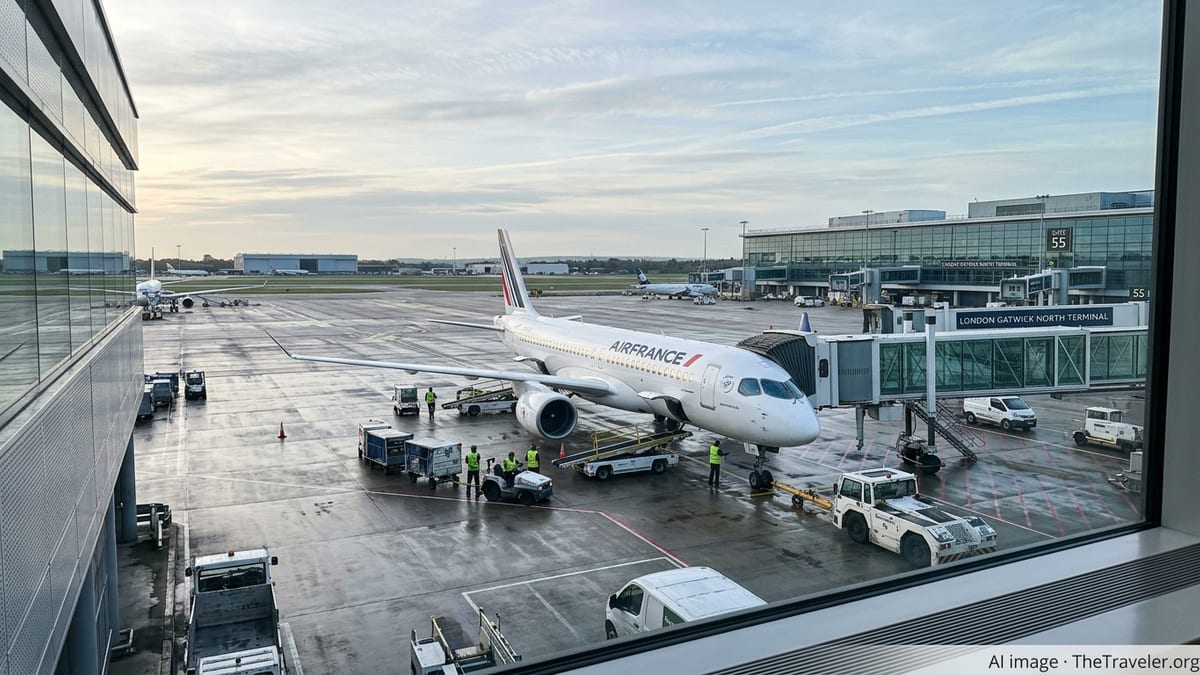
Busy late‑summer schedules keep pressure on Gatwick operations
London Gatwick remains one of the UK’s busiest airports, with traffic broadly back to pre‑pandemic levels and a heavy focus on short‑haul leisure routes across Europe. Publicly available data on recent traffic patterns indicates that late‑August weekends routinely bring dense waves of departures and arrivals, particularly in the early morning and evening peaks, which can translate into knock‑on delays when conditions are not perfectly smooth.
Tool‑based and timetable analysis over the past month shows Gatwick handling well over 500 flights a day across around 200 destinations, with easyJet, Tui and other leisure carriers forming a substantial share of daily movements. That concentration of holiday traffic means that even relatively small pockets of disruption, such as weather‑related air traffic control constraints or minor technical issues, can have a visible impact on departure boards.
On Sunday 30 August, live boards and recent performance data suggest that the airport is operating a broadly full schedule, but with a noticeable scatter of late departures and arrivals. The pattern reflects a continuation of the conditions reported on Saturday 29 August, when monitoring by travel outlets highlighted short‑notice cancellations and rolling delays across several European routes served by Gatwick‑based airlines.
While the majority of flights remain scheduled to operate, the overall picture points to an airport working close to its operational ceiling. That leaves limited margin to recover quickly when individual services run late, and it explains why some passengers are seeing relatively modest delays ripple further into the day.
Impact on easyJet, Tui and Ryanair services
easyJet remains Gatwick’s largest carrier by movements, and recent analytical summaries of the airport’s schedule underline the airline’s central role in short‑haul operations. From March 2026, publicly available guidance confirms that all easyJet flights at Gatwick have been consolidated in the North Terminal, simplifying transfers but also concentrating large passenger flows into a single terminal during peak times.
On Sunday 30 August, easyJet services are generally operating, but tracking data and route‑level histories around Gatwick show typical late‑summer variability, with some departures running behind schedule and a smaller number of services subject to more extended disruption over recent days. Consumer reports published in recent weeks describe cases in which easyJet flights have been cancelled or significantly delayed, leading to overnight stays and rebookings, underlining the importance for today’s travellers of monitoring the airline’s app or website for the latest status.
Tui, which bases a substantial holiday fleet at Gatwick, continues to route most of its flights through the North Terminal, with some services operated by partner carriers from the South Terminal according to current terminal information. The company’s flight‑status tools indicate that Sunday’s programme is largely intact but not immune to delay, particularly on popular Mediterranean and Canary Islands routes where tight turnaround times meet busy airspace at this point in the season.
Ryanair maintains a smaller but growing presence at Gatwick compared with its larger bases at Stansted and other European airports. Publicly available schedule overviews show a compact set of Gatwick routes, and Sunday 30 August appears to follow that pattern, with the majority of flights operating but with isolated delays appearing in live systems. For passengers, this translates less into widespread cancellation risk and more into the possibility of extended gate or onboard waiting times before departure.
Early‑morning rail engineering adds to passenger challenges
Travel to and from the airport is another factor for Gatwick passengers today. National Rail disruption summaries confirm that engineering work in the London Victoria area is affecting services in the early hours of Sunday 30 August, with lines partially closed and amended timetables in place for Gatwick Express and Southern trains.
According to those updates, no Gatwick Express trains are running before around 07:00, and services between approximately 07:00 and 09:00 are operating to a revised timetable with longer journey times. Southern services between London Victoria and Three Bridges or Brighton are also subject to extended travel times until roughly 09:00. After that point, timetables are expected to return closer to normal, but passengers travelling in the morning window are advised by journey‑planner tools to allow extra time.
For air travellers with early departures or tight check‑in windows, the combination of rail alterations and a busy airport schedule increases the risk of arriving later than planned at the terminal. Journey‑planning services recommend checking train times carefully and considering alternative routes, such as Thameslink services via central London, where available. Road access to Gatwick remains open, but heavier drop‑off and parking traffic is likely around the morning bank of departures.
These surface‑transport constraints do not directly cause flight delays, but they do shape the overall passenger experience on a day when the airport itself is already under seasonal pressure. Longer queues at security and check‑in are more likely when large numbers of customers arrive in compressed time windows following gaps in rail service.
What today’s disruption means for passengers
For travellers flying with easyJet, Tui or Ryanair from Gatwick on Sunday 30 August, the prevailing picture is one of mostly operating services accompanied by scattered delays and a limited number of cancellations. Travel‑tracking platforms and airline alerts highlight that, in such conditions, the most important step is to monitor flight status closely from several hours before departure, as timings can change multiple times during the day.
Recent performance data published by aviation‑tracking sites indicates that, on typical busy days at Gatwick, average departure delays of 20 to 30 minutes are not unusual when schedules are tightly packed. While many flights still leave broadly on time, it is common for later‑departing rotations to inherit knock‑on delays from earlier services, particularly on popular leisure routes that operate several times a week or more.
Publicly shared passenger experiences from this summer show that when disruptions do escalate into cancellations, airlines are expected under UK and European rules to provide rebooking, care and assistance, and in some circumstances compensation. However, those outcomes depend on the cause of the disruption, and travellers are often advised by consumer advocates to keep receipts for any additional reasonable expenses incurred while waiting for a replacement flight.
In practical terms, passengers using Gatwick today are being encouraged by a range of travel information services to arrive in good time, build extra buffer into their journeys to the airport, and rely on official airline channels and the airport’s own flight‑tracking tools as the primary source of up‑to‑the‑minute information. With the late‑summer holiday period still in full flow, conditions may remain changeable across the rest of the day.
London Gatwick Airport live flight information
easyJet latest travel information
National Rail engineering works affecting Gatwick Express and Southern