


More news on this day
Portugal has moved to tender a new operating contract for Porto’s light rail network, launching an international public competition to subconcession the operation and maintenance of Metro do Porto across the metropolitan area.
Get the latest news straight to your inbox!
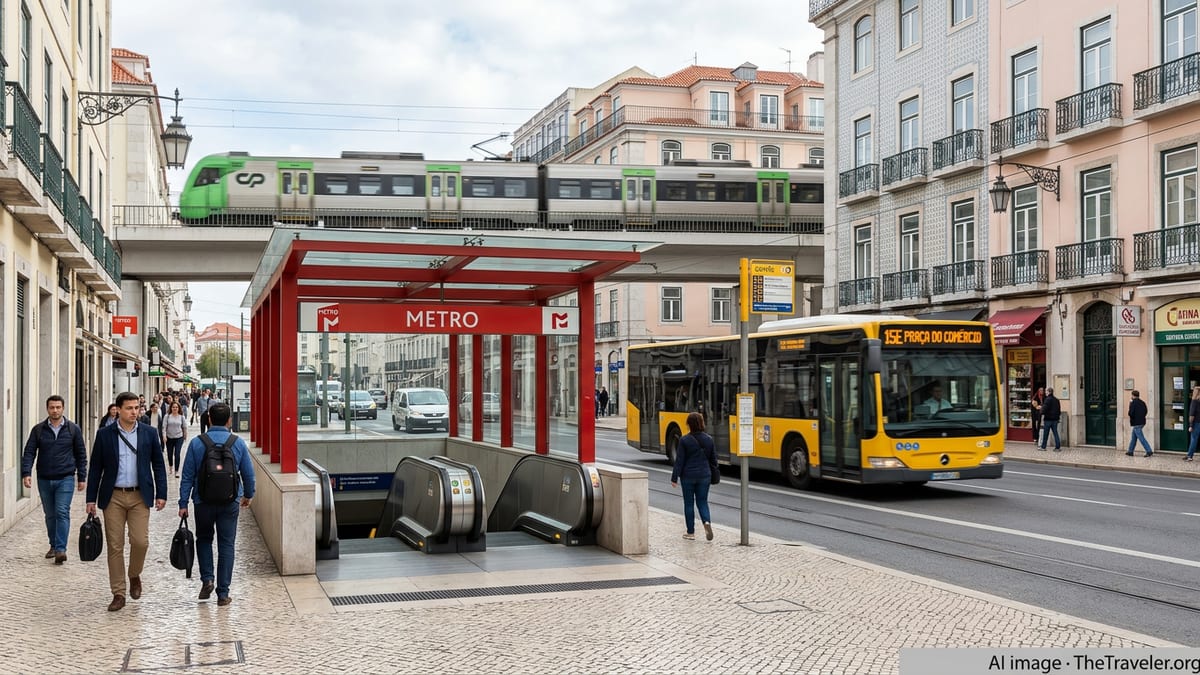
Public private partnership sets new framework for Porto metro
Publicly available information in Portugal’s official journal indicates that the government has approved the launch of a public private partnership for the subconcession of the light rail system in the Porto metropolitan area. A dispatch published in June 2026 outlines the decision to move ahead with a long term contract covering operation and maintenance of the network under a partnership model.
The dispatch refers to preparatory work completed by a project team first mandated in 2024 and subsequently updated in early 2026. That work produced the tender programme and contract specifications that will govern the competition. The new arrangement is intended to frame how a private or mixed consortium will be responsible for running daily services, maintaining rolling stock and infrastructure, and meeting a series of performance obligations.
Legal analysis accompanying the decision notes that the partnership is structured within Portugal’s general regime for public private partnerships and public procurement. The framework emphasizes allocation of operational risk to the subconcessionaire, alongside mechanisms to align service quality and cost efficiency with the objectives of the granting authority.
The step marks a fresh chapter for Metro do Porto, which has previously operated under concession style arrangements and programme contracts. The new tender is expected to shape governance of the light rail system over a multi year horizon, coinciding with the opening of new lines and the arrival of additional rolling stock.
International public tender launched for operating contract
An announcement of procedure published in late July 2026 describes a public tender with international publicity for the subconcession of Porto’s light rail system. The notice identifies the contract as a competition for the “Subconcessão do Sistema de Metro Ligeiro da Área Metropolitana do Porto,” confirming that Metro do Porto is the contracting authority and that the procedure follows an open public tender model.
The tender is being advertised both in the national official journal and in the Official Journal of the European Union, positioning the contract to attract interest from international operators and consortia. The published documentation sets out the internal reference for the process, the type of procedure, and key administrative details, while directing prospective bidders to technical documents such as the programme and specifications.
According to summaries of the tender framework, the subconcession covers the integrated light rail network that serves the Porto metropolitan area, including existing lines and extensions scheduled to open in the coming years. The contract is expected to encompass service planning within agreed parameters, staffing, fleet and systems maintenance, and support services across the network.
The launch of the procedure follows earlier notices this year in the official journal relating to Metro do Porto procurements for signalling, surveillance, and other support functions. Together, these steps indicate that the operator is preparing its assets and systems for the transition to a new contractual regime once the subconcession is awarded.
Government outlines financial and service quality objectives
A communication from the Portuguese government summarizing the decision on Porto’s light rail subconcession highlights a central objective of ensuring that the future partnership does not create additional financial burdens for the state budget. Publicly available information describes the model as one in which the selected operator assumes operational risks, with compensation mechanisms designed to be neutral for central public finances.
The same communication underlines that the tender is intended to guarantee the continuity of what is described as a high quality service for passengers. The partnership structure is presented as a way to secure long term investment in operations and maintenance, while supporting the integration of the metro with other public transport services in the Porto metropolitan area.
Background studies on previous operating contracts for Metro do Porto, including academic assessments of the network’s performance under earlier concession periods, suggest that well designed incentive mechanisms can improve operating efficiency and service reliability. These analyses note that bonus and penalty regimes linked to punctuality, availability and customer satisfaction have been used in past arrangements, and similar tools are expected to feature in the upcoming subconcession contract.
Observers of Portuguese transport policy point out that Porto’s approach aligns with broader trends in European urban rail, where public authorities often retain asset ownership while contracting private partners to deliver operations under long term agreements. The new contract for Metro do Porto is likely to be regarded as a significant case study in this field, given the size of the network and the scale of planned extensions.
Expanding network increases stakes of new operating deal
The timing of the operating tender coincides with a major expansion phase for Porto’s metro. New lines, including the Rubi corridor and other network enhancements, are advancing through construction and testing, with partial openings anticipated over the next several years according to published project updates. Public investment programmes such as Portugal 2030 also reference funding allocations for new rolling stock for Metro do Porto, scheduled to begin arriving in the city from late 2026.
As lines and fleets grow, the complexity of managing the system increases, making the scope of the subconcession contract more extensive than in previous operating cycles. The future operator will be expected to integrate new infrastructure, adapt timetables, train additional staff and embed updated safety and signalling systems while maintaining daily service on existing routes.
Notices in the official journal throughout 2026 show Metro do Porto preparing the ground for this transition with separate tenders for signalling on new routes, ticket control services and complementary support activities. These contracts are typically structured to be compatible with the longer term subconcession, allowing the winning consortium either to assume existing service contracts or to coordinate with specialized providers under the new operating model.
For travellers, the new arrangement is likely to be most visible through service frequencies, cleanliness, ticket inspection practices and integration with other modes. While the legal and financial architecture of the partnership will be of primary interest to potential bidders and policymakers, the ultimate test of the contract will be in delivering reliable, frequent and comfortable journeys across the metropolitan area.
Next steps in the tender and potential timeline for award
With the official launch of the international public tender, prospective bidders now have access to the full set of competition documents, including the programme, technical specifications and draft subconcession contract. These materials outline the eligibility criteria, evaluation methodology and technical requirements that operators must meet to submit a compliant proposal.
Industry practice in comparable European rail tenders suggests that the process is likely to unfold over several stages, beginning with clarification questions and site visits, followed by submission of proposals, evaluation and negotiation of final contract details. While the official notices do not yet specify the expected award date, the timing of the dispatch authorizing the partnership and the publication of the tender indicates that authorities aim to have the new subconcession in place in advance of key network milestones later in the decade.
The eventual contract signing will be followed by a mobilisation period in which the winning consortium prepares to take over full operations. This phase typically involves transferring staff under applicable labour rules, setting up control and maintenance systems, aligning safety certification, and testing processes across the network.
For Porto as a travel destination, the tender represents an important step in securing the long term reliability of a light rail system that has become central to how residents and visitors move around the city. As the competition progresses, operators from Portugal and abroad are expected to assess how the balance of risks and rewards in the subconcession aligns with their strategies for urban rail operations across Europe.