


More news on this day
Portugal has emerged as Europe’s worst performer for flight punctuality, with new data indicating that passengers using the country’s airports collectively lost millions of hours to delays in 2024, intensifying scrutiny of capacity constraints and chronic bottlenecks in its aviation system.
Get the latest news straight to your inbox!
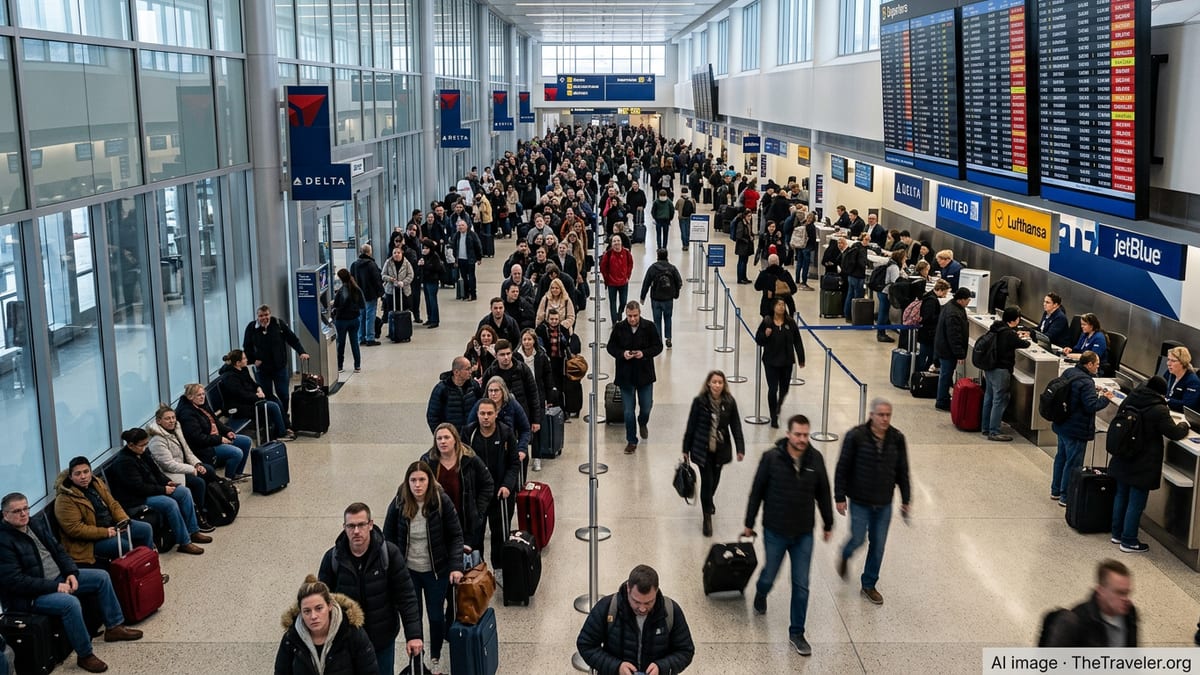
Portugal ranked last for on-time performance
Recent punctuality data compiled from major European airports indicates that Portugal recorded the poorest flight performance in Europe over the past year, both for departures and arrivals. The country fell to the bottom of regional rankings as the share of on-time flights slipped well below the European average.
Industry analyses show that while around two thirds of flights across Europe departed on time in 2024, Portugal’s main gateways, including Lisbon and Porto, lagged those figures by a significant margin. Arrivals fared only slightly better, leaving Portugal as the weakest overall performer among comparable markets.
Lisbon, the country’s busiest hub, has for several years been highlighted in punctuality reports as one of Europe’s most delay-prone airports. The latest figures confirm that, despite traffic still recovering from the pandemic, congestion and operational limits continue to weigh heavily on performance.
The poor record has placed Portugal in sharp contrast with several northern and central European countries that managed to stabilise or slightly improve punctuality in 2024, even as air traffic and staffing pressures remained elevated.
Millions of passenger hours lost to disruption
Calculations based on average delay lengths and passenger volumes suggest that travellers using Portuguese airports collectively lost millions of hours in 2024 as flights ran late or missed scheduled departure and arrival windows. The accumulation of relatively short delays across thousands of services translated into a substantial loss of passenger time.
Economic studies used within the aviation sector often assign a monetary value to each hour of passenger delay, reflecting lost productivity, missed connections and additional expenses for accommodation or rebooking. Applying those benchmarks to the Portuguese data implies that the time lost runs into hundreds of millions of euros in economic cost each year.
Disruption also tends to cascade across the network. Late-departing aircraft from Lisbon and other Portuguese airports can trigger knock-on delays at connecting hubs elsewhere in Europe, amplifying the impact well beyond the country’s borders and adding to broader regional congestion.
For passengers, the consequences are intensely practical: longer queues at boarding gates, missed rail and ferry connections, curtailed holidays and late-night arrivals that oblige last-minute changes to hotel and ground transport plans.
Chronic capacity constraints at Lisbon at the center
A central factor behind Portugal’s poor performance is widely linked to structural capacity constraints, particularly at Lisbon’s main airport. Publicly available analyses have repeatedly described Lisbon as operating close to or at saturation during peak periods, with limited scope to absorb disruptions caused by weather, air traffic control restrictions or technical issues.
Debate over a long-discussed new airport for the capital region has dragged on for years, with successive feasibility studies and changing plans delaying a final decision. As investment decisions have slipped, passenger numbers rebounded faster than infrastructure capacity, leaving airlines and ground handlers to operate in tightly constrained conditions.
The concentration of traffic at Lisbon intensifies the effect. A high share of Portugal’s international flights, including long haul services, passes through a single hub, which magnifies the impact when delays build at specific times of day. Even modest disruptions in the early morning or late afternoon can reverberate across the schedule for the rest of the day.
Other Portuguese airports, including Porto and Faro, have also experienced punctuality issues during peak summer travel, but sector analyses suggest that the structural squeeze in the Lisbon region remains the primary driver of the country’s position at the bottom of European rankings.
Weather, airspace and staffing pressures add to delays
In addition to infrastructure limits, Portugal has been exposed to wider European pressures that have driven up delays across the continent. Reports from aviation bodies highlight a rise in air traffic control restrictions, with en-route delays increasing as traffic recovered and certain control centres struggled with staffing or technical constraints.
Severe weather episodes affecting southwestern Europe, particularly in winter, have further strained operations. Storm systems passing over the Iberian Peninsula in late 2023 and early 2024 disrupted inbound and outbound services at several Portuguese airports, forcing temporary ground stops, diversions and tighter spacing between aircraft for safety reasons.
On the ground, staffing imbalances at peak times have also contributed to slower aircraft turnarounds. Handling agents, security checkpoints and baggage operations faced ongoing recruitment and retention challenges following the pandemic, leaving some airports short of experienced staff just as holiday traffic surged back toward pre-crisis levels.
These combined pressures mean that when a disruption occurs, there is often limited slack in the system to recover. Flights scheduled tightly together leave less room to absorb delays, which then accumulate across the day and spill into subsequent rotations.
What it means for travelers heading to Portugal
For tourists and business travelers planning trips to Portugal, the figures underline the importance of allowing extra time in itineraries that involve tight connections. Travel advisers and consumer advocates commonly recommend longer layovers when connecting through Lisbon or other busy European hubs with elevated delay risks.
Passengers flying to or from Portugal on European carriers are covered by the region’s compensation regime when severe disruption occurs, including long delays and cancellations under defined conditions. However, compensation typically applies only in specific circumstances and does not fully offset the practical inconvenience of extended waits and missed plans.
Travel insurance policies that cover delay-related expenses are increasingly promoted for peak summer and holiday travel, particularly for itineraries that link flights with cruises, tours or time-sensitive events. Policy terms vary, but some products reimburse costs for accommodation, meals and alternative transport when delays exceed set thresholds.
Despite the challenges, Portugal remains one of Europe’s most in-demand leisure destinations, and overall passenger numbers continue to grow. Industry observers note that without decisive steps to expand capacity and improve operational resilience, the gap between demand and punctuality is likely to persist, prolonging the pattern of lost hours for millions of passengers each year.