


Landing at Prague’s Václav Havel Airport is usually straightforward, but knowing what to expect after touchdown can save you time, stress, and money. This practical arrivals guide walks you step by step through passport control, baggage claim, customs, cash and SIM options, and the best ways to reach the city, using real examples from how the airport and Prague’s transport network work today.
Get the latest updates straight to your inbox!
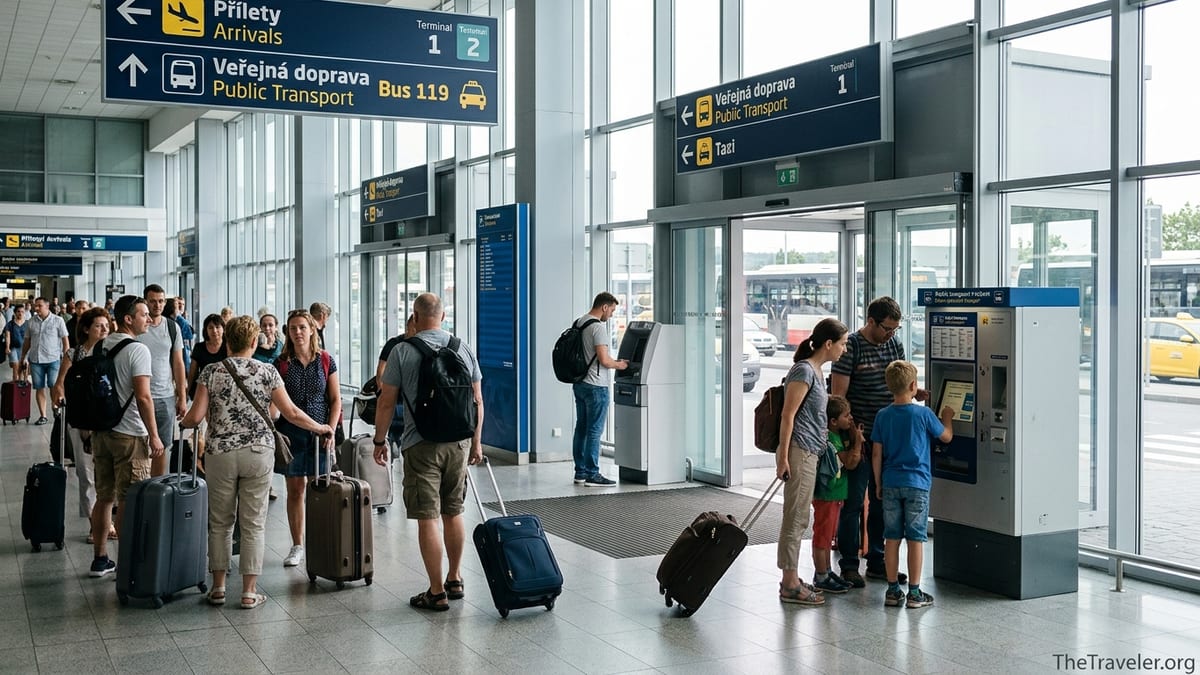
Understanding Terminals, Schengen Rules and Passport Control
Prague’s Václav Havel Airport has two main passenger terminals for regular flights. Terminal 1 handles most non Schengen flights, such as arrivals from the United Kingdom, United States, Canada or Asia. Terminal 2 handles flights from within the Schengen Area, such as Germany, France, Spain, Italy, Austria and many others. Signs throughout the airport clearly indicate “Terminal 1 Non Schengen” and “Terminal 2 Schengen,” which is your first clue about what type of border checks to expect.
If you arrive from outside Schengen, you will go through full passport control and the new Entry Exit System, which collects fingerprints and a facial scan for many non EU travelers. On a busy afternoon, queues for the registration kiosks can add 20 to 40 minutes before you reach the officer. Early morning and late evening flights often move faster. EU and some Schengen residents can usually use dedicated lanes with shorter waits, while many non EU visitors should plan at least an extra half hour before meeting a driver or catching a bus.
Arriving from another Schengen country through Terminal 2 is usually quicker. You will not go through full immigration again and often walk straight from the aircraft through a short corridor directly toward baggage claim. Spot checks still happen, and police can ask for your passport or ID, but in normal circumstances you will be in the public arrivals hall within 10 to 20 minutes of landing if you have only hand luggage and no delays at the gate.
For families or groups arriving on separate flights, it helps to agree a meeting point in advance on the public side of the terminal. The arrivals halls of Terminal 1 and Terminal 2 are connected by a short indoor walkway, so once everyone has cleared border control and customs you can meet between the terminals or at a visible landmark such as the large information desk or the public transport ticket counter.
Baggage Claim, Customs and What Happens Landside
After passport control in both terminals you will follow the standard “Baggage reclaim / Exit” signs to a carousel area. Overhead screens list flight numbers and carousel assignments. Prague is a medium sized airport, so distances are manageable, but during peak times some flights share carousels and bags can take 20 to 30 minutes to appear. Trolleys are readily available in the reclaim area and are free to use, which is helpful if you have ski bags for the mountains or heavier suitcases for a longer stay.
If your luggage does not appear after the belt stops, head straight to the “Lost luggage” or “Baggage claim” desk in the reclaim hall. Here you will need your passport and baggage tag. Staff typically file an electronic report and arrange delivery to your accommodation in Prague if the bag arrives on a later flight. For tight onward train connections, it is safest not to schedule a departure less than two hours from scheduled landing in case of luggage delays.
Customs is straightforward for most travelers. After leaving the baggage area you will see the usual green channel for “Nothing to declare” and the red channel for “Goods to declare.” Most visitors with personal items, typical duty free allowances and regular electronics simply walk through the green lane. Random checks do happen, particularly on flights from long haul destinations, so keep receipts handy for expensive new electronics or high value goods.
As you step into the public arrivals hall you will notice three things almost immediately: illuminated signs for taxi and ride hailing pickup points outside, public transport and Airport Express bus icons near the exits, and a cluster of services such as ATMs, currency exchange counters, SIM card stands and small convenience shops selling drinks, snacks and basic travel accessories. This is where you will make your first decisions about money, mobile data and how to reach the city.
Getting Cash, Using ATMs and Handling Currency Exchange
Prague and the rest of Czechia use the Czech crown, abbreviated CZK or Kč. You will find several ATMs in the arrivals halls of both terminals, usually operated by major local banks and by independent providers. For better rates and lower fees, it is generally wiser to choose machines belonging to large Czech banks and to decline any “dynamic currency conversion” that offers to charge you in your home currency. Select “charge in CZK” instead and let your own bank handle the exchange rate whenever possible.
As a real world example, a typical cash withdrawal at a bank ATM for the equivalent of around 2000 to 3000 CZK might incur only your home bank’s foreign transaction fee, while the same withdrawal with dynamic conversion at the machine could cost several percent more. The difference can easily be the price of a full day public transport pass. When in doubt, read the ATM screen carefully and avoid options that highlight convenience in your home currency without clearly stating the total cost.
You will also notice currency exchange kiosks with large digital boards listing buy and sell rates for euros, US dollars, British pounds and other currencies. Airport exchange offices are convenient but often offer significantly less favorable rates than city center exchange bureaus or using an ATM. If you prefer to carry some cash immediately, consider changing only a small amount at the airport, just enough for a snack or emergency taxi, and withdraw or exchange more once you are in the city where rates are usually closer to the official market rate.
For many visitors, it is entirely possible to rely mostly on cards and mobile payments from the moment you land. Supermarkets, public transport ticket machines, bus drivers on certain lines and most restaurants in Prague accept contactless payments. Keeping a small amount of cash, such as 500 to 1000 CZK, is still useful for older kiosks, smaller cafés or tipping, but you will not need large amounts of physical currency just to get into town.
Buying SIM Cards, eSIMs and Staying Connected
Once you are landside in the arrivals hall you will see several options to get online. Mobile operators and electronics shops at Prague Airport often sell physical SIM starter packs for the main Czech networks, typically including a bundle of local data and calls. Prices at the airport can be higher than in the city, but they are still useful if you need immediate connectivity to call your hotel, order a ride or navigate public transport. Staff can usually help with activation and basic setup if your phone is unlocked.
If you have a modern smartphone, an eSIM is often the most convenient option. Many travelers now arrive with an eSIM already installed from a global provider, activated as soon as their plane lands. This lets you skip airport counters completely. For example, a visitor staying four days in Prague might activate an eSIM with around 5 to 10 GB of data, enough for maps, messaging and light streaming without hunting for Wi Fi in the terminal.
In the arrivals area you might also see compact vending style machines or small branded kiosks offering “tourist SIM” packs that combine data with local calls or discounted international minutes. Read the details carefully. Some are good value, while others include services you may not need, like large call allowances inside Czechia when you mostly rely on data based apps. As a rule of thumb, if you have a short stay and already use roaming within the European Union, your home provider’s EU roaming may work out just as well as buying a separate local SIM.
Free Wi Fi is available throughout the terminals, which is useful while you decide. Look for the airport’s official network name, then follow the on screen instructions. With this connection in place you can compare roaming prices, eSIM offers and local SIM costs in real time and decide whether to buy at the airport or wait until you reach the city center, where regular mobile shops often sell cheaper prepaid packages.
Public Transport Tickets, Machines and How to Use Them
Prague’s integrated public transport system is one of the easiest and most economical ways to reach the city from the airport. Standard city tickets are time based and valid on buses, metro and trams within their time limit, which makes transfers seamless. A common option for new arrivals is a basic ticket valid for 90 minutes, typically enough to ride the airport bus to a metro station and then continue all the way to central areas such as Staroměstská, Můstek or Florenc.
You can buy these tickets in several places immediately after exiting customs. In both terminals look for yellow or grey ticket machines near the public transport signs or at the bus stops outside. Newer machines accept contactless bank cards and often offer English and other language options. At staffed information counters in the arrivals halls you can buy paper tickets or passes, pay by card or cash, and ask staff which route best suits your hotel or apartment location.
On board certain airport bus lines you will find compact validators for contactless payments, often placed near the doors. With these devices, you simply tap your bank card or phone once when you board. The system creates an electronic ticket without printing paper, and inspectors check the card itself as proof of payment. This is very practical if you arrive late in the evening and do not want to queue at a machine in the terminal.
One crucial detail many visitors miss is validation of paper tickets. If you buy a printed ticket before boarding a bus or entering the metro, you must insert it into a yellow stamping machine at the entrance to the platform or near the bus doors. The machine prints date and time on the ticket, and your validity period starts from that moment. Forgetting to validate can lead to on the spot fines during ticket checks, and inspectors in Prague are active. To avoid surprises, make a habit of looking for the yellow validators as soon as you step into a bus or toward a metro escalator.
Airport Buses, Airport Express and Reaching the City Center
From the arrivals halls, follow the signs marked with the bus icon to reach the public transport stops just outside both terminals. The most commonly used line for visitors is the bus that runs between the airport and the green metro line, providing a quick link to central districts. In practice, many travelers ride from the airport to a metro station on this line and then continue underground to Malostranská for Prague Castle, Můstek for Wenceslas Square or Muzeum for the National Museum and upper part of the center.
For travelers heading toward the western or southern parts of Prague, another airport bus connects to the yellow metro line, which runs through Anděl and Florenc. This line is useful if you are staying near Smíchov, the main bus station or some of the big international hotel chains. A third option on some routes is a bus that continues deeper into residential areas, which is more useful for locals than visitors but can still be practical for long term stays or apartment rentals.
The Airport Express bus links the airport with Praha hlavní nádraží, the city’s main railway station. This service uses its own fare, which is more expensive than a regular city ticket, but offers a direct link for passengers catching long distance trains to cities like Brno, Vienna, Berlin or Budapest. Many visitors compare the Airport Express price with the cost of a typical ride hail trip and choose based on how many people are traveling and how much luggage they carry.
At night, when metro lines close, Prague operates night buses that continue to serve the airport. Schedules are less frequent, and journeys can take longer with transfers, but this system still offers a budget way into town after late arrivals. If you land around midnight or later, check the times displayed at the stop or ask at the information counter in the arrivals hall whether a night connection is running soon or whether a taxi or ride hail is more practical at that hour.
Taxis, Ride Hailing and Private Transfers
Official taxi ranks are signposted outside the arrivals halls of both terminals. Airport staff often direct arriving passengers to these stands and discourage accepting rides from drivers who approach you inside the terminal. Licensed airport taxis display their company name and prices clearly on the vehicle, usually including a flag down fee, per kilometer rate and any waiting charges. For most central destinations, a metered taxi ride typically takes 25 to 35 minutes in normal traffic, longer during peak hours or roadworks.
Prices vary with traffic and route, but many visitors find that a standard taxi or ride hail trip for one or two people is significantly more expensive than public transport yet still reasonable compared with major Western European capitals. To avoid unpleasant surprises, confirm before departure whether the vehicle will run on the meter or a fixed price, and ask for a printed or electronic receipt at the end of the journey in case of later questions.
Ride hailing services operate at Prague Airport, and many travelers prefer to book via an app to see an estimated price and route in advance. The apps usually direct you to specific pickup points outside the terminal. Because demand can surge after big waves of arrivals, prices can be higher at busy times, but for small groups with heavy luggage or accommodation in less central neighborhoods, the convenience often justifies the cost. Using an app also avoids the need for local cash, since payment is processed through your stored card.
For those who value predictability or are traveling with small children or elderly relatives, pre booked private transfers are another option. These services often include a meet and greet in the arrivals hall with a driver holding a name sign, help with luggage, and guaranteed child seats if requested in advance. The price is typically higher than public transport but can be comparable to a taxi if several people share the vehicle. Many hotels in Prague can arrange such transfers through trusted providers if you prefer to have everything set before you fly.
Onward Travel by Train, Bus and Domestic Connections
If Prague is only your gateway to other Czech or Central European destinations, you will likely connect to a train or intercity bus after leaving the airport. The most common route is airport bus to metro and then metro to Praha hlavní nádraží, the main railway station, or to Florenc, the main coach terminal. With a standard 90 minute ticket, you can usually reach either of these hubs without buying a second fare, provided you do not exceed the time limit.
For example, a traveler heading straight from the airport to a train for Český Krumlov might take the bus to a green line metro station, ride the metro to Muzeum and change to the red line for one stop to hlavní nádraží. There they can board a pre booked train or buy a same day ticket at the station. Another visitor catching a bus to Kraków or Vienna might ride the airport bus to a yellow line station, continue to Florenc and walk directly from the metro hall into the coach terminal building.
Inside the city’s main train and bus stations you will find luggage lockers and left luggage offices, which are useful if you plan a short stop in Prague before heading onward. It is quite common for travelers to leave larger suitcases at hlavní nádraží, explore the Old Town with only a daypack, and return later for an evening train. Because ticket checks on Prague public transport are random, keep your airport transfer ticket until you have fully exited to street level at your connection point.
Domestic flights within Czechia are relatively limited, so the vast majority of onward journeys from Prague Airport continue by rail or bus. When planning your schedule, remember to allow extra time for possible delays at passport control, baggage claim and the route into town. Booking a train or bus that departs at least three hours after your scheduled landing usually gives a comfortable buffer, especially for long haul arrivals.
The Takeaway
Arriving at Prague’s Václav Havel Airport is generally efficient, but a little preparation goes a long way. Understanding the difference between Terminal 1 for most non Schengen flights and Terminal 2 for Schengen arrivals helps you anticipate how long passport control might take. Once through, baggage claim and customs are straightforward, and you quickly reach a compact arrivals area where you can get local currency, mobile data and transport tickets in just a few steps.
For most visitors, the combination of an airport bus and metro using a standard city ticket offers the best balance of price and convenience, with clear signage, regular departures and easy connections to hubs like hlavní nádraží and Florenc. Taxis, ride hailing and private transfers suit travelers who prioritize door to door comfort or are arriving late at night. With realistic expectations about waiting times, ticket validation rules and the layout of the terminals, you can step off the aircraft, navigate the airport with confidence and be on your way to enjoying Prague’s streets, cafés and riverfront within an hour or two of landing.
FAQ
Q1. How long does it usually take to get through Prague Airport after landing?
For many flights, you can reach the public arrivals hall within 30 to 60 minutes of landing, including passport control and baggage claim. Non Schengen arrivals at busy times or those using the new Entry Exit System for the first time should allow closer to an hour or slightly more, especially if you checked luggage.
Q2. Do I need Czech crowns right away or can I use cards everywhere?
You can pay by card for almost everything you need at the airport, including tickets from most machines and many shops. It is still sensible to withdraw or exchange a small amount of Czech crowns, perhaps 500 to 1000 CZK, for small purchases or older machines, but you do not need large amounts of cash just to reach the city center.
Q3. Where exactly can I buy public transport tickets at Prague Airport?
Ticket machines are located near the exits in the arrivals halls and at the public bus stops outside both terminals. There are also staffed information counters where you can purchase tickets or passes and ask for route advice. Look for the signs with the public transport logo as soon as you exit customs.
Q4. Do I have to validate my ticket when taking the bus or metro from the airport?
Yes, if you use a paper ticket bought from a machine or counter you must validate it in a yellow stamping machine at the entrance to the metro or near the bus doors. If you pay by tapping a bank card or phone on a dedicated validator, the system records your journey automatically and no paper ticket is printed.
Q5. Is the Airport Express bus worth the extra cost compared with regular buses?
The Airport Express is convenient if you are traveling with heavy luggage directly to or from the main railway station and prefer a simple, one seat ride. For budget conscious travelers or those whose accommodation is closer to a metro station on another line, regular airport buses combined with the metro usually offer better value.
Q6. Are taxis from Prague Airport reliable and how much should I expect to pay?
Official taxis from the signed ranks outside the terminals are generally reliable, and most drivers accept cards. For central Prague, the fare is typically higher than public transport but still reasonable compared with major Western capitals. Exact prices vary with traffic and distance, so it is wise to confirm whether the ride uses a meter or fixed price and ask for a receipt.
Q7. Can I use ride hailing apps like I do in other European cities?
Yes, ride hailing services operate at Prague Airport and many travelers use them to see the estimated price and route before booking. Your app will direct you to a designated pickup point near the terminal. This can be a good choice for groups, late night arrivals or travelers with large amounts of luggage.
Q8. Is there a direct train from the airport to the city center?
There is currently no direct passenger train from Prague Airport into the city center. Most travelers use public buses that connect to the metro, then continue by metro to key hubs like hlavní nádraží or Florenc. The Airport Express bus provides a direct bus connection to the main railway station instead of a rail link.
Q9. Where should I meet friends or family arriving on a different flight?
A practical meeting point is in the public arrivals hall of either terminal, near the main information desk or public transport ticket counter. Because the Terminal 1 and Terminal 2 arrivals halls are connected by a short indoor walkway, it is easy to walk between them once everyone has cleared passport control and customs.
Q10. Can I sleep at Prague Airport if I arrive very late or depart early?
Prague Airport stays active overnight, and some travelers rest in seating areas of the public zones, though lighting and announcements mean it is not completely quiet. A few airport area hotels offer shuttle services, and several city hotels are reachable by night bus or taxi. If you expect a long layover, arranging a hotel or private room in advance will usually be more comfortable than spending the night in the terminal.