


More news on this day
Prague is rapidly cementing its role as a rail gateway between Central Europe and Scandinavia, as new and upgraded cross-border connections make it easier for visitors to link the Czech capital with Berlin and Copenhagen on a single low-carbon itinerary.
Get the latest news straight to your inbox!
Direct Prague–Copenhagen Link Marks a New Era
Publicly available information from Czech Railways and European Union transport channels shows that a new direct daytime service between Prague, Berlin, Hamburg and Copenhagen is scheduled to start in May 2026, operating with modern ComfortJet trainsets. The train will run via Dresden and Berlin before crossing northern Germany and Denmark, creating a single seat ride between the three capitals for the first time in more than a decade.
The daytime connection has been selected as one of the European Commission’s pilot routes to improve international rail, placing the Prague–Berlin–Copenhagen corridor alongside a handful of other strategic cross-border projects. EU transport briefings describe the service as an example of how national operators can combine rolling stock investments with targeted policy support to make long-distance rail more attractive for passengers.
According to Czech Railways’ published plans, the new ComfortJet trains will replace older rolling stock on key international routes and introduce features such as air-conditioned carriages, modern interiors and upgraded onboard services. The long-term aim, as outlined in EU rail strategy papers, is to cut journey times between the three cities and make daytime rail competitive with short-haul flights on both comfort and total travel time.
For travelers, the change turns Prague into a practical starting or finishing point for itineraries that continue by rail to Denmark and Sweden. With Copenhagen directly linked to Prague via Berlin, multi-city journeys that once required several changes and overnight buses can be organized as a chain of high-quality rail segments.
Stronger Prague–Berlin Services Anchor the Corridor
While the new Copenhagen link attracts attention, the Prague–Berlin section remains the backbone of the corridor. Timetables published by Czech Railways indicate that several daily EuroCity and Railjet services already run between Prague and Berlin, with extra capacity and compulsory reservations in peak summer periods due to strong demand. This regular pattern of daytime trains provides the flexibility needed for travelers planning multi-stop trips.
Recent summers have also seen seasonal adjustments, such as additional EuroCity trains and mandatory seat reservations between Prague, Dresden and Berlin during the busiest months. Operator notices describe these measures as a response to heavy tourist and leisure traffic, especially when major events in Germany add pressure to the route. For visitors, it underlines the importance of booking in advance on popular dates.
The Prague–Berlin leg is further reinforced by separate initiatives to upgrade infrastructure along the Elbe corridor. EU documentation on future high-speed plans highlights Berlin–Prague as a route where planned projects could significantly reduce travel time in the 2030s and 2040s. Although these upgrades are long term, they signal that the rail link between the two cities will continue to improve beyond the launch of the Prague–Copenhagen service.
Combined, the dense daytime timetable and medium-term infrastructure investments mean that Berlin is set to function as a natural interchange, but not a bottleneck, on itineraries that run through Prague toward Scandinavia and back.
Night Trains and New Operators Expand Options
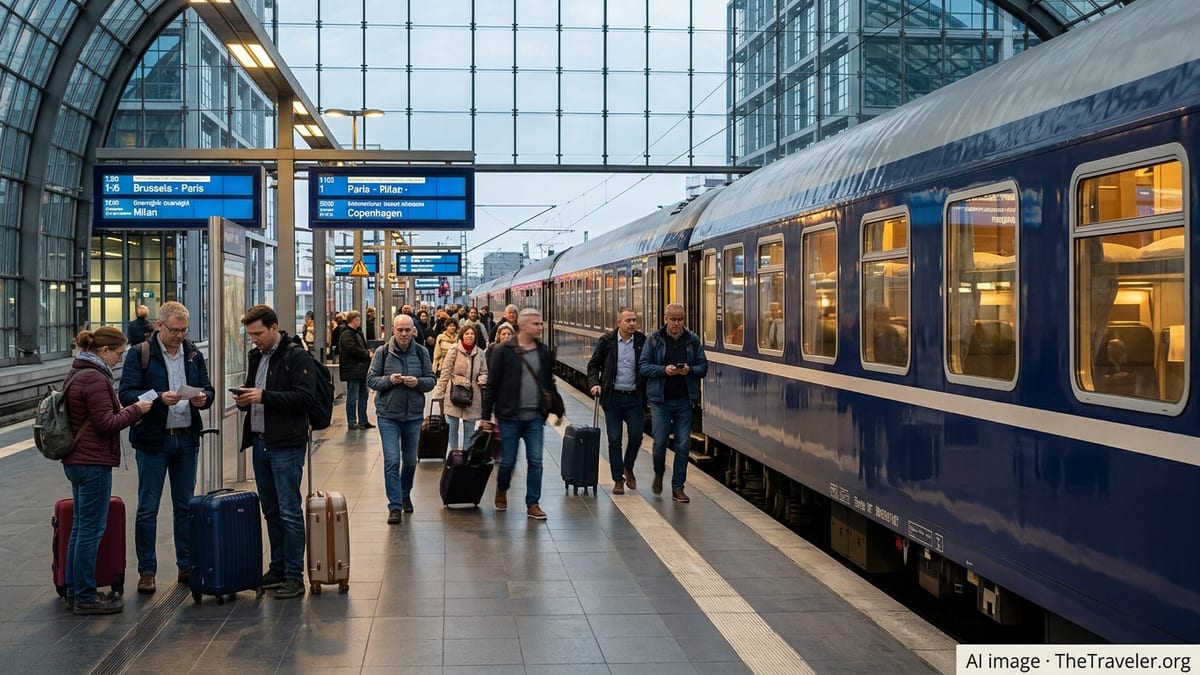
Alongside national operators, new entrants are reshaping how travelers move between Prague and northern Europe. The cooperative European Sleeper has gradually expanded its night train offer, with publicly available timetables showing services running between Brussels, Berlin and Prague and an increasing focus on connecting multiple capitals on a single overnight route.
European Sleeper’s network does not yet extend directly to Copenhagen, but the company promotes onward travel from its Prague and Berlin termini, positioning its night trains as part of a broader mesh of rail options between Benelux, Germany and Central Europe. Press materials from the operator outline future ambitions toward Scandinavia, coordinated with infrastructure managers along the route.
On the northern side of the corridor, Scandinavian operator SJ runs the SJ Euronight between Stockholm, Copenhagen and Berlin, offering sleeping cars across the Öresund and down through Denmark. EU rail pilot documentation highlights this Stockholm–Copenhagen–Berlin line, alongside the forthcoming Prague–Berlin–Copenhagen service, as part of a wider push to strengthen north–south sleeper and daytime links.
Taken together, these services create new possibilities for travelers to mix day and night segments. An itinerary might combine a European Sleeper night from Brussels to Berlin, a morning EuroCity to Prague, and later, once the ComfortJet service is running, a direct daytime run from Prague to Copenhagen. Each segment adds flexibility to how long visitors stay in each city and how they balance sleep, sightseeing and travel time.
What the New Links Mean for Tourists
For tourism planners and individual travelers alike, the emerging Prague–Berlin–Copenhagen spine shifts what is practical within one trip. The direct daytime train will cut the number of changes required between Prague and the Danish capital, reducing stress for families, first-time visitors and travelers with luggage, while maintaining city-center to city-center access.
Interrail and Eurail documentation already lists Prague–Berlin EuroCity trains among the key routes in Central Europe, with notes about reservation requirements during peak periods. The addition of a through service to Copenhagen will give pass holders a straightforward way to connect Central European city breaks with visits to Denmark and onward ferries or flights to the wider Nordic region.
From a sustainability perspective, EU transport briefings frame the Prague–Copenhagen pilot as part of a broader effort to shift demand from aviation to rail on distances of roughly 500 to 1,000 kilometers. The combination of modern rolling stock, direct services and coordinated timetables is presented as essential to making rail a credible alternative on itineraries that span multiple countries.
In practical terms, tourists can expect a gradual transition rather than an overnight overhaul. Existing international trains between Prague and Berlin continue to operate, seasonal capacity constraints will still appear on busy dates, and not all services on the corridor will be brand-new. Yet the direction of travel is clear: Prague is being woven more tightly into a northbound rail network that links Central Europe with Copenhagen and beyond.
Czech Railways: Direct Prague–Berlin–Copenhagen ComfortJet service
European Commission: Launch of Prague–Berlin–Copenhagen rail service