


More news on this day
Princess Cruises is reshaping how guests pay for upcoming voyages, tightening final payment deadlines and increasing mostly nonrefundable deposits in a policy shift that affects new bookings across its global fleet.
Get the latest news straight to your inbox!
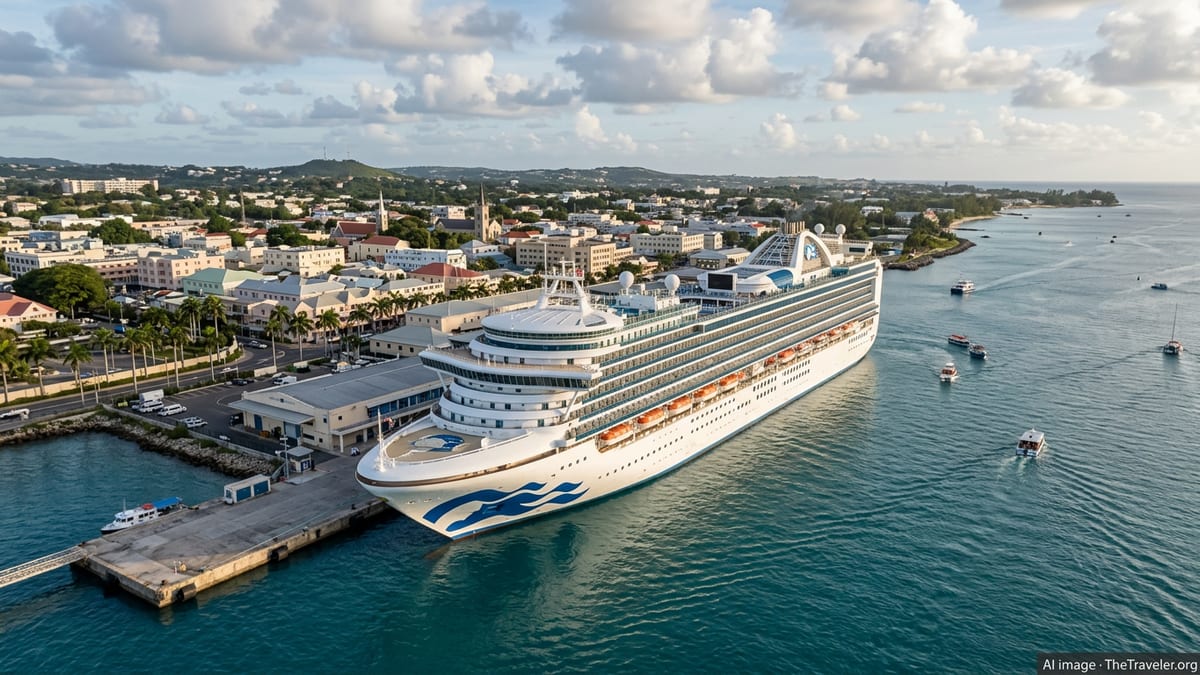
New Policies Take Effect for North American Bookings
Recent updates to publicly available policy documents and industry coverage indicate that Princess Cruises has overhauled its deposit rules and adjusted when final payments are due. The changes primarily affect new bookings made by guests in North America, where the line has standardized a nonrefundable deposit as the default on many cruise fares.
Information summarized from travel agency advisories and cruise news outlets shows that, beginning in the final months of 2025, most new Princess reservations now automatically book with nonrefundable deposits unless travelers actively choose a refundable option where available. This marks a notable departure from the long-standing approach in which deposits were generally refundable until the standard cancellation penalties came into effect.
Princess has also updated its general policies for 2024 to 2026 voyages, clarifying how much guests must pay upfront and when the balance is due. The revised conditions are being applied as new voyages open for sale and as updated brochures and general policy documents are released into the trade.
Nonrefundable Deposits Become the Default
Publicly posted terms now describe nonrefundable deposits as the standard for many Princess fare types, with refundable deposits positioned as an optional upgrade on select price categories. Industry analysts report that this move aligns Princess with several competing lines that have already pivoted toward nonrefundable models, particularly on promotional and value-focused fares.
In practice, the change means that many guests who secure a Princess cruise now face stiffer penalties if they cancel, even well before their scheduled sailing date. Where deposits were once widely reimbursed if plans changed outside the final payment window, the updated rules increasingly treat these initial amounts as at-risk funds that may not be returned in cash or credit.
Travel forums and cruise-specialist media describe scenarios in which guests can still access refundable deposits, but often by paying a higher initial price or selecting less restricted fare structures. This has prompted some frequent cruisers to weigh the upfront savings of a nonrefundable deposit against the flexibility of paying more for terms that allow cancellation without losing the entire amount.
Earlier Final Payment Deadlines on Longer Sailings
Alongside deposit changes, Princess has refined the timelines for when final payment is due. Current general policy documents for North American guests outline a 90-day final payment deadline for many shorter itineraries. However, for longer voyages, including sailings of roughly two weeks or more, the line has moved to an earlier cutoff.
Trade references and commentary from cruise analysts note that final payment for these extended itineraries is now typically due around 120 days before departure. This effectively brings forward the date when guests must settle their full cruise fare, reducing the window between paying in full and departure for many itineraries that span multiple regions or continents.
The adjustment also interacts with Princess pricing guarantees and re-fare practices. Since many best-price assurances only apply before final payment is made, shifting that deadline earlier narrows the time available for guests to seek price adjustments if fares drop after they book.
Higher Upfront Costs and Tiered Deposit Amounts
Beyond the new refund rules, Princess has increased deposit amounts for many sailings, with publicly available brochures and policy documents describing tiered structures that vary by voyage length and stateroom category. Longer itineraries and premium accommodations often carry higher deposits, reflecting the greater total fare involved.
Some travel agency guidance highlights that these deposit increases can represent a meaningful rise in upfront cost, particularly for guests booking suites or ambitious itineraries such as extended Asia, Australia, or world-cruise segments. In many cases, deposits constitute a larger percentage of the overall fare than in previous years.
At the same time, Princess continues to promote its Future Cruise Deposit and Future Cruise Credit programs, which allow guests to lock in reduced deposits or apply credits from prior sailings. However, consumer-facing explanations increasingly stress that once these instruments are used to secure a new booking under the nonrefundable rules, the associated amounts may be subject to the same stricter cancellation terms as standard cash deposits.
What the Changes Mean for Cruise Travelers
For travelers, the combined effect of earlier final payment deadlines and more restrictive deposit rules is a shift in financial risk. Guests who are accustomed to booking far in advance with minimal penalties for changing plans may now find that flexibility comes at a higher price, while lower headline fares often accompany tougher conditions if they cancel.
Travel advisors and cruise commentators are urging prospective Princess guests to scrutinize fare descriptions at the time of booking, paying particular attention to whether the deposit is refundable and when cancellation penalties begin. They also note that options such as travel protection plans, agency-specific cancellation waivers, or alternative refundable fare types may help mitigate the impact of the new policies for travelers who value flexibility.
While Princess continues to emphasize value-added offers and its best-price guarantees on future voyages, the updated policies place greater importance on booking with clear awareness of deposit terms and final payment dates. For many guests, the new environment may encourage more cautious planning, closer coordination with travel professionals, and early decisions about how much flexibility they are willing to pay for when committing to a future cruise.