


More news on this day
West Midlands Trains has entered a new era under public ownership in 2026, as changing timetables, performance targets and industrial relations reshape rail travel across the heart of England.
Get the latest news straight to your inbox!
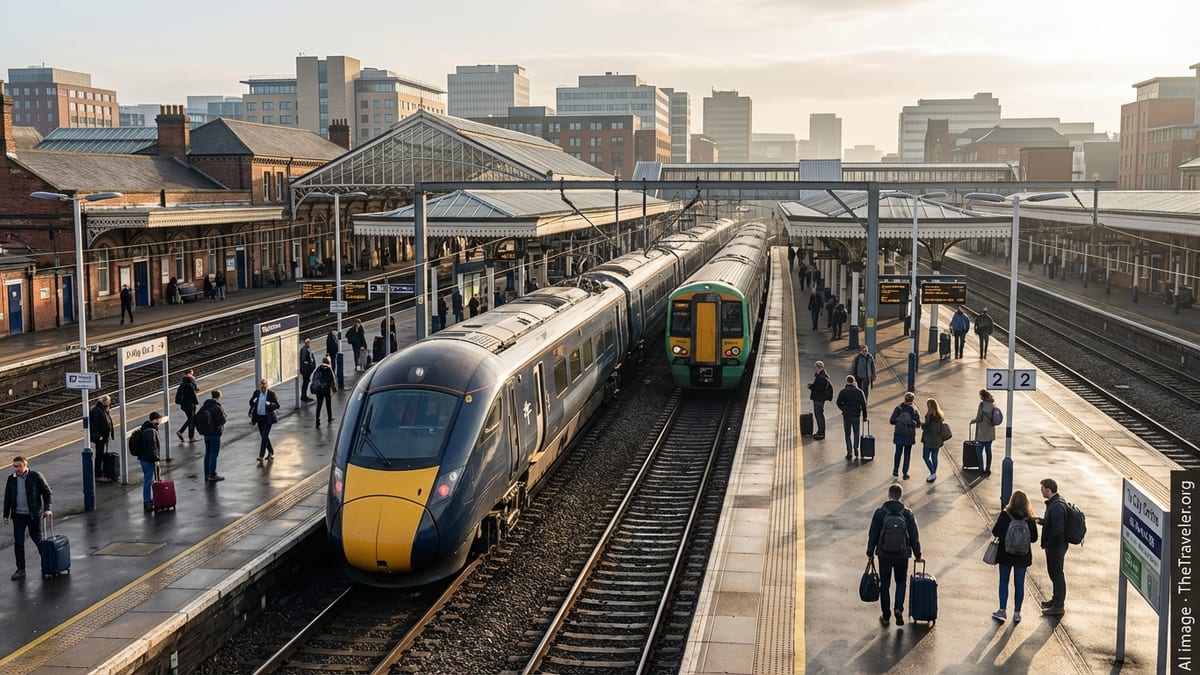
Services transfer to public ownership under DfT Operator
West Midlands Trains, which operates as West Midlands Railway and London Northwestern Railway, transferred into public ownership on 1 February 2026. Publicly available information shows that the franchise is now managed by DfT Operator Limited, the government’s owning group for state run train companies. The move makes the operator one of several English rail brands brought back under direct public control in recent years.
Official statements on the transfer indicate that the new structure is intended to align train operations more closely with national rail reform plans and the proposed Great British Railways framework. By bringing oversight of services and infrastructure closer together, policymakers aim to improve reliability, reduce the cost of subsidies and strengthen links between timetables, investment and passenger demand in the West Midlands and along the West Coast corridor.
Background material from the Office of Rail and Road notes that the transfer had been anticipated as part of a wider rail reform programme. West Midlands Trains had already been operating under intense scrutiny over punctuality and passenger assistance performance, which is expected to remain a focus as the public sector operator works to stabilise services and rebuild customer confidence.
Timetable changes reshape regional and interurban routes
Alongside the ownership change, recent and upcoming timetable adjustments are reshaping how passengers move around the region. National timetable information for the May 2026 change shows updated schedules for West Midlands Railway services running through Birmingham and across the wider network, with revised timings in place through to December 2026. These adjustments follow a sequence of earlier changes in 2024 and 2025 agreed with the regulator.
Earlier in 2025, a temporary amended timetable was introduced on the Snow Hill lines, reflecting resource constraints and a need to match available traincrew to service levels. Documentation from the Office of Rail and Road on supplemental track access agreements highlights that changes to the May and December 2025 timetables were designed to ensure West Midlands Trains could operate a deliverable service specification, even as other operators sought additional paths on key main lines.
Regional rail planning reports from the West Midlands Rail Executive emphasise that West Midlands Trains’ local and interurban services must also fit around long distance changes, particularly new and enhanced Avanti West Coast operations between Birmingham and London Euston. From 2025, more frequent intercity services and evolving open access proposals on the West Coast Main Line have increased the pressure on timetabling around Birmingham New Street, with knock on implications for stopping patterns and journey times on London Northwestern Railway routes.
Performance pressures and reliability under scrutiny
Performance data released by the Office of Rail and Road for the final quarter of 2025 indicates that West Midlands Trains continued to face reliability challenges heading into the period of public ownership. Passenger rail performance across Great Britain showed some overall improvement, but the statistics identify a fall in reliability for the operator compared with the previous year, with punctuality and cancellation rates remaining a concern for regular users.
The company has a history of regulatory pressure over service quality. A previous intervention in 2020 required West Midlands Trains to invest an additional multimillion pound sum into improving operations after missing contractual performance targets. Those measures focused on driver recruitment, timetable reliability and passenger information, and they continue to frame public expectations of what the new publicly owned structure should deliver.
Recent online discussions among passengers suggest a mixed picture on the ground. Some travellers describe busy but generally workable commuter services to and from London, while others report recurring short notice alterations and instances where stopping patterns are changed to recover a delayed timetable. These experiences highlight how headline performance metrics translate into day to day journey planning, especially for those relying on connections between local West Midlands Railway services and long distance operators.
Industrial action disrupts spring and summer travel
Industrial relations have added another layer of complexity for West Midlands Trains passengers in 2026. National Rail disruption summaries from mid May confirm that industrial action affected both West Midlands Railway and London Northwestern Railway services, with contingency timetables and reduced frequencies in place during strike periods. These events followed several years of wider national rail disputes that have periodically disrupted services across Britain.
Additional commentary shared on public forums in May and July points to targeted action involving roster clerks, train crew managers and control staff, roles that are critical to allocating drivers and managing real time train running. Even short walkouts in these areas can force operators to cut back services sharply, as seen in reduced timetables and warnings of crowded trains on key commuter routes into Birmingham, Liverpool and London.
For leisure and business travellers, the combination of planned strikes and ongoing timetable changes has underlined the need to check journey planners close to departure. Reports from local passengers ahead of summer events and school holidays refer to reduced West Midlands Railway services on some strike dates, while other operators such as Avanti West Coast and Transport for Wales attempted to maintain normal timetables, providing alternative options where capacity allowed.
Funding, investment and the wider West Midlands transport picture
The rail developments surrounding West Midlands Trains sit within a broader regional transport funding landscape. Budget information from Transport for West Midlands for 2026 to 2027 shows continued pressure on publicly supported bus and tram services due to high fuel and labour costs, as well as a slower than expected recovery in passenger numbers after the pandemic period. Additional central government grants have been used to protect parts of the commercial network, indicating the level of support still required to maintain connectivity.
Public ownership of West Midlands Trains is framed by policymakers as one tool to align rail operations with this wider regional strategy. By integrating decisions on timetables, fares and investment more closely with local priorities, transport planners aim to strengthen links between rail services and new infrastructure projects, including station reopenings and corridor upgrades intended to encourage a shift from car to public transport.
For travellers, the coming months will show how far the new arrangements can translate policy ambitions into tangible improvements. With fresh timetables in place, performance statistics under close observation and industrial relations still sensitive, West Midlands Trains’ public sector era begins at a time of both opportunity and scrutiny for one of England’s busiest regional rail networks.