


More news on this day
Qatar has moved into closer alignment with neighboring Gulf and Levant states as renewed hostilities between Iran and Israel tighten security around the Strait of Hormuz and Red Sea shipping lanes, amplifying risks for tourism, aviation and energy markets across a region already grappling with disrupted sea and air corridors.
Get the latest news straight to your inbox!
Gulf and Levant States Tighten Travel and Security Stances
Recent advisories and public statements from governments across the Middle East indicate a widening circle of concern as the United Arab Emirates, Saudi Arabia, Bahrain, Kuwait, Oman, Lebanon, Iraq and now Qatar respond to escalating conflict involving Iran and Israel. Heightened alerts have focused on the danger to commercial and civilian traffic around the Strait of Hormuz, the Persian Gulf and adjoining airspace, with foreign ministries in multiple countries urging citizens to reassess nonessential travel and monitor official guidance.
According to published coverage from regional outlets and diplomatic briefings, Qatar has condemned attacks on shipping and warned that Iranian strikes on neighboring states are inflicting what it describes as catastrophic regional effects. At the same time, travel advisories issued by third countries for destinations such as Qatar, the UAE, Saudi Arabia, Kuwait, Bahrain and Oman underscore how quickly perceived risk has expanded beyond the immediate conflict zones, placing core Gulf tourism and aviation hubs under closer international scrutiny.
Publicly available information also shows that Lebanon and Iraq are experiencing intensified security concerns as Israel’s confrontation with Iran’s regional allies continues. Airlines and tour operators serving Beirut and Baghdad are monitoring the situation closely, with route planning and insurance conditions becoming more complex as rocket fire, drone activity and air defense operations affect parts of their airspace.
While most Gulf states continue to promote a message of continuity in core services, the convergence of domestic security postures, foreign travel warnings and maritime advisories is reshaping how travelers and industry planners view the wider Middle East as a connected tourism and aviation market.
Strait of Hormuz and Red Sea Chokepoints Under Strain
The Strait of Hormuz, long regarded as one of the world’s most sensitive maritime chokepoints, has become a central pressure point in the latest phase of the Iran–Israel confrontation. Open-source assessments describe a severe reduction in traffic after Iran signaled the closure of the waterway earlier this year, a move that coincided with intensified military activity by Iran, the United States and Israel. Subsequent analysis by international media and think tanks notes a collapse of normal tanker and container flows as ship operators and insurers reassess the risk of transit.
Parallel instability in the Red Sea and Bab al Mandab Strait continues to complicate any attempt to reroute safely around the Gulf. Since 2023, attacks on commercial shipping in the Red Sea attributed to Yemen-based Houthi forces backed by Iran have pushed many carriers to divert around the Cape of Good Hope. Research centers and industry data have documented steep increases in container freight rates and voyage lengths, adding to fuel costs and squeezing schedules for both cargo and cruise segments that historically linked Europe, the Gulf and Asia.
New reporting on electronic interference and signal jamming around the Red Sea and Hormuz adds another layer of concern for maritime safety. Studies referenced by navigation institutes and maritime monitoring centers describe hundreds of vessels each month experiencing disruptions to GPS and tracking systems in the broader region. For ships already operating under threat of missile, drone or fast-boat attacks, such interference raises collision and grounding risks, complicating emergency responses and inflating insurance premiums.
For tourism economies that rely on smooth flows of visitors and supplies, these chokepoint disruptions translate into more than just higher shipping costs. Longer detours can delay hotel refurbishment projects, push up the price of imported food and consumer goods, and discourage cruise lines from scheduling Gulf and Red Sea itineraries at a time when confidence in regional travel was only beginning to recover from the pandemic.
Aviation Corridors Narrow as Carriers Reassess Risk
Aviation networks across the Middle East are also adjusting to the renewed hostilities and the threat profile around key maritime corridors. Industry-focused publications report that major carriers have rerouted flights to avoid certain segments of Iranian, Iraqi and Syrian airspace since the latest phase of the conflict began, with additional caution now extending over parts of the Red Sea and Gulf of Aden due to the risk of long-range drones and missiles.
Publicly available travel alerts from airlines based in the Gulf describe operations confined to defined safe corridors approved by national aviation regulators. These updates often coincide with more flexible rebooking policies for passengers holding tickets to or through the region, reflecting both the operational uncertainties for carriers and the hesitancy among travelers considering transit via traditional hubs such as Doha, Dubai, Abu Dhabi, Riyadh and Manama.
Security analysts quoted in specialized aviation coverage warn that any further expansion of missile activity, particularly from Yemen-based actors toward the Red Sea and Gulf of Aden, could disrupt jet fuel supply chains and complicate overflight planning between Europe, Africa and Asia. Such a scenario would likely trigger additional detours and potential capacity reductions, putting upward pressure on fares and reducing the appeal of itineraries that cross the Middle East, even where airports remain fully functional and largely insulated from direct attacks.
For Lebanon and Iraq, the impact on aviation is even more direct. Heightened tensions around Beirut and Baghdad have already led some foreign airlines to trim schedules or adjust flight paths, according to regional aviation trackers and timetable changes. These shifts risk further isolating destinations that depend on diaspora travel and seasonal tourism, just as broader perceptions of regional instability weigh on demand.
Tourism Markets Juggle Image, Safety and Rising Costs
Tourism authorities and private-sector operators from the Gulf to the Levant now face a complicated balancing act: maintaining the image of safe, modern destinations while acknowledging the geographic proximity to active conflict zones and contested sea lanes. Hotel groups, destination management companies and cruise planners are monitoring maritime and aviation advisories daily, adjusting itineraries, shore excursions and promotional campaigns in line with evolving risk assessments.
In Gulf destinations such as the UAE, Qatar, Saudi Arabia, Bahrain, Kuwait and Oman, publicly available data suggests that core urban tourism infrastructure continues to operate normally, with flagship events and business travel largely sustained. However, rising operational costs linked to longer shipping routes, higher insurance premiums and potential jet fuel price spikes are feeding into medium-term forecasts. Analysts following the sector note that margins could be squeezed if operators absorb these costs, while any attempt to pass them on may dampen price-sensitive leisure segments.
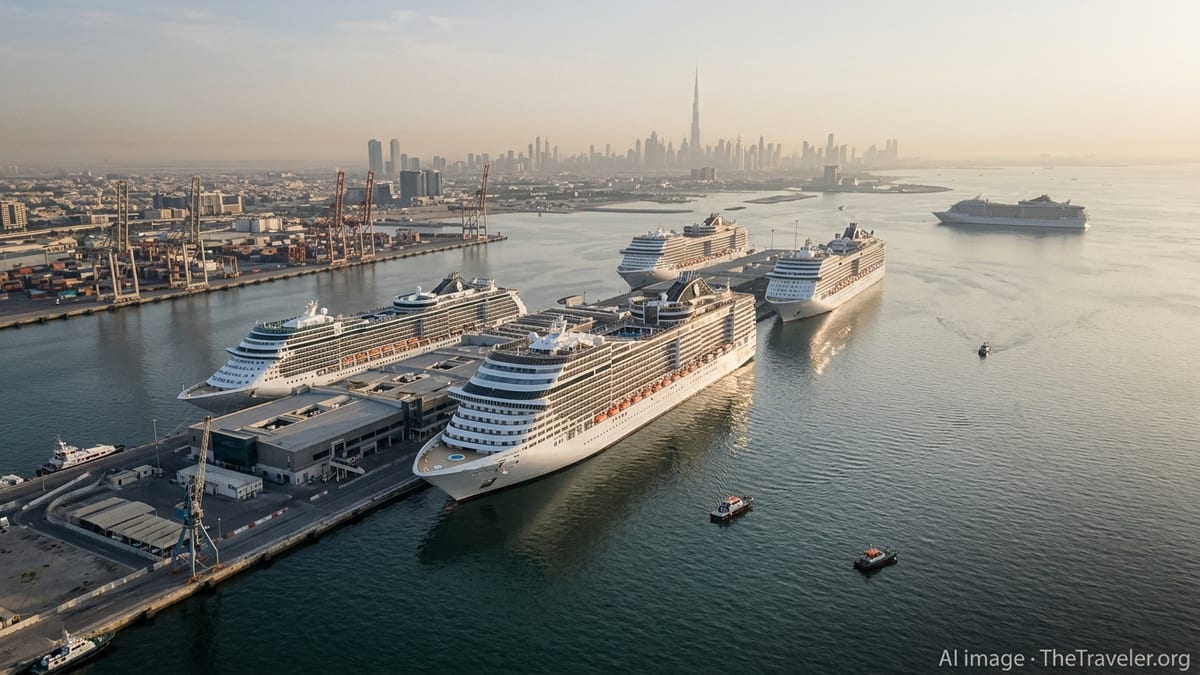
Cruise tourism has been particularly exposed to volatility around the Strait of Hormuz and the Red Sea. Previous closures and threats in these waterways have already prompted cruise lines to reposition vessels and cancel Gulf and Red Sea seasons. Current coverage from maritime and travel industry sources points to a renewed wave of schedule changes, with some ships redeployed to the Mediterranean, Indian Ocean or Asia-Pacific, reducing passenger volumes in ports from Muscat and Doha to Jeddah and Aqaba.
Levantine destinations, including Lebanon and Iraq’s Kurdish region, face a different challenge. Their tourism offerings rely heavily on cultural tourism, nature-based travel and visits from expatriate communities. As headlines are dominated by images of missile strikes, intercepted drones and burning tankers, tour operators in these markets must work harder to reassure potential guests about security conditions on the ground while contending with fewer direct flights and higher regional insurance surcharges.
Energy Trade Disruptions Ripple Into Travel and Hospitality
The conflict’s most immediate global impact is being felt in energy markets, but those shifts are quickly spilling into travel and hospitality dynamics. The Strait of Hormuz normally carries a significant share of the world’s seaborne oil exports, along with liquefied natural gas shipments from Qatar and other producers. Analyses circulating among energy consultancies show that the effective throttling of this route since February has forced Gulf producers to rely more heavily on alternative pipelines and Red Sea ports, increasing transit times and logistics complexity.
As oil and gas supplies are diverted around contested waters, benchmark prices have shown renewed volatility, with some banks and research houses warning of the potential for price spikes if hostilities escalate further. Higher crude prices typically feed into the cost of jet fuel and marine fuel, driving up operating expenses for airlines, cruise lines and cargo carriers. These cost pressures, combined with insurance surcharges for war-risk zones, are already factored into forward-looking budgets for airlines and shipping companies that serve Middle Eastern routes.
For destination economies, more expensive energy also affects domestic tourism and hospitality. Higher electricity and cooling costs can raise operating expenditures for hotels, resorts and entertainment venues, particularly in peak summer months when demand for air conditioning soars. Governments across the Gulf and wider Middle East have invested heavily in diversifying away from hydrocarbons through tourism and aviation, but the current crisis highlights how closely these non-oil sectors remain tied to the security of energy trade routes.
Industry observers note that if tensions ease and shipping lanes through Hormuz and the Red Sea stabilize, pent-up travel demand and the region’s substantial infrastructure investments could support a relatively swift rebound. Until that point, however, Qatar’s decision to align more visibly with neighboring states in highlighting the risks to shipping and regional security underlines how tourism, aviation and energy in the Middle East are now entwined with the fortunes of two of the world’s most strategically sensitive waterways.