


More news on this day
Passengers at Sydney Airport are facing longer queues, delays and uncertainty after a double wave of industrial action by security screeners and Qantas-linked ground workers disrupted flights and baggage handling on Thursday.
Get the latest news straight to your inbox!
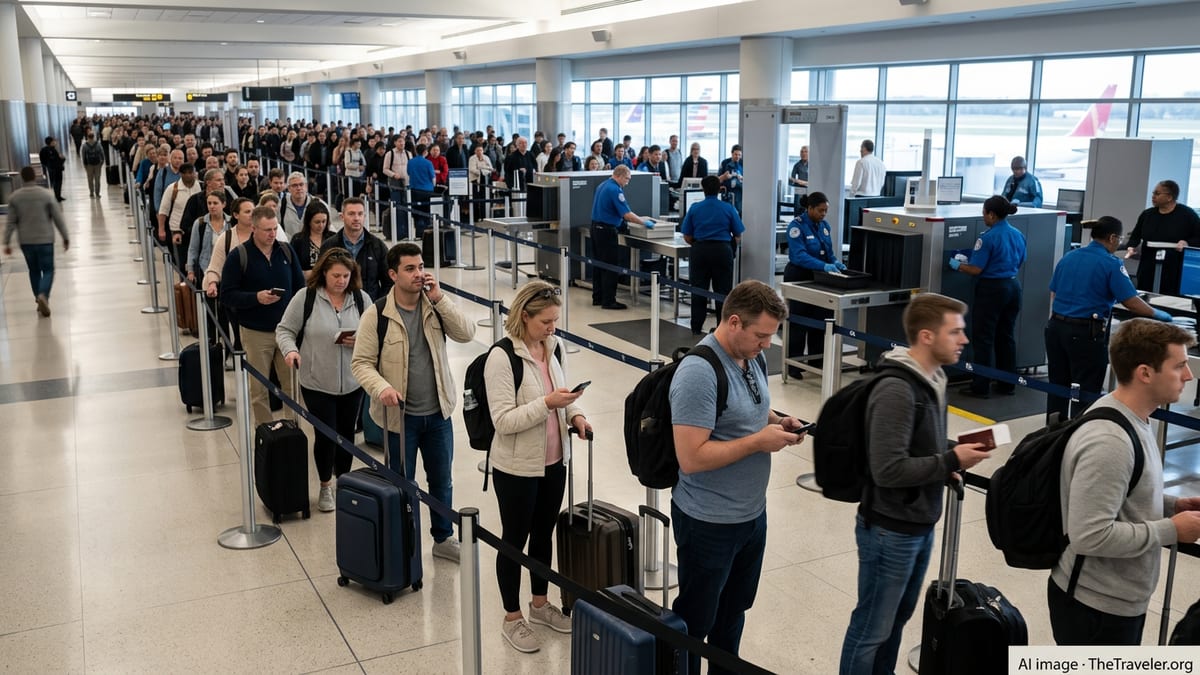
Security walkouts trigger early-morning queues
The latest disruption began on the morning of 24 September, when around 400 security screening staff employed by contractor Certis staged a two-hour stoppage at Sydney Airport. Publicly available information indicates the walkout was part of an escalating pay and conditions dispute that has been building through 2026.
Coverage from Australian broadcasters shows screening lanes reduced and queues building in the domestic terminals as the stoppage took effect. Passengers reported arriving to find lines snaking through departure halls, with some describing the situation as “quite disruptive” as they tried to reach flights on time.
Airport management has urged travellers to arrive earlier than usual and monitor updates from their airlines while the action continues. A second two-hour strike window was scheduled for the evening peak, with a further three-hour stoppage already flagged for Monday, the first day of the New South Wales school holidays.
According to industry reporting, Sydney Airport has implemented contingency plans including redeploying administrative staff to assist with queue management and passenger information inside the terminals.
Qantas freight and regional ground staff join 24-hour strike
At the same time as the security stoppages, hundreds of ground workers employed by Qantas subsidiaries have walked off the job for 24 hours, affecting freight operations and some regional flights. Statements from the Transport Workers’ Union describe coordinated action by staff at Qantas Ground Services and Australian air Express, which handle baggage and freight for Qantas and Australia Post, along with some QantasLink ground crew.
The strike is part of a wider national campaign taking place at airports in Sydney, Adelaide, Brisbane and Perth. It follows months of bargaining over pay, job security and the use of multiple Qantas-linked entities for ground operations, an arrangement unions argue has fragmented conditions and hollowed out experience on the tarmac.
Reports indicate that Qantas has activated contingency plans, including redeploying management personnel and engaging other ground-handling providers, to keep most passenger services running. The airline has stated publicly that it expects limited impact on mainline flights, though regional and freight movements are more exposed to disruption.
For travellers passing through Sydney, the combination of freight and regional strikes with security stoppages has created an unusual overlap of pressure points across the airport’s operations on the same day.
Passengers report delays, confusion and a sense of unease
The double strike has translated into a patchwork of experiences for passengers, ranging from relatively smooth check-ins to significant delays at security and baggage claim. Australian media footage from the terminals shows some travellers expressing frustration over missed connections and extended waits at screening points.
Others have spoken of heightened anxiety, particularly those beginning holidays or travelling with young children. With security lines banked up, many passengers chose to arrive hours earlier than their airlines usually recommend, filling public areas before the morning peak.
At baggage carousels, some domestic travellers reported longer waits as ground handling teams operated with reduced staffing. However, contingency measures meant that widely feared mass cancellations did not materialise in the early hours of the stoppages, and many flights departed close to schedule.
Travel industry commentary notes that the situation highlights how dependent passengers are on multiple contracted workforces that sit behind the check-in counters and boarding gates. For many travellers, the strikes provided a rare glimpse of the complex labour arrangements that underpin day-to-day airport operations.
Escalating industrial tensions ahead of school holidays
The strikes come at a sensitive moment for the aviation sector, with passenger numbers recovering strongly and key travel periods approaching. New South Wales state school holidays begin next week, and there is concern that further stoppages could impact one of the busiest periods of the year for Sydney Airport.
Union statements in recent weeks have pointed to rising profits at both Sydney Airport and Qantas while claiming that wages and job security for contracted staff have lagged behind. The current wave of industrial action follows earlier warnings in September that ground workers were preparing to escalate campaigns if negotiations did not yield improvements.
Industry analysts suggest that both sides face pressure to reach a settlement before the holiday rush intensifies. Prolonged disruption at the country’s busiest international gateway would risk renewed public scrutiny of aviation labour practices and could further strain already fragile traveller confidence after several years of operational turbulence.
For now, publicly available schedules show flights continuing to operate with targeted adjustments rather than wholesale cancellations. Yet the threat of additional strikes in the coming days means that passengers planning to travel through Sydney are being advised to keep a close eye on developments.
What travellers need to know before flying through Sydney
Airlines and the airport are advising passengers with flights over the coming days to build in extra time, especially during early morning and evening peaks when industrial action is most likely to bite. Travellers on regional services and those with tight connections are considered most vulnerable to knock-on delays from any disruption to ground handling or security screening.
Published guidance from Sydney Airport recommends that domestic passengers arrive at least two hours before departure during periods of disruption, and international passengers at least three hours ahead. With strike activity expected to continue at specific times, some travel agents are encouraging customers to allow even more buffer where possible.
Passengers are also being urged to check their airline’s app or text alerts on the day of travel, as timetable changes and gate moves can occur at short notice when staffing levels fluctuate. Those checking bags are advised to head straight to the check-in area on arrival at the terminal, given the potential for longer processing times.
While Thursday’s double strike stopped short of bringing operations to a standstill, the experience has underlined how quickly targeted industrial action can ripple across Australia’s largest hub. For passengers, the message emerging from today’s events is clear: allow more time, stay informed, and be prepared for a journey that may feel a little more “disruptive” than usual.