


More news on this day
Travelers heading to and from Greece on June 27 are facing a fresh wave of disruption as a radar malfunction affecting Athens International Airport triggers knock-on delays and cancellations at some of the country’s busiest island gateways, with 409 flights reported delayed and 14 canceled across Athens, Santorini, Mykonos and Aktion National airports.
Get the latest news straight to your inbox!
Chain Reaction Across Major Greek Airports
Publicly available flight-tracking snapshots for June 27 indicate that Athens International Airport, Greece’s primary aviation hub, is bearing the brunt of the disruption, with hundreds of arrivals and departures operating behind schedule. Those delays are rippling outward to popular holiday airports at Santorini, Mykonos and Aktion National, a key gateway for the Ionian coast, as tightly timed domestic rotations fall out of sync.
Operational data compiled from airport and aviation-monitoring dashboards points to 409 delayed flights and 14 cancellations across the four airports over the course of the day. The pattern shows prolonged ground holds at Athens early in the schedule, followed by late-arriving aircraft into the islands, which in turn has forced airlines to push back subsequent departures or consolidate services.
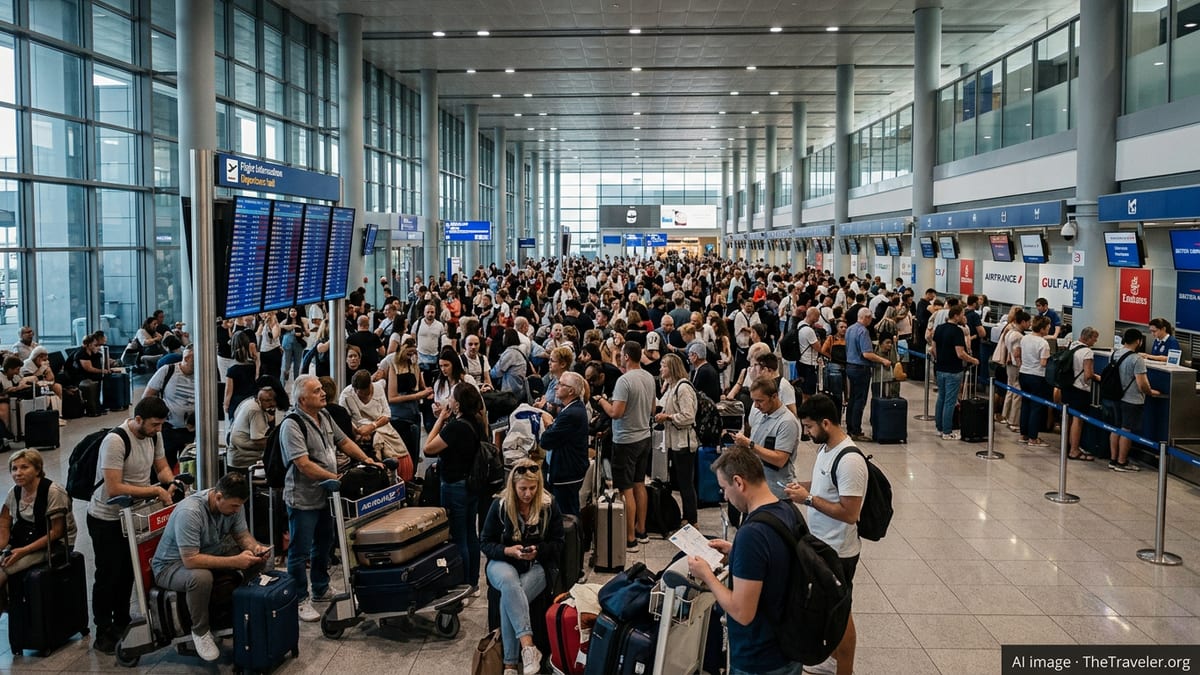
Reports in Greek and international travel media describe packed departure halls, long queues at check in and security, and aircraft waiting on taxiways for new slots. Visitors attempting to make same-day connections to ferries or onward international flights appear particularly exposed, as even modest schedule changes can eliminate planned transfer buffers during the peak summer rush.
While the overall number of cancellations remains relatively limited compared with the volume of delays, the concentration of disruption at a handful of leisure-focused airports at the height of the season means the impact on individual itineraries and holiday plans is significant.
Radar Malfunction at Athens at the Center of the Disruption
Greek travel and general news outlets report that a malfunction affecting an approach radar system serving Athens International Airport is the primary trigger for the latest disruption. Coverage indicates that the issue, first detailed in reports on June 26, forced air traffic managers to reduce the rate at which aircraft could safely be handled in the busy airspace around the capital.
With Athens functioning as the main hub for domestic connections to the islands and a major gateway for international traffic into Greece, any reduction in arrival and departure capacity quickly cascades. Data published by aviation monitors highlights holding patterns and extended arrival times for aircraft inbound to Athens, followed by late turnarounds on short-haul links to destinations such as Santorini and Mykonos.
This latest episode comes in a year when Greece’s airspace and airports have already faced periods of strain. Earlier in 2026, disruptions linked to technical issues in national air traffic systems and capacity constraints at key hubs led to unusually high levels of delays and cancellations on several days, including at Athens and a cluster of regional airports.
Industry analyses of recent seasons have also pointed to sustained growth in passenger volumes through Greek gateways without a corresponding margin of spare capacity in air traffic control and ground operations. On peak summer weekends, even a short-lived technical fault can therefore translate into hours of cumulative delay as schedules are tightly packed.
Aegean, Sky Express and Low-Cost Carriers Hit Hard
The scale and geographic spread of Friday’s disruption mean that a broad mix of airlines is affected, from Greece’s own Aegean Airlines and Sky Express to pan-European low-cost carriers and major network brands. Flight-program data for Athens and the island airports shows dense schedules involving Aegean and its regional partners on domestic spokes, alongside services by Ryanair, easyJet and others connecting holiday destinations with cities across Europe.
Monitoring of planned rotations between Athens and Santorini on June 27 illustrates how quickly the situation deteriorated. Multiple Aegean and Sky Express services, alongside Ryanair and Emirates codeshare flights on the route, were showing extended departure and arrival times as the day progressed, with late inbound aircraft from Athens creating subsequent knock-on delays for return legs back to the capital.
According to published airport statistics, international carriers such as Lufthansa, British Airways and Emirates all maintain significant operations at Athens, feeding long-haul and European networks. When domestic feeders from the islands arrive late or are rescheduled, passengers risk misconnecting onward flights, prompting rebookings, overnight stays and additional pressure on customer-service channels.
While the 14 recorded cancellations are spread across multiple operators, the far higher number of delayed flights indicates that airlines have largely attempted to operate their planned programs with revised timings rather than preemptively cutting large portions of the schedule. That strategy reduces the number of travelers stranded without a flight, yet it also results in widespread late arrivals that can disrupt subsequent travel plans.
Knock-on Effects for Santorini, Mykonos and Aktion Holiday Traffic
At Santorini, one of Greece’s busiest summer airports, timetable data for June 27 shows an intense pattern of domestic and international movements linking the island with Athens and a range of European cities. With many of those departures dependent on aircraft arriving from the capital, delayed morning and midday flights have had a compounding effect, leaving some departures backed up into later time slots.
Similar dynamics are reported at Mykonos, where Sky Express and Aegean concentrate domestic services, and at Aktion National Airport near Preveza, which sees seasonal leisure traffic from carriers serving beach resorts along the Ionian coast. When Athens-based flights miss their scheduled slots into these constrained island airports, subsequent arrivals and departures can be forced into extended holding or minor ground delays that gradually build through the day.
Travel industry coverage notes that airport terminals at these destinations have seen growing crowds as visitors wait out revised departure times, often with limited seating and amenities compared with the larger hub facilities in Athens. For travelers on tight itineraries, late departures from the islands also heighten the risk of missing evening long-haul connections home.
The current pattern resembles earlier disruption waves in Greece this year, when heavy clusters of delays at Athens and several regional airports left hundreds of passengers temporarily stranded. Analysts point out that, in a system operating close to capacity, the combination of technical issues and peak-season demand is likely to generate more such days of widespread schedule stress.
What Travelers Can Do if Their Flight Is Affected
Consumer travel advice services monitoring the situation recommend that passengers due to fly to or from Athens, Santorini, Mykonos or Aktion on June 27 and the following days keep a close watch on their booking status through airline apps and notification channels. Same-day online check-in, live flight-status pages and airport departure boards remain the primary tools for tracking evolving delays.
Air passenger rights within the European Union set out compensation and assistance rules in cases of significant delay or cancellation, although technical faults that are outside an airline’s direct control can limit eligibility. Travelers are encouraged by passenger-rights groups to keep records of boarding passes, booking confirmations and any written notices of schedule changes in case they later pursue claims or seek reimbursement of extra costs such as overnight accommodation.
Given the current strain on the system, trip planners suggest adding extra buffer time for same-day connections involving ferries or international long-haul departures, particularly when traveling from the islands back to Athens. For those yet to depart for Greece, monitoring airline schedule changes over the coming days may help identify patterns of recurring disruption on specific routes or time windows.
With the radar issue in Athens under investigation and traffic levels at seasonal highs, observers expect residual knock-on effects to continue until airlines and air traffic managers can fully realign schedules. Travelers heading for Greece’s key holiday gateways in the near term are being urged by travel services to remain flexible and be prepared for last-minute adjustments to their plans.