


More news on this day
Travelers across Greece faced significant disruption on June 27 after a radar problem affecting air traffic control near Athens triggered cascading delays and cancellations at Athens International Airport and popular island gateways, stranding passengers at the height of the country’s summer tourism season.
Get the latest news straight to your inbox!
Wide-Ranging Delays at Athens and Island Hubs
Publicly available flight-tracking data and Greek travel news coverage indicate that 409 flights were delayed and 14 canceled across several major Greek airports, with Athens International Airport Eleftherios Venizelos at the center of the disruption. The knock-on effects extended to Santorini, Mykonos, and Aktion National Airport in Preveza, all of which are key entry points for summer visitors heading to the Aegean and Ionian coasts.
The disturbance occurred on June 27, coinciding with one of the busiest weekends of the peak travel period. Athens International serves as Greece’s primary aviation hub, handling a dense schedule of domestic connections to the islands alongside long haul and European traffic. When departures and arrivals there slow, delays can quickly spread across the wider Greek network.
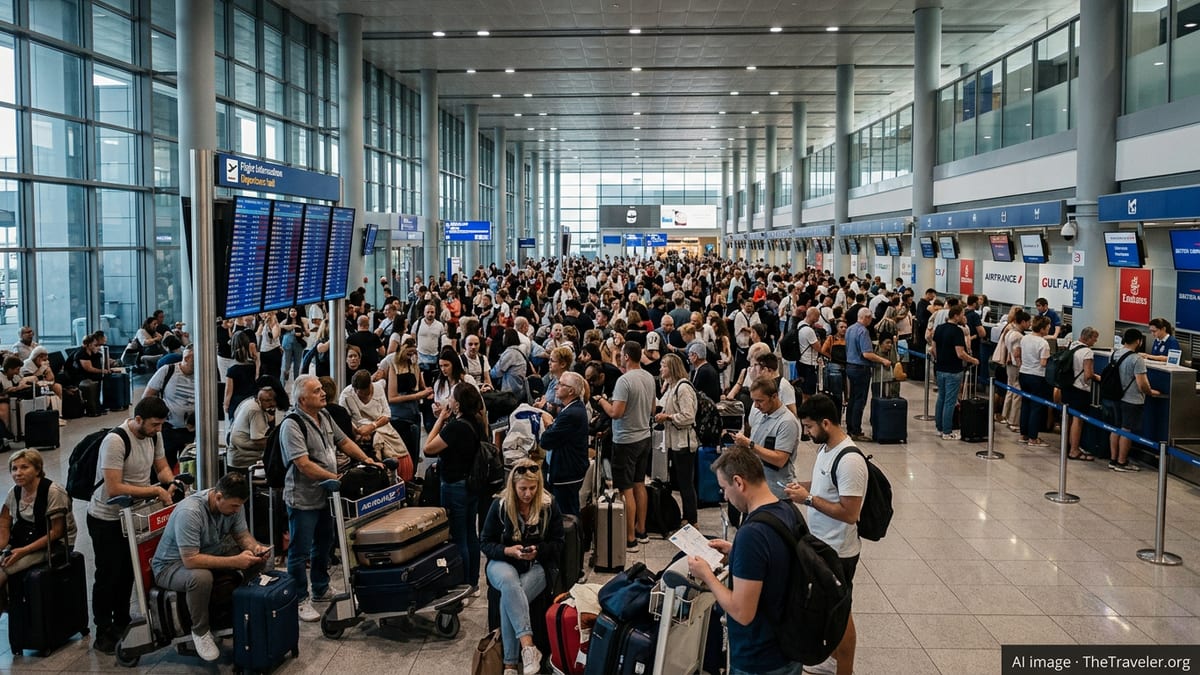
Reports from Greek travel outlets describe long queues at check-in and security, with departure boards showing rolling delays for both domestic hops to the islands and international services to and from major European cities. Many travelers attempting same-day connections to island resorts reported missed ferries, rebooked hotel transfers, and unexpectedly late arrivals at their destinations.
Data compiled by aviation monitoring sites and regional media suggest that the highest concentration of delays was recorded in Athens, but that island airports saw substantial disruption as aircraft and crews struggled to return to normal rotation. With aircraft held on the ground or put into holding patterns, afternoon and evening waves of flights became heavily compressed, intensifying crowding at departure gates.
Radar Failure Blamed as Peak Season Pressure Builds
Greek travel news reports attribute the June 27 disruption primarily to a radar failure affecting air traffic control operations serving Athens. This technical issue reportedly reduced the rate at which aircraft could be safely handled in the airspace around the capital, forcing controllers to apply tighter flow restrictions and lighter arrival and departure schedules.
The radar problem followed months of rising pressure on Greek airspace as tourism demand continued to expand. Earlier in 2026, aviation summaries highlighted capacity constraints and frequent flow management measures over Athens, with traffic surging to popular leisure destinations such as Santorini and Mykonos. The latest setback arrived just as airlines had ramped up frequencies to capture peak-season demand.
According to publicly available operational data, the combination of limited air traffic control capacity and near-full summer schedules left little room to absorb even short-lived technical difficulties. Once flights were pushed back during the morning and early afternoon, subsequent rotations across the country’s airport network were forced into delays, compounding the disruption through the day.
Regional coverage also points to earlier episodes in 2026 when Greek airports registered unusually high numbers of delayed and canceled flights, underlining a pattern of strain on the aviation system. While those previous events were smaller in scale, they highlighted the vulnerability of a tightly wound summer schedule to infrastructure and systems issues.
Major Airlines Caught in the Disruption
The impact of the June 27 disruption was widely felt across carriers operating in and out of Greece. Data from flight trackers and route listings show that Aegean Airlines, Greece’s flag carrier and largest airline by passenger numbers, had a significant share of the affected operations, given its extensive domestic and European network from Athens and the islands.
Other Greek operators, including Sky Express, also featured prominently among the disrupted services. Sky Express is a key provider of domestic links between Athens and island airports such as Santorini, Mykonos, and Aktion National, meaning delays there directly affected travelers heading to or from regional destinations and resort areas.
Low-cost carriers and international network airlines were also touched by the delays. Public flight information for Athens and the island airports lists services by Ryanair, easyJet, Lufthansa, British Airways, and Emirates among the affected schedules. Many of these flights connect Greece to major European hubs and long haul networks, amplifying the consequences for onward connections.
Because the disruption unfolded during a tightly scheduled peak weekend, aircraft and crews for these airlines had limited flexibility to absorb delays. As rotations slid later into the day, some departures were ultimately canceled where crew duty-time limits, airport curfews, or aircraft positioning constraints made continued operation impractical.
Passengers Confront Long Queues and Missed Connections
Travelers passing through Athens, Santorini, Mykonos, and Aktion National on June 27 reported a familiar pattern of disruption: lengthy queues at check-in and security, overcrowded departure halls, and sparse or constantly changing information on departure boards. With many flights delayed by more than an hour, passengers frequently found themselves rejoining lines as they sought rebooking options or clarification on revised schedules.
Reports from recent weeks indicate that congestion at Athens and other Greek airports has already been a challenge in summer 2026, with long waiting times at passport control and security even on normal operating days. The radar-related disruption magnified these pressures, as delayed departures created bottlenecks at boarding gates and pushed arriving passengers into already busy terminal spaces.
For visitors relying on tight connections from flights to ferries or domestic hops onward to more remote islands, the delays translated into missed sailings or the need to secure last-minute overnight accommodation. Travel forums and social media posts from this season suggest that travelers are increasingly building in additional buffer time in Athens or major island hubs to guard against such cascading disruptions.
Families and tour groups appeared particularly exposed, as coordinated transfers and prearranged schedules left little flexibility when flights slipped by multiple hours. In some cases, package operators reportedly sought to consolidate transfers or adjust itineraries on short notice as they worked to move guests to their final destinations.
What Travelers Should Do Next
Publicly available advisories from airlines and airports in recent months have consistently urged passengers flying into or within Greece during the high season to check flight status frequently and arrive early for departures. The events of June 27 are likely to reinforce that guidance, especially for travelers using Athens as a connection point to popular islands.
Air passenger rights frameworks in Europe provide potential avenues for compensation or assistance when flights are significantly disrupted, though eligibility can vary depending on the cause of the delays and cancellations. Travelers are generally encouraged in public consumer guidance to retain boarding passes and booking confirmations, document out-of-pocket expenses, and consult their carrier’s published policies.
Given the pattern of recurrent strain on Greek aviation operations during the summer months, travel planners often recommend that visitors avoid scheduling last-connection ferries or tight same-day transfers after arrivals into Athens or major island airports. Overnight stays between flight and ferry segments, while adding cost, can reduce exposure to missed connections when technical or capacity problems arise.
As investigations and technical reviews proceed following the radar failure, summer traffic through Greece is expected to remain intense. Travelers heading to Athens, Santorini, Mykonos, Aktion National, and other gateways over the coming weeks may find it prudent to monitor airport conditions closely, remain flexible with itineraries where possible, and allow generous time margins for each leg of their journeys.