


Standing at the rental counter after a long flight, the last thing most travelers want is a surprise insurance pitch that doubles the cost of the car. Services like Bonzah promise cheaper, clearer rental car protection that you buy before you ever see the keys. But is Bonzah really a better deal than coverage from the rental company, your credit card, or other independent providers, and when does it make sense to use it?
Get the latest updates straight to your inbox!
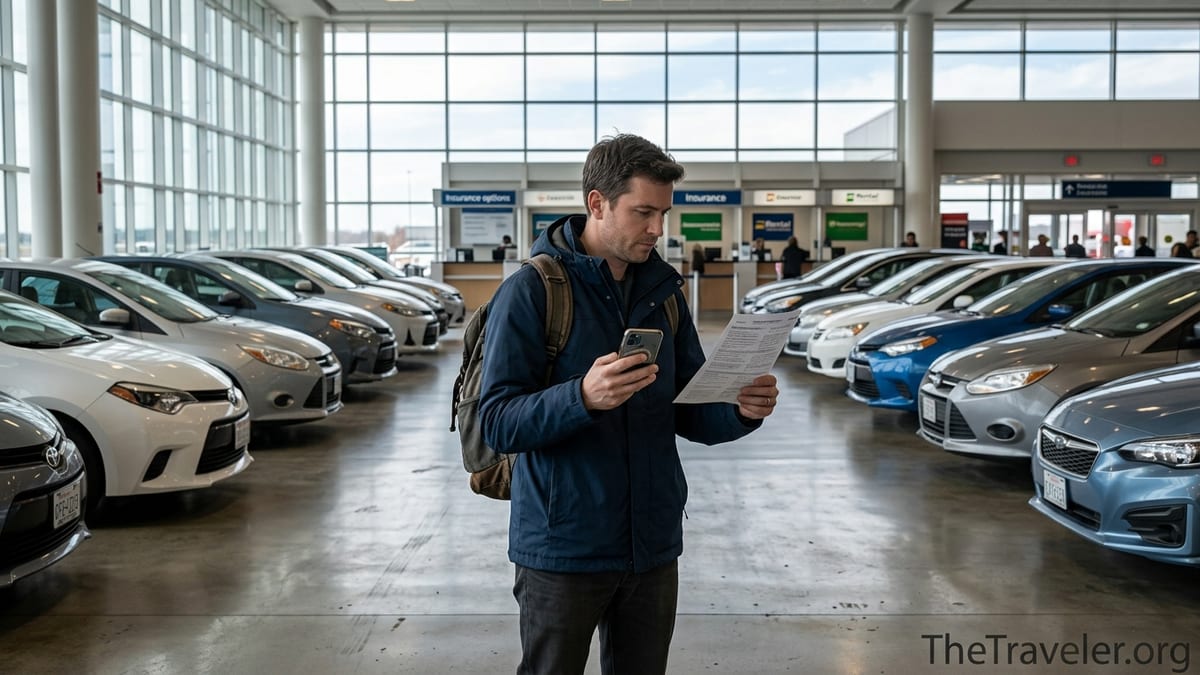
How Rental Car Protection Really Works
To decide whether Bonzah or any standalone rental car protection makes sense, you first need to understand what you are actually being sold. In the United States, when you reach the rental counter at brands like Alamo, Hertz, or Enterprise, the agent typically offers a collision damage waiver or loss damage waiver. This is not technically insurance. It is a contractual waiver that says the company will not pursue you for damage or theft of the rental car if something goes wrong, provided you complied with the rental terms. The peace of mind is attractive, but daily costs are high, often in the 30 to 40 dollar range and sometimes more at airport locations or in high‑cost cities.
Separate from that waiver is liability coverage, which pays if you injure someone else or damage their property in an accident. In the United States, the rental car usually includes state minimum liability by law, but those limits can be very low. Rental companies then offer supplemental liability insurance that can raise limits into the hundreds of thousands of dollars, sometimes adding another 10 to 15 dollars a day. Add personal accident insurance, roadside assistance, and other extras, and your 40 dollar daily base rate can quickly climb toward 100 dollars once all the protection options are layered on.
Against this backdrop, third‑party providers like Bonzah, Allianz, and Sure step in with pre‑booked policies that cover damage to the rental car, and sometimes liability, for a flat daily price purchased online. Instead of deciding under pressure at the counter, you can read the policy at home, compare options, and carry digital proof of coverage on your phone. The economics only work in your favor, however, if the coverage you buy actually fits your situation and fills gaps your existing policies do not already cover.
One more piece of the puzzle is your own auto insurance and credit cards. If you own a car at home and carry full coverage, your collision and comprehensive usually extend to a rental of similar type in the United States and Canada, with the same deductibles and limits. Many travel rewards credit cards, especially premium products, add collision damage protection if you pay for the rental in full with the card. In some cases that coverage is primary, in others it is secondary to your auto policy. Before you even think about Bonzah or any alternative, you should know exactly what protection you already have and where the gaps lie.
What Bonzah Offers in Practice
Bonzah positions itself as a simple, affordable alternative to the rental counter add‑ons. Its core product is rental car damage insurance that steps in if the vehicle is damaged or stolen. Public information indicates that Bonzah policies are designed to cover collision damage and theft for typical rental cars up to a fixed limit per incident, along with certain fees commonly charged by rental companies after an accident, such as loss of use or towing. The coverage is purchased entirely online, often in just a few minutes, and the policy documents are delivered by email so you can show them at the counter if questions arise.
Real‑world pricing for Bonzah can vary by state, trip length, and coverage level, but recent examples show that a full protection bundle is often significantly less than a rental company’s comprehensive package. One current comparison highlighted Bonzah’s package averaging around 40 dollars a day for robust protection, versus about 50 dollars a day for an equivalent bundle from a major rental brand. Over a seven‑day vacation, that 10 dollar daily difference adds up to roughly 70 dollars saved while still covering the same rental period and vehicle category. On shorter rentals, Bonzah often advertises starting daily prices under 10 dollars for basic damage coverage, making it competitive even when you only need a car for a weekend.
Coverage details matter as much as price. Bonzah’s damage policies typically address more than just bodywork after a collision. They may include vandalism, weather‑related damage, and theft of the vehicle, subject to policy exclusions. Some plans also reimburse administrative charges that rental companies add after an incident and may cover loss of use fees the rental company claims while the car is off the road. In practical terms, that means if you back into a barrier in a Denver parking garage and the bumper, sensors, and paint all need repair, Bonzah aims to reimburse the full repair bill up to the limit, instead of just picking up a portion after a deductible like your personal auto policy might.
Bonzah also stands out for offering supplemental liability coverage on top of its damage protection in certain markets. Travelers who do not own a car back home, and thus have no personal auto policy, often worry most about liability. They know that the state minimum coverage built into a rental may not go far if they cause a serious crash. Bonzah’s liability add‑ons are intended to increase those limits to more comfortable levels, sometimes marketed as reaching into the hundreds of thousands of dollars or beyond, depending on the jurisdiction. That positioning makes it especially appealing to urban travelers and digital nomads who rely entirely on rentals and car‑shares a few times a year.
Comparing Bonzah to Rental Counter Coverage
The clearest advantage Bonzah usually has over rental counter protection is price consistency. At the counter, collision damage waiver pricing can swing dramatically by location and season. A traveler landing at Los Angeles International Airport in peak summer can encounter a waiver priced at more than 40 dollars a day, with supplemental liability on top. By contrast, Bonzah’s daily rates are quoted upfront online and are less sensitive to airport fees and local surcharges. This allows a traveler to lock in coverage for a seven‑day California road trip at a predictable rate before they even search for the rental vehicle itself.
The second advantage is the nature of the claims process. With rental counter waivers, if you damage the vehicle, the rental company typically handles everything internally. You drop the keys, fill out an incident report, and in many cases walk away without paying anything further. With third‑party coverage like Bonzah, the rental company still holds you financially responsible for the damage. You must pay or be billed, then file a claim with Bonzah to be reimbursed. This means you could see a substantial charge temporarily appear on your credit card statement while the claim is processed. Some travelers are comfortable with that trade‑off to save hundreds of dollars over a weeklong rental, while others value the simplicity of handing the problem back to the rental desk.
Coverage gaps are another key comparison point. Rental company waivers often exclude certain types of damage, such as roof, undercarriage, or interior damage, unless you buy extra coverage. Third‑party policies like Bonzah’s may handle some of these areas differently. For example, a traveler driving on a gravel road in Utah who gets a cracked windshield from a flying stone might find that their rental company’s waiver treats glass separately, while Bonzah’s policy language could categorize it under covered collision damage. The only way to know for sure is to read the fine print side by side, but many independent reviews praise Bonzah and similar providers for more transparent wording than the dense waiver language printed on rental contracts.
There are, however, situations where rental counter coverage retains an edge. If you are renting in a destination where rental companies are known for aggressive damage claims, or where the local legal system is unfamiliar, having the waiver directly with the company can simplify disputes. In some countries, staff may be less familiar with third‑party providers, and you may spend extra time at pickup explaining your coverage or signing additional forms that shift more responsibility onto you. While major U.S. locations generally accept that customers can decline waivers if they have their own coverage, the real‑world experience at small airport or independent locations overseas can be more mixed.
How Bonzah Stacks Up Against Other Third‑Party Providers
Bonzah operates in a competitive niche. Other major names in standalone rental car protection include Allianz, Sure, and Insure My Rental Car, along with smaller regional players. Each takes a slightly different approach to pricing, benefit limits, and where they operate. For example, Allianz markets a OneTrip rental car product that focuses heavily on collision and theft damage with relatively high limits, often around the 75,000 dollar mark for vehicle value, and a zero dollar deductible. Sure, by contrast, has frequently promoted coverage that not only protects the vehicle but also includes some protection for personal belongings inside the car.
Independent analyses often highlight Bonzah as particularly strong on combining damage coverage with supplemental liability in both the United States and Canada. For a traveler picking up a car in Toronto and driving down into New York State for a cross‑border road trip, that ability to keep the same provider and framework on both sides of the border can be appealing. Other providers sometimes limit coverage to specific regions or exclude rentals that cross national boundaries. In those cases, a traveler might pair one provider’s policy for the Canadian leg with a different solution in the United States, adding complexity.
Price comparisons between Bonzah and its peers show that the cheapest option can vary by itinerary. A traveler renting a compact car in Phoenix for three days may find Allianz quoted at around 13 dollars a day while Bonzah’s full‑featured bundle sits closer to 40 dollars a day, but with different included benefits. On a longer ten‑day rental in Florida, the totals may flip depending on promotional discounts and the level of liability coverage chosen. For travelers who place a high value on liability protection and are comfortable managing a reimbursement‑based claim, Bonzah’s product mix can look compelling. For those who only care about collision damage and have robust personal liability limits already, a leaner, cheaper competitor may be preferable.
Reputation and claims experience also play a role. Public review platforms show a mixture of positive and negative experiences for all major brands, which is to be expected in insurance. Some Bonzah users praise quick claim responses and clear communication when dealing with bills after minor fender‑benders. Others report frustrations around documentation requirements or disputes over what was covered. The same pattern appears with Allianz, Sure, and similar providers. From a practical standpoint, this means you should focus on how clear the policy wording is and how easy it is to submit claims rather than assuming any provider will be frictionless. Checking recent reviews can give a more current snapshot of service quality than relying on older ratings alone.
When Bonzah Makes Sense, and When It Doesn’t
Bonzah tends to make the most sense in a handful of specific scenarios. First, if you do not own a car and therefore have no personal auto policy, but you also do not carry a premium credit card with strong rental benefits, Bonzah’s combination of collision damage and optional liability can provide a more complete safety net at a relatively modest daily rate. Imagine a Brooklyn resident who rarely drives but needs a car for a weeklong visit to relatives in North Carolina. At the rental counter, full coverage might approach 60 to 70 dollars a day once waivers and liability are included. A Bonzah policy offering similar levels of protection at around 40 dollars a day can shave a noticeable amount off the total bill while still keeping major risks covered.
Second, Bonzah can be a smart play when your existing coverage has gaps you are uncomfortable with. For instance, a driver with only liability coverage on an older car at home may have no collision coverage to extend to a rental. If that driver’s credit card also offers only secondary coverage or none at all, a third‑party policy that explicitly protects against damage and theft of the rental car can prevent a single accident from turning into a five‑figure out‑of‑pocket expense. A typical compact car from a mainstream brand can easily cost more than 25,000 dollars to replace, and rental companies routinely charge for loss of use while it is repaired, so relying solely on state minimum liability included with the rental can be a risky bet.
There are also international trip scenarios where Bonzah or another third‑party provider plays a useful supporting role. Some personal auto policies from the United States provide little or no coverage for vehicles rented in Europe or Latin America, and many credit cards exclude certain countries or vehicle types such as large vans or luxury cars. In a case like a two‑week self‑drive holiday in Portugal or Costa Rica, a traveler might accept the mandatory local liability coverage required by law in that country, then use Bonzah or a similar product to enhance collision and theft protection. In such cases, the priority is to confirm that the provider’s policy is valid in the destination country and compatible with cross‑border routes if your itinerary spans multiple nations.
On the other hand, Bonzah is less compelling if you already have robust coverage built into your financial life. A traveler who owns a late‑model car with full coverage and carries a premium credit card with primary rental collision protection may find that most realistic risks are already addressed. In that case, paying extra for Bonzah on top of declining the rental company’s waiver might offer marginal additional peace of mind but limited financial benefit. The money saved could be better spent on something else, such as increasing overall travel medical coverage or upgrading to a safer vehicle class with more advanced driver‑assistance features.
How to Decide Between Bonzah and Alternatives
To choose between Bonzah and other rental car protection options, it helps to walk through a simple, practical checklist using a real itinerary. Start with your destination and rental details: imagine you are flying from Chicago to Denver in February for a five‑day ski trip, renting a midsize SUV at the airport. The base rental quote is 55 dollars per day before taxes and fees. At checkout, the rental company offers a collision damage waiver at 32 dollars a day and supplemental liability at 12 dollars a day. If you accept both, you add 44 dollars to the daily cost, or 220 dollars before tax for the trip.
Next, check your existing coverage. If you own a car in Illinois with full coverage, your policy documents may state that collision and comprehensive extend to rental cars in the United States. Your deductible might be 500 or 1,000 dollars. If you pay with a travel rewards credit card that offers primary rental collision protection, you may already be protected against damage to the rental without involving your auto insurer, though liability coverage likely still depends on your personal policy. In this case, taking both the waiver and Bonzah would be redundant. You might reasonably skip Bonzah, decline the waiver, and rely on your existing auto and credit card coverage combined.
Now consider the same itinerary for a traveler who lives in Manhattan without a personal car and holds only a basic cash‑back credit card with no rental benefits. That traveler effectively has no collision protection for the Denver SUV unless they buy it. Here, the rental counter package adding 44 dollars a day might push the effective rate close to 100 dollars daily after taxes. A Bonzah policy at around 40 dollars a day could cover both damage and enhanced liability, bringing the all‑in protection cost down meaningfully. The traveler must then decide if the inconvenience of reimbursement‑based claims is acceptable in exchange for the savings.
When making these decisions, also factor in your risk tolerance and cash flow. If you could comfortably cover a sudden 1,500‑dollar charge to your credit card for repair costs and wait a few weeks for reimbursement, a third‑party provider is easier to live with. If that kind of temporary expense would cause significant stress, the simplicity of a rental company waiver might justify its higher price. There is no single correct answer; there is only the solution that best matches your existing coverage, finances, and comfort level for the specific trip you are planning.
The Takeaway
Bonzah can be a valuable tool in a traveler’s insurance toolkit, but it is not a universal solution. In many scenarios, especially for drivers without a personal auto policy or premium credit card, Bonzah’s blend of collision damage and optional liability at a predictable daily price offers meaningful savings over rental counter packages while still guarding against genuinely expensive risks. The ability to buy coverage online before arriving at the airport also reduces the pressure many people feel in front of the rental agent’s screen.
At the same time, Bonzah operates within a crowded field of third‑party providers and alongside coverage you may already own. For travelers with comprehensive auto insurance and strong credit card benefits, adding Bonzah on top may create more overlap than value. Others may prioritize the no‑questions‑asked simplicity of a rental company’s damage waiver, despite its cost, rather than navigating a reimbursement claim. The key is not to ask whether Bonzah is good or bad in the abstract, but whether Bonzah, or any similar service, solves the specific coverage problems of the trip you are about to take.
In practice, that means reading the fine print, comparing total trip costs with and without third‑party coverage, and being honest about how much hassle you are prepared to handle if something does go wrong. If you are willing to trade a bit of administrative work for potentially large savings, Bonzah and its competitors deserve a close look. If you value simplicity above all else, you might still walk away from the rental counter having paid more, but with one less layer of complexity to think about as you start your journey.
FAQ
Q1. Is Bonzah primary or secondary rental car coverage?
Bonzah is generally designed to act as primary coverage for damage to the rental vehicle, meaning it can respond before your personal auto insurer, but you should confirm this in the specific policy wording for your state or country.
Q2. Does Bonzah cover liability if I injure someone else?
Bonzah’s core product focuses on damage and theft of the rental car, with separate supplemental liability options available in some regions. Always check whether a particular plan includes liability and what the limits are before relying on it for injuries or property damage to others.
Q3. Will rental car companies accept Bonzah and let me decline their damage waiver?
In the United States, major rental brands typically allow you to decline their waiver if you have your own coverage, including third‑party policies like Bonzah. Front‑line staff may not always be familiar with every provider, so carrying your policy documents and calmly confirming that you understand you are responsible for any damage is the best approach.
Q4. How does Bonzah compare in price to Allianz and similar services?
Bonzah’s pricing can be lower or higher than competitors depending on the trip details, but it often sits below the full protection packages sold at the rental counter. Allianz and other providers may quote lower daily rates for damage‑only plans, while Bonzah can be strong value when you want both damage and added liability in one place.
Q5. What happens if I damage my rental car while using Bonzah?
If the rental car is damaged, the rental company will treat you as responsible and may charge your card for repairs, fees, and loss of use. You then file a claim with Bonzah, submitting documents such as the rental agreement, damage report, repair estimate, and receipts so that Bonzah can evaluate and, if approved, reimburse you up to the policy limits.
Q6. Does Bonzah work for rentals outside the United States?
Bonzah coverage is not globally uniform, and eligibility can vary by destination and traveler residence. Before relying on it for an overseas rental, you should verify that the policy clearly states coverage in the country where you will be driving and that it matches any local insurance requirements.
Q7. If my credit card already provides rental car insurance, do I still need Bonzah?
If your credit card offers robust primary collision coverage and you have strong personal auto liability limits, you may not need Bonzah for many domestic trips. Some travelers still choose an additional policy for higher limits or specific benefits, but in many cases the marginal value is limited compared with the overlap it creates.
Q8. Can Bonzah help with loss of use and administrative fees from the rental company?
Many Bonzah policies state that they cover reasonable fees commonly charged after an accident, including loss of use and certain administrative charges, again up to policy limits. Since these fees vary by rental company, it is important to read the benefit descriptions closely and keep all invoices when submitting a claim.
Q9. Is Bonzah a good choice if I rent cars frequently throughout the year?
Frequent renters may find that buying Bonzah for every trip adds up, but it can still be cheaper than repeatedly taking the rental company’s waivers, especially on longer rentals. Heavy renters should compare total annual costs and also consider whether upgrading to a credit card with strong built‑in rental benefits might be more economical in the long run.
Q10. How far in advance should I buy Bonzah before picking up my rental car?
Bonzah policies can typically be purchased right up until the rental starts, but it is wise to buy at least a day or two beforehand. This gives you time to read the documents, confirm coverage details, and resolve any questions before you are standing at the counter making quick decisions.