


More news on this day
Railway Gazette International’s 2015 output offers a concentrated snapshot of how the global rail industry responded to rising urbanisation, demand for low-carbon transport and renewed infrastructure investment across key regions.
Get the latest news straight to your inbox!
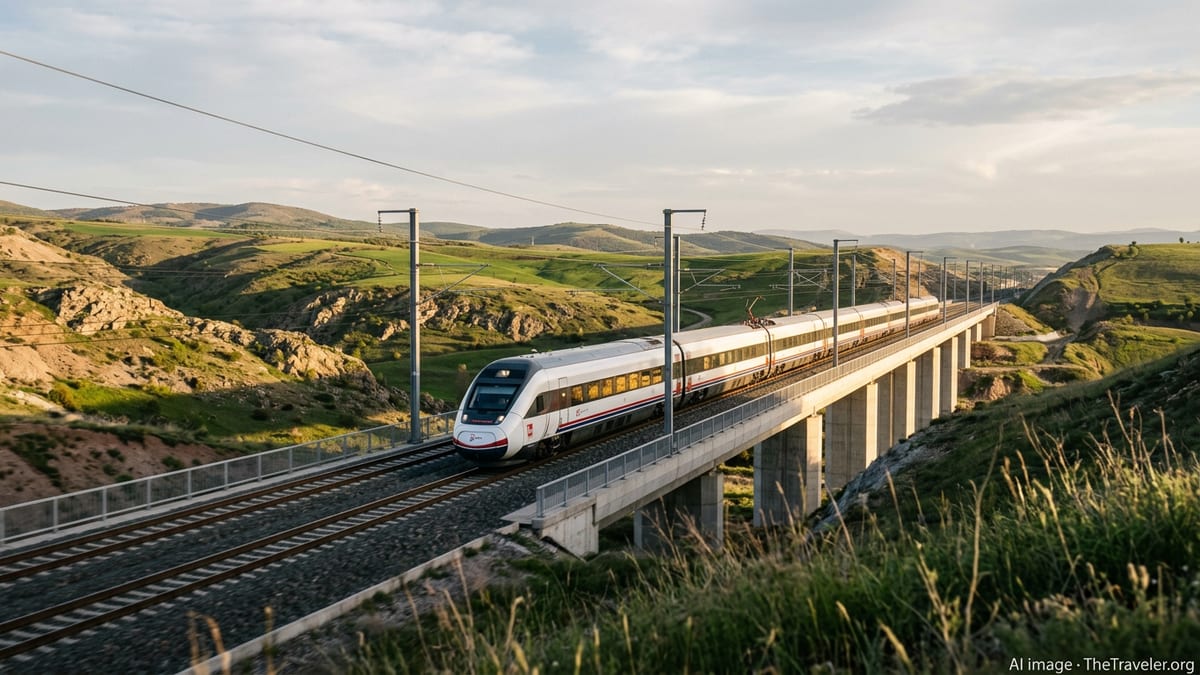
A year of intensified global rail investment
The 2015 archive of Railway Gazette International shows a year marked by strong capital flows into new and upgraded rail infrastructure, particularly in emerging markets. Throughout the year’s issues, coverage points to governments and operators turning to rail as a backbone for long-term economic development, congestion relief and emissions reduction.
News items from late 2015 highlight high profile agreements such as India’s move toward a Mumbai to Ahmedabad high speed corridor supported by Japanese technology, illustrating how rail investment was increasingly linked with international industrial partnerships. Reports also note large syndicated financing packages for network modernisation in countries including Kazakhstan, indicating that multilateral lenders and commercial banks were willing to back complex restructuring and asset renewal plans.
Across the 2015 editions, the publication’s mix of news and analysis underscores how long-distance freight, high speed passenger services and heavy-haul corridors were all being repositioned within national transport strategies. The tone of coverage suggests that railways were no longer treated as legacy infrastructure, but as strategic assets competing for investment alongside highways, ports and airports.
High speed rail corridors gain momentum
High speed rail projects feature prominently in Railway Gazette International’s 2015 reporting, reflecting a broader shift toward faster intercity links as an alternative to short-haul air travel. Articles and news briefs indicate that Asia continued to set the pace, with China’s extensive build-out complemented by new project announcements and upgrade plans in markets such as Taiwan and India.
Published material from mid-2015 points to negotiations and concession adjustments on existing high speed lines, including the restructuring of arrangements around Taiwan’s north–south corridor. These developments were framed as efforts to put financially strained concessions on a more sustainable footing while retaining the strategic benefits of high speed connectivity between major cities.
The magazine’s references to financing models, build–operate–transfer concessions and technology transfer agreements show how high speed rail had become a test bed for innovative project structures. In several regions, reports indicate a growing emphasis on aligning rolling stock procurement, signalling upgrades and station area development to maximise economic benefits along high speed corridors.
Urban and metro rail respond to rapid city growth
Urban rail and metro systems were another core theme in Railway Gazette International’s 2015 output, mirroring the pressures facing fast-growing cities. Coverage from that year points to an expanding pipeline of metro and light rail projects, with particular focus on how dense urban centres were turning to grade-separated rail to ease congestion and support compact development.
Commentary on China’s urban programmes notes the emergence of large-scale funding vehicles dedicated to metro projects, with plans to deploy substantial capital into design, construction and long-term operation under public–private partnership structures. Elsewhere, shorter news items from European cities report incremental extensions, new tunnels and updated signalling on existing urban networks, underlining that capacity enhancement was not limited to entirely new lines.
Across these stories, the magazine drew attention to the operational and technical challenges of expanding urban rail, from integrating new lines with legacy networks to maintaining reliability during complex reconstruction works. The 2015 archive suggests that urban rail investment was increasingly framed not only as a transport policy decision but also as a tool for reshaping land use and supporting more sustainable city forms.
Technology, standards and digitalisation in focus
Beyond infrastructure, Railway Gazette International’s 2015 issues reflect a sector grappling with rapid technological change. Reports on signalling and train control emphasise the continued roll-out and refinement of European Train Control System specifications, including the use of formal modelling tools to verify performance parameters such as braking curves on new onboard equipment.
Technical coverage from that year also highlights the growing importance of digital systems in operations and maintenance, with suppliers and operators exploring remote condition monitoring, advanced diagnostics and more sophisticated traffic management platforms. Such developments were presented as key levers to lift capacity on existing routes without major civil works, an important consideration in densely built or financially constrained environments.
At the same time, articles and references from 2015 indicate an early stage of discussions around future-proofing railway communications and preparing for higher data demands on trains, particularly in the high speed segment. This focus on standards and interoperability suggested a recognition that coherent, long-term technology strategies would be essential to support the next wave of capacity and service improvements.
Industry structure, finance and long-term outlook
The 2015 coverage preserved in Railway Gazette International’s archive also sheds light on the evolving structure of the rail supply industry and the financial context for operators. Regular business news documented leadership changes at major equipment suppliers and highlighted consolidation trends, reflecting pressures to achieve scale in rolling stock, signalling and component markets.
Features and news briefs from late 2015 point to an active market for syndicated loans, bond issues and public–private partnership arrangements supporting rail projects. This financial activity was often discussed alongside restructuring efforts at national railways, illustrating how governance reforms and balance sheet improvements were intertwined with new investment cycles.
Taken together, the archived material portrays 2015 as a year when rail’s role in global transport systems was being redefined. Railway Gazette International’s reporting from that period shows a convergence of policy support, financial innovation and technological advancement that laid groundwork for the expansion and modernisation programmes that have continued to shape the sector in the subsequent decade.