


More news on this day
In 2018, Railway Gazette International chronicled a year of sharp contrasts for the global rail sector, with record-breaking investment in new lines and technology unfolding alongside operational challenges and shifting commercial models.
Get the latest news straight to your inbox!
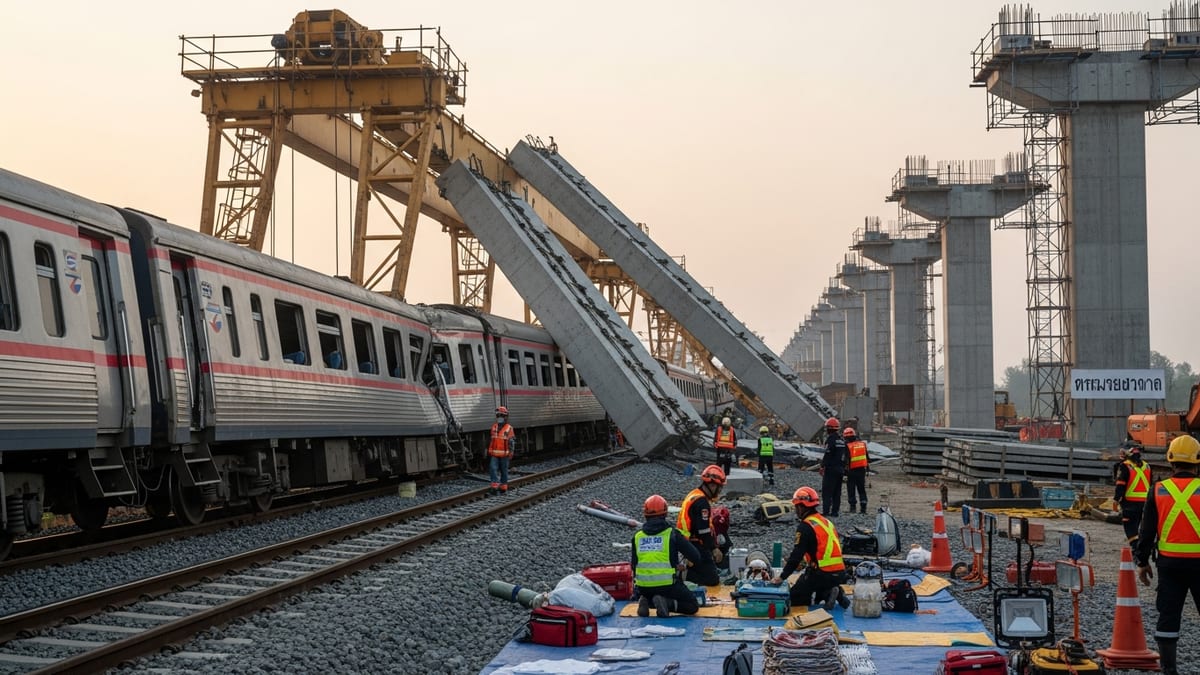
A Global Trade Title at the Heart of a Fast-Changing Industry
Railway Gazette International, a long-established monthly business magazine and news service focused on railways and urban transit, entered 2018 with a growing digital footprint and a mission to follow rapid change in rail transport. Publicly available information shows that the title, published by the Railway Gazette Group, serves readers across main line, high speed, metro, light rail and freight segments, positioning it to report on developments from multiple continents in real time.
Magazine archives for 2018 indicate that each issue combined technical features, project case studies and business coverage, reflecting how infrastructure policy, rolling stock procurement and operations have become more tightly linked. Regular country and city profiles highlighted how railways were expanding or being modernised to respond to congestion, environmental pressure and urban growth, themes that grew more prominent through the year.
The group’s broader portfolio, including specialist online news focused on national markets, provided additional context as major reforms and franchise restructurings unfolded in Europe and beyond. By late 2018, coverage increasingly emphasised questions of funding, reliability and governance, underlining how political and commercial decisions were directly shaping passenger and freight services.
High Speed Rail and Intercity Megaprojects in the Spotlight
Railway Gazette International’s 2018 output tracked a series of landmark high speed and intercity rail projects that were reshaping travel patterns. Published coverage of global rail events that year highlighted how countries in Asia and Europe continued to extend high speed networks, while feasibility studies and debates intensified in regions where such systems remained at the planning stage.
Open sources on 2018 rail developments show that one of the year’s most closely watched milestones was the start of operations on the Guangzhou–Shenzhen–Hong Kong Express Rail Link, which connected Hong Kong to mainland China’s extensive high speed network after years of construction and delays. Railway-focused periodicals, including Railway Gazette International, followed the project’s commissioning and the cross-border operating model, seeing it as emblematic of both the technical possibilities and regulatory complexities associated with long-distance high speed corridors.
Elsewhere, 2018 saw continuing construction activity on major schemes, from new high speed lines in Europe to corridor upgrades in emerging markets, and Railway Gazette International’s features examined rolling stock choices, signalling strategy and financing structures. Analysis pieces often placed these projects within wider debates about regional integration, climate objectives and competition with air and road transport, highlighting how intercity rail had become central to long-term mobility planning.
Urban Rail Growth, Technology and Safety Challenges
Urban rail and metro investment remained a central theme of Railway Gazette International’s 2018 coverage, as cities worldwide sought to address congestion and air quality concerns. Articles from that year show a strong focus on expansion projects in rapidly growing metropolitan areas, alongside modernisation programmes on legacy networks in Europe, North America and parts of Asia.
Information from the magazine’s 2018 archive indicates that topics such as driverless operation, advanced train control and communications-based signalling featured prominently. Reports examined how automation and digital control were being deployed to increase capacity and improve reliability on busy metro lines, while also raising questions about workforce skills, cybersecurity and integration with existing infrastructure.
At the same time, safety and resilience issues remained high on the agenda. Rail sector reporting in 2018, including that of Railway Gazette International, noted both progress in reducing incidents and ongoing concerns around ageing assets, extreme weather and human factors. Case studies explored how operators were investing in predictive maintenance, asset monitoring and risk management tools to strengthen performance on dense urban networks that carry millions of passengers daily.
Freight, Logistics and Shifting Commercial Models
Freight transport and logistics received sustained attention in Railway Gazette International’s 2018 reporting, reflecting uncertainty but also opportunity in this part of the industry. Publicly available summaries of rail sector news from that year describe how freight operators were responding to competitive pressure from road haulage, volatile commodity flows and changing trade patterns.
In Europe and Asia, the growth of long-distance intermodal services, including routes linking Chinese inland hubs with European terminals, was a recurring story across rail trade media. These services were portrayed as a niche but expanding complement to maritime shipping, with Railway Gazette International and its peers tracking service launches, terminal investments and equipment orders that aimed to make rail a more attractive option for time-sensitive cargo.
In North America and other liberalised markets, 2018 coverage pointed to evolving commercial strategies, mergers and regulatory debates, as freight railways sought to balance shareholder expectations with infrastructure obligations. Analysis in specialist publications considered how pricing policies, capacity allocation and service reliability could influence whether shippers shifted more traffic from road to rail, a key question for policymakers interested in decarbonisation.
Digitalisation, Data and the Future of Rail Reporting
The year 2018 also marked an acceleration in the rail sector’s adoption of digital tools, a trend that shaped both the industry and the way Railway Gazette International reported on it. Articles and special reports focused on topics including condition-based maintenance, data analytics for timetable planning, and the integration of signalling with broader network management platforms.
Publicly available information about the Railway Gazette Group suggests that the publisher simultaneously expanded its own digital channels, using online news, newsletters and multimedia content to complement the monthly print magazine. This shift enabled more rapid coverage of orders, contract awards and regulatory changes, which had become too frequent and globally dispersed to be captured solely in a traditional print cycle.
By the end of 2018, the interplay between rail digitalisation and news delivery was clearly visible. The same data-driven approaches that infrastructure managers and operators were introducing on their networks were being mirrored in how trade media tracked trends, curated archives and offered searchable databases of projects and rolling stock. Railway Gazette International’s 2018 output provides a snapshot of a sector in transition, where technology, policy and passenger expectations were all moving quickly, and where specialised journalism played a central role in interpreting those shifts for a global professional audience.