


More news on this day
Ronald Reagan Washington National Airport will largely shut down flight operations on July 4 as federal airspace restrictions for Independence Day military flyovers and a massive semiquincentennial fireworks show bring unusual disruption to one of the country’s busiest political gateways.
Get the latest news straight to your inbox!
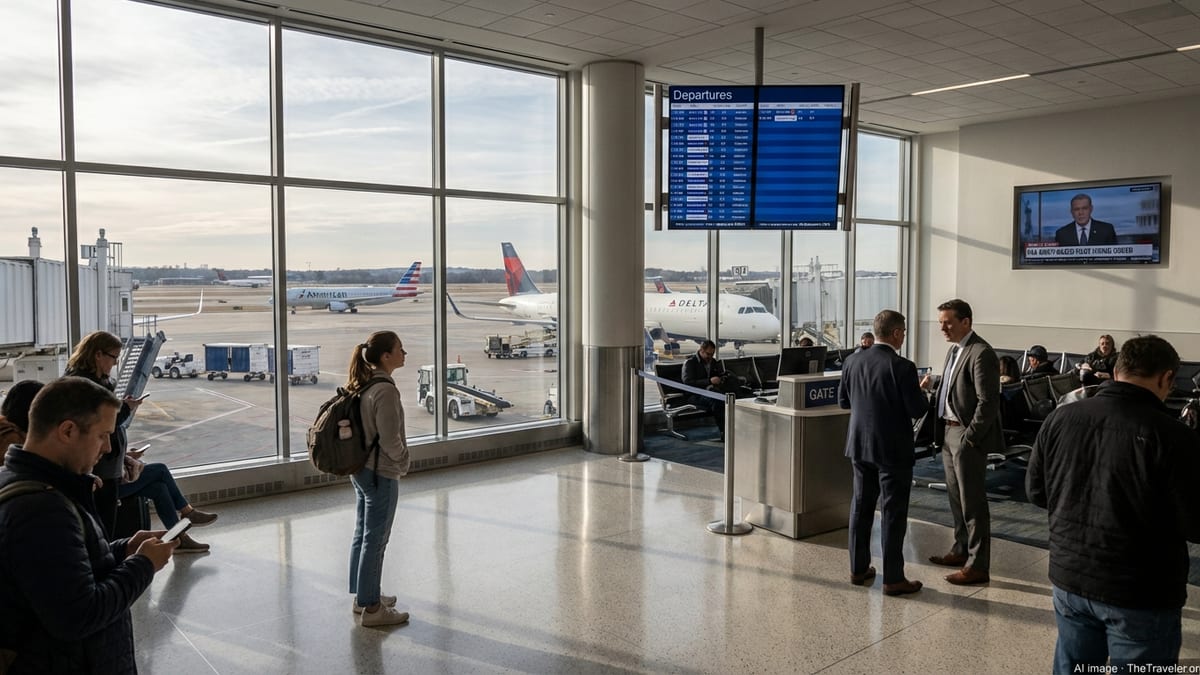
Extended Airspace Lock Cuts Deep Into Holiday Schedule
Publicly available notices from the Metropolitan Washington Airports Authority and the Federal Aviation Administration show that most commercial flights at Reagan National will be grounded for hours on July 4 while a sweeping airspace lock takes effect over central Washington. The restrictions are tied to America 250 festivities, including prolonged military flyovers and what organizers describe as a record-scale fireworks display over the National Mall.
Local coverage indicates that Reagan National will stop takeoffs and landings beginning around midday on July 4, with no scheduled commercial operations for the remainder of the day. The shutdown is being characterized by aviation observers as one of the most extensive Independence Day flight interruptions the airport has ever seen, far exceeding the shorter pauses that usually occur during annual flyovers and fireworks.
Temporary flight restrictions and special security measures around the nation’s capital are not unusual, but the combination of the semiquincentennial celebration, a late-night fireworks program and rolling aviation demonstrations has produced an exceptionally long airspace closure window. Washington travel analysts note that the halt at Reagan National coincides with peak summer demand, amplifying the potential for wider network effects if flights are not carefully managed.
Reagan National will not be the only airport affected by Fourth of July security and ceremonial activity, but its location just across the Potomac River from the National Mall places it at the center of the most restrictive airspace. Nearby Washington Dulles International and Baltimore/Washington International Thurgood Marshall airports are expected to maintain normal operations, offering alternate options for travelers headed to or from the region.
American, Delta and United Adjust Schedules and Reroute Passengers
Major U.S. carriers with large presences at Reagan National, including American Airlines, Delta Air Lines and United Airlines, have already reworked their schedules to comply with the airspace lock while aiming to limit passenger disruption. According to airline advisories and published reports, carriers began adjusting timetables weeks in advance, pulling flights out of the affected window and, in many cases, shifting capacity to Dulles or Baltimore/Washington instead.
American, the dominant operator at Reagan National, has issued a formal travel alert for Washington-area passengers covering the days immediately leading into the holiday period. The advisory allows certain customers ticketed to or from Reagan National to rebook without change fees within a specified date and city pair range, signaling the carrier’s expectation of reduced flexibility on July 3 and July 4 themselves. Public information indicates that some American departures on July 3 will also pause for several hours to accommodate rehearsal flyovers and security measures.
Delta and United, which operate smaller but strategically important schedules at Reagan National, have publicly outlined similar steps. Airline statements summarized in recent coverage describe proactively trimming or rescheduling flights during the July 3 to July 4 period and offering affected travelers the option to move to earlier or later departures where space permits. Some passengers are being accommodated on alternate routings through Dulles, Baltimore or other East Coast hubs to maintain connectivity during the Reagan National shutdown.
Airline industry analysts point out that much of the disruption has been shifted behind the scenes into schedule planning rather than day-of cancellations. By removing flights from the timetable ahead of time, carriers gain more control over crew assignments and aircraft positioning, which can help keep the broader network running smoothly through a peak holiday weekend.
Military Flyovers and Record Fireworks Drive Security Perimeter
The unusual length and timing of the airspace lock are closely tied to an expanded program of military aviation displays and an ambitious fireworks show associated with Washington’s America 250 celebration. Event plans outlined in public briefings describe hours of rolling flyovers by a range of military aircraft, beginning in the afternoon and continuing into the evening above the capital region.
Separate coverage of the Freedom 250 and “Salute to America” programming indicates that the nighttime fireworks on the National Mall are expected to start considerably later than in previous years, potentially around 11 p.m., and to last longer as organizers attempt to set a world record for a pyrotechnic display. To support that schedule, the federal security perimeter and related aviation restrictions will stay in place well into the night, preventing Reagan National from resuming operations once the afternoon ground stop begins.
The FAA routinely issues temporary flight restrictions around large public events, particularly when military aircraft, high-profile dignitaries or major fireworks displays are involved. In this case, the combination of all three factors in close proximity to sensitive federal sites has led to measures that resemble those put in place during presidential inaugurations, with layered ground security and tightly managed airspace around central Washington.
Travel industry observers note that the same security posture affecting commercial aviation will also limit recreational and general aviation flying near the capital region. Drone operations in the restricted zone are expected to be heavily curtailed or banned outright for the duration of the celebration period, and sightseeing flights that sometimes operate around the broader metropolitan area will need to steer clear of the core airspace.
Passengers Urged to Reroute Through Dulles and BWI
With Reagan National effectively off the board for much of July 4, regional travel advisories are steering passengers toward alternative airports. Guidance from the airports authority and travel publications points to Washington Dulles International, to the west of the city, and Baltimore/Washington International Thurgood Marshall, to the northeast, as the primary substitutes for flights that would ordinarily touch Reagan National.
Major carriers have already shifted some holiday capacity to those airports, and booking data on public-facing platforms shows additional seats available on routes that typically see balanced traffic across the three Washington-area gateways. The pattern suggests that airlines are trying to absorb displaced Reagan National passengers into the wider regional system rather than simply removing demand from the market.
Travel experts recommend that anyone who has not yet finalized plans for the holiday weekend consider flying into or out of Dulles or BWI on July 4 itself, especially for itineraries that cannot be easily moved to July 3 or July 5. For travelers who must use Reagan National because of proximity or schedule constraints, moving flights outside the restricted window, even by several hours, may be the most practical way to avoid disruption.
On the ground, passengers heading to substitute airports are being urged to allow additional time for surface travel, particularly on the evening of July 4, when road closures around downtown Washington and the National Mall will be in effect for crowds attending the fireworks and related events.
Fourth of July Travel in Washington Enters New Territory
Although short disruptions at Reagan National during Independence Day festivities occur most years, aviation historians and local officials describe this year’s schedule as unprecedented for a July 4 celebration. The prolonged closure, late-night fireworks and designation of the event as a national special security occasion have combined to reshape travel patterns across the metropolitan area at the height of the summer season.
For airlines, the episode serves as another stress test of their ability to manage planned, large-scale constraints on critical airports while maintaining reliability elsewhere in the network. For travelers, it is a reminder that major civic events in politically sensitive locations can have far-reaching effects on routine mobility, even when no weather or technical disruption is involved.
Looking ahead, some industry commentators suggest that the experience in Washington could influence how carriers and regulators handle airspace and scheduling during future large-scale national celebrations. For now, travelers bound for the capital region over the holiday are being advised to treat Reagan National’s July 4 shutdown as a central planning factor, not a minor timing quirk, as America’s 250th birthday transforms the skies over the city into a carefully choreographed stage.