


More news on this day
A rare mix-up involving two American Airlines jets flying simultaneously with the same flight number near Phoenix led to a narrowly avoided disaster, according to recent media coverage and publicly available accounts from aviation observers.
Get the latest news straight to your inbox!
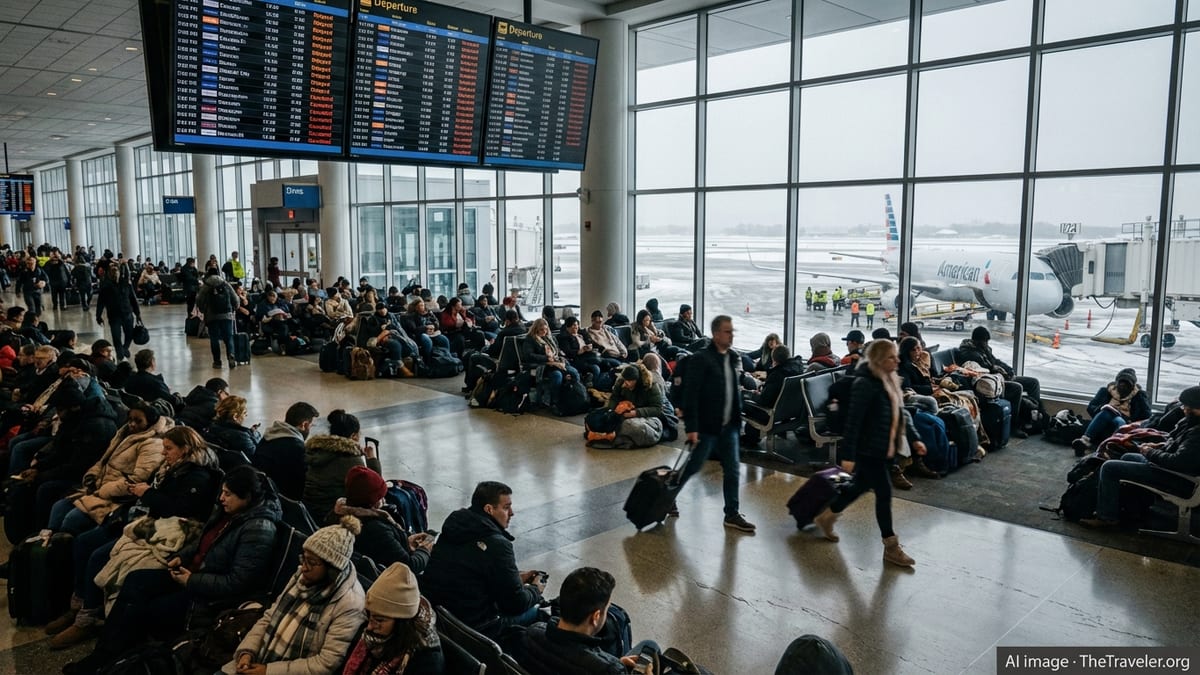
How Two Jets Ended Up Sharing One Flight Number
Published reports indicate that the incident unfolded near Phoenix when two American Airlines flights were dispatched under the same flight number and call sign while operating in the same region of airspace. Aviation outlets describe one aircraft inbound and another outbound, both identified over the radio with the same numerical designation, a situation that can create confusion in busy skies.
According to coverage of the event, the flights were filed and accepted through standard dispatch and air traffic control processes before anyone noticed that both aircraft were using the identical identifier. Industry specialists quoted in news reports suggest that the duplication likely originated in the airline’s internal planning and dispatch system, where a turnaround flight or schedule change can inadvertently recycle a number while the original aircraft is still airborne.
The duplication meant that when controllers and pilots referenced the flight number, there was an inherent risk that instructions, clearances, or position reports might be associated with the wrong jet. Safety analysts note that, while crew members rely on additional details such as altitude, heading, and transponder codes, the shared call sign removed one of the critical layers of redundancy that normally help keep aircraft safely separated.
Accounts shared by aviation enthusiasts monitoring the event through publicly available flight-tracking data and radio communications logs suggest that the overlap occurred during a relatively busy period of traffic in the Phoenix area. That context increased concern that any delay in recognizing the error could have translated into conflicting maneuvers or misread instructions.
Quick-Thinking Controller Prevents Serious Incident
Coverage by national and aviation-focused news organizations credits a Phoenix-area air traffic controller with quickly recognizing that something was wrong when two aircraft appeared to respond to the same call sign. Reports describe how the controller, noticing conflicting position information and acknowledging that two aircraft were checked in under the same number, intervened to create additional spacing and clarify which jet was which.
Publicly available descriptions of the radar replay show that, while the aircraft were never reported to have entered an immediate collision course, the potential for a dangerous mix-up was rising. By issuing corrective headings and altitude instructions, the controller increased the distance between the two jets and removed any ambiguity about their respective positions and intentions.
Aviation analysts commenting on the event note that the response illustrates the importance of human vigilance, even in a system heavily supported by automation. Controllers use a combination of call signs, tagged data blocks on radar scopes, and coordination with nearby facilities, and they are trained to question anomalies such as duplicate identifiers or unexpected pilot readbacks.
News coverage also emphasizes that the event appears to have concluded without injuries, damage, or disruptive maneuvers for passengers on board either aircraft. Both American Airlines flights reportedly continued to their destinations after the situation was resolved and the call sign conflict was addressed.
Why Duplicate Flight Numbers Are So Dangerous
The incident has drawn attention to how modern airline scheduling practices can unintentionally create safety concerns when duplicate or overlapping flight numbers are assigned. Large carriers operate thousands of flights each day, and use a limited pool of numbers that are often recycled across different routes, time zones, and days of operation. In routine practice, those numbers are kept separate in time and space so that only one active flight is using a given call sign at any moment.
Experts cited in recent analyses warn that when two flights with the same number are aloft in the same general region, the risk of miscommunication grows significantly. Pilots may respond to a call that was intended for the other aircraft, mishear a clearance, or believe that a vector or altitude assignment applies to them when it does not. In complex arrival and departure corridors, a single incorrect turn or climb based on a misunderstood instruction can quickly erode safe separation standards.
The danger is not limited to en route operations. On or near the ground, shared flight numbers can introduce confusion in tower communications, gate operations, and ground control instructions. Even if radar tags distinguish the aircraft, the presence of identical call signs in a congested radio environment adds workload for both controllers and pilots, increasing the likelihood of readback errors and missed corrections.
Following previous high-profile near misses in the United States, safety bodies have repeatedly highlighted the need for robust defenses against human error, including clearer procedures for assigning call signs. The Phoenix episode is being discussed in that broader context as a reminder that software safeguards and organizational rules must be strong enough to prevent two jets with the same identity from operating in overlapping airspace.
Regulators and Industry Examine System Safeguards
While detailed investigative documentation has not yet been publicly released, aviation regulators typically review such incidents to determine whether additional safeguards are needed. Past investigations into runway incursions and near collisions in U.S. airspace have resulted in recommendations that focus on communication clarity, staffing levels, and better use of technological tools that alert controllers to emerging conflicts.
Public information from earlier safety reports highlights recurring themes: complex workloads in busy control facilities, pressure from dense schedules, and the potential for multitasking to lead to oversights. Analysts observing the Phoenix case note that a duplicate flight number is precisely the kind of oversight that automated systems and procedural checks are meant to catch before aircraft push back from the gate.
Industry commentary following the incident indicates that airlines are likely to revisit their internal processes for assigning and validating flight numbers and call signs, especially for aircraft operating to and from the same airport within a short time window. Some aviation specialists have suggested that dispatch software could include hard stops that prevent release of a new flight plan if the same call sign is already active within a defined radius or time frame.
Regulators, in turn, may assess whether additional guidance is needed to ensure consistency across carriers and air traffic facilities. The discussion fits into a wider national effort to reduce the number of serious close calls in U.S. skies by tightening procedures around communication, identification, and separation standards.
Aviation Community Renews Focus on Close-Call Trends
The close call involving the two American Airlines jets arrives at a time when U.S. aviation safety is under the spotlight due to a series of unrelated near misses on runways and in terminal airspace. Recent years have seen a rise in public attention on such events, driven in part by widely shared video, audio recordings, and flight-tracking visualizations that make the margin of error more tangible for travelers.
According to compiled data and earlier federal summaries, the overall rate of the most serious incursions remains low compared with the enormous volume of daily flights. However, several high-visibility cases have prompted calls from lawmakers, unions, and safety advocates for more investment in hiring and training air traffic controllers, modernizing equipment, and improving airline operational practices.
Aviation commentators point out that, in many of these episodes, layers of the safety system still worked as intended. Pilots followed cockpit alerts, controllers corrected instructions, or onboard collision-avoidance systems prompted course changes. The Phoenix same-flight-number incident appears to fall into that category, serving as another example of how human and technological defenses can avert disaster even when an upstream error slips through.
For passengers, the episode is a reminder that aviation safety is built on redundancy, constant monitoring, and continuous learning from close calls. As investigators and industry experts examine how two jets came to share the same flight number in crowded airspace, their findings are expected to shape future policies designed to keep such a scenario from recurring.