


More news on this day
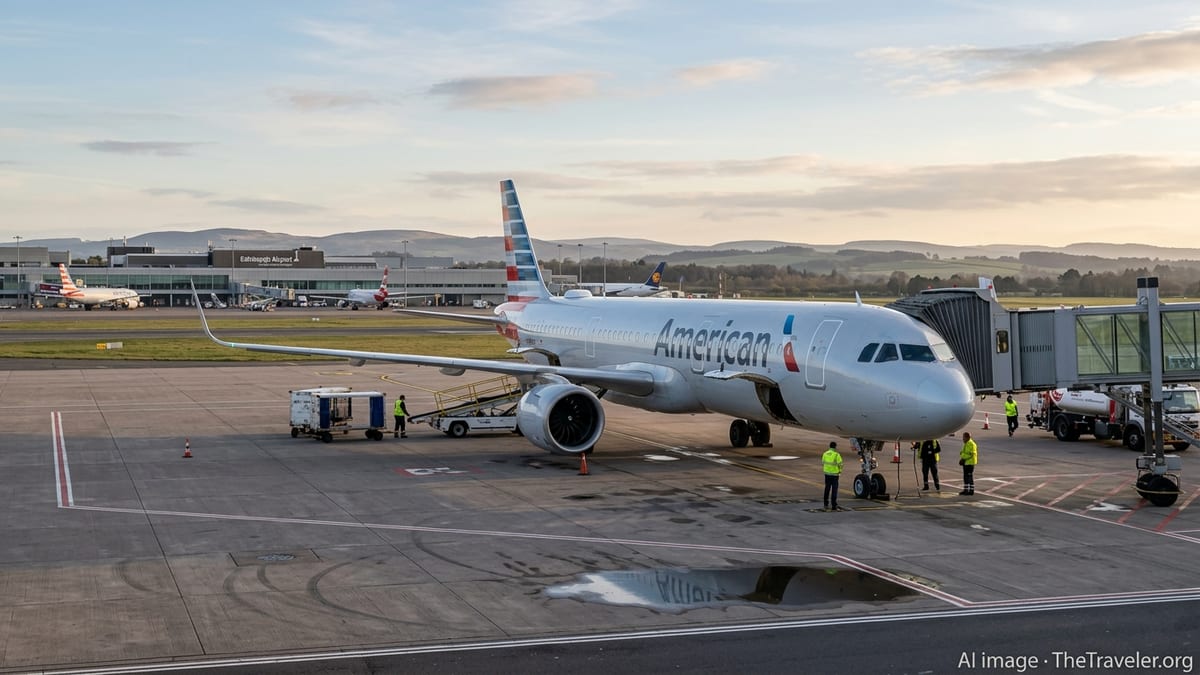
American Airlines is accelerating deployment of its new Airbus A321XLR, a 155 seat long range narrowbody that is now scheduled across nine premium transcontinental and transatlantic routes, signaling a major shift in how the carrier plans to serve long haul markets with smaller aircraft.
Get the latest news straight to your inbox!
A Premium Heavy Narrowbody With Just 155 Seats
Publicly available fleet data and cabin guides show that American’s Airbus A321XLRs are configured with only 155 seats, far fewer than the roughly 190 seats on the airline’s standard A321 aircraft. The jet features three distinct cabins: 20 Flagship Suite business class seats in a 1 1 layout, 12 Premium Economy seats, and 123 Main Cabin seats, creating one of the most premium heavy narrowbody layouts in the U.S. market.
Reports indicate that the design centers on providing a widebody style experience on routes that do not justify a larger twin aisle aircraft. Business class suites come with lie flat beds and doors, while Premium Economy adds larger recliners with leg and foot rests. Throughout the cabin, passengers have access to seatback entertainment, Bluetooth connectivity, power outlets and high speed Wi Fi, positioning the A321XLR as a flagship product despite its single aisle footprint.
Industry analysis notes that the low overall seat count allows American to keep unit costs competitive while selling a higher proportion of premium seats. That mix is intended to attract corporate travelers on key business routes while still giving the airline flexibility to profitably serve thinner transatlantic markets that might struggle to fill a larger widebody year round.
Transcon Workhorse: New York and Boston To The West Coast
American’s first A321XLR route is its high profile New York John F. Kennedy to Los Angeles service, which entered the schedule with the new aircraft type ahead of a broader rollout. The airline is using the XLR to gradually replace its older A321T fleet on this flagship corridor, maintaining a three cabin premium product while sharply increasing total capacity compared with the 102 seat A321T.
As more aircraft arrive, American is extending A321XLR coverage to additional transcontinental routes. Published schedules and route analyses indicate that JFK to San Francisco is being added to the XLR network, again targeting coastal business demand with lie flat suites and a small Premium Economy cabin. These deployments are central to American’s strategy of keeping a consistent, high end product on its most competitive domestic routes.
Boston also features prominently. Data compiled from schedule filings shows that Boston to Los Angeles is slated to become an all A321XLR route during the peak summer period, with multiple daily frequencies. That move significantly upgrades American’s presence in Boston, giving the city a dedicated premium transcon product that mirrors what is available from New York while taking advantage of the aircraft’s relatively modest size.
Crossing The Atlantic: From JFK To Edinburgh And Beyond
On the international front, American’s first scheduled transatlantic A321XLR route is New York JFK to Edinburgh. Company fact sheets and network updates describe the Scottish capital as the launch market for the type on overseas services, highlighting the aircraft’s ability to operate long thin routes where widebodies might be too large outside the peak summer season.
Industry reporting notes that Edinburgh is only the beginning. Additional filings and network previews show the A321XLR appearing on further European routes from East Coast gateways, with Barcelona, Lisbon and Amsterdam identified by several analysts as part of the initial winter and summer patterns. These routes pair major American hubs with important but relatively niche European cities, underscoring how the jet is being used to extend the network rather than just replace existing widebody flights.
Observers point out that the 155 seat layout is a key factor in keeping such routes viable deep into the shoulder and winter seasons, when demand typically falls off. By right sizing capacity while maintaining a competitive premium product, American can keep daily service in markets that might otherwise revert to seasonal or less frequent operations.
Nine Routes, One Strategy: Right Sizing Long Haul Capacity
Based on published scheduling data and aviation industry coverage, American’s A321XLR route map now encompasses nine distinct services spanning domestic and transatlantic markets. These include multiple daily frequencies on New York JFK to Los Angeles and Boston to Los Angeles, supplementary service on JFK to San Francisco, and a growing list of East Coast to Europe links anchored by the New York to Edinburgh launch.
Additional European pairings identified in recent analyses include services from JFK and other East Coast gateways to cities such as Barcelona, Lisbon and Amsterdam, rounding out the current tally of nine routes where the type is scheduled either seasonally or year round. Together, these flights illustrate how American is concentrating the aircraft on markets where premium demand is strong but total passenger volumes are better matched to a 155 seat jet than to a larger widebody.
Network planners appear to be using the A321XLR as a flexible tool. The aircraft can pivot between summer heavy transatlantic flying and high yield transcontinental missions in the off season, keeping utilization high. This dual role approach helps explain why the first wave of routes spans both coasts of the United States as well as multiple points in Europe, rather than being confined to one region.
What The A321XLR Means For American Flyers
For passengers, the expansion of A321XLR service means that more long haul and premium domestic flights will take place on a single aisle aircraft, but with amenities designed to mirror or improve upon many widebody experiences. Travelers in business class gain direct aisle access suites with doors, while Premium Economy offers upgraded seating that did not exist on the outgoing A321T. Even in the Main Cabin, reports from early flights highlight relatively generous legroom compared with some of American’s other narrowbody configurations.
The trade off is a more compact cabin and a higher passenger to lavatory ratio than on some widebody aircraft, a point noted in traveler commentary and online discussion. However, American is betting that most customers will value the improved seats, in flight entertainment and connectivity more than the perceived drawbacks of flying long haul on a single aisle jet.
As deliveries continue and the route map evolves, American’s use of the Airbus A321XLR is set to become a key case study in how airlines deploy new generation long range narrowbodies. With only 155 seats spread across three cabins on each aircraft, the airline is placing a considerable strategic wager that smaller, premium heavy jets can unlock routes and schedules that would not otherwise be sustainable, reshaping expectations for both transcontinental and transatlantic travel.