


More news on this day
Hong Kong is recovering from a night of intense downpours after a rare red rainstorm warning brought severe flooding, suspended classes and major disruption to travel across the city.
Get the latest news straight to your inbox!
Warning Raised As Skies Open Over the City
The Hong Kong Observatory issued a red rainstorm warning in the early hours of May 21, signalling that more than 50 millimetres of rain had fallen or was expected within an hour over wide areas of the territory. The alert followed earlier thunderstorm warnings as a band of heavy showers moved across the Pearl River Delta, feeding humid, unstable air over the city.
According to official bulletins, the red signal was hoisted at around 2:40 a.m. local time, part of a three-tier system that marks one of the most serious levels of rain-related risk short of a black warning. The service cautioned that low-lying and poorly drained districts could see rapid waterlogging, and that road and rail journeys were likely to be significantly disrupted.
The red alert came only a day after strong thunderstorm warnings had been extended into the night, underscoring how quickly conditions deteriorated. Weather forecasts pointed to bands of torrential rain and squally thunderstorms lingering over Hong Kong and neighbouring provinces, in line with a broader pattern of heavy precipitation reported across southern China in recent days.
Rainstorm warnings are typically most common between April and September, but forecasters noted that May is often one of the wettest months. Publicly available information from the Observatory describes red rainstorm conditions as capable of causing severe traffic disruption and, in some cases, widespread flooding.
Flash Flooding Hits New Territories and Urban Lowlands
The heaviest impacts were reported overnight and into the Thursday morning commute, with several parts of the New Territories and northern districts battling flash floods. Local coverage highlighted scenes of muddy water surging through village streets and inundating rural roads as drainage systems struggled to cope with the volume of rainfall.
In the northern New Territories, emergency crews deployed mobile pumping systems, including remotely operated “water-pumping dragon” devices, to channel floodwater away from housing clusters and transport corridors. Reports indicate that crews worked through the night to clear blocked drains and reopen partially submerged roads as water levels gradually receded.
Urban areas on Hong Kong Island and in Kowloon also saw localized flooding, particularly in known low-lying pockets near underpasses, tram tracks and older drainage networks. Photos and video shared by local media showed buses and cars moving slowly through brown floodwater, while some smaller vehicles were forced to turn back from deeply submerged sections of road.
Drainage experts have previously warned that short, intense bursts of rain pose a particular challenge for the city’s hill-framed catchments, which can funnel runoff into urban areas within minutes. The latest event added renewed pressure on ongoing flood-mitigation projects, particularly in fast-developing northern districts close to the Shenzhen border.
Transport Networks Suffer Delays and Closures
Travel across Hong Kong was significantly affected through the morning, as saturated roads and persistent downpours slowed traffic and triggered temporary closures. Bus operators curtailed or diverted a number of routes in flood-prone districts where water pooled at junctions and roundabouts, while some green and red minibuses were unable to complete their usual hill and village runs.
Rail services on the city’s mass transit network continued to run but faced heavier than usual passenger loads as commuters shifted from road to rail. Reports from local media described crowded platforms and minor delays as trains operated at reduced speeds in exposed sections due to poor visibility and slippery track conditions.
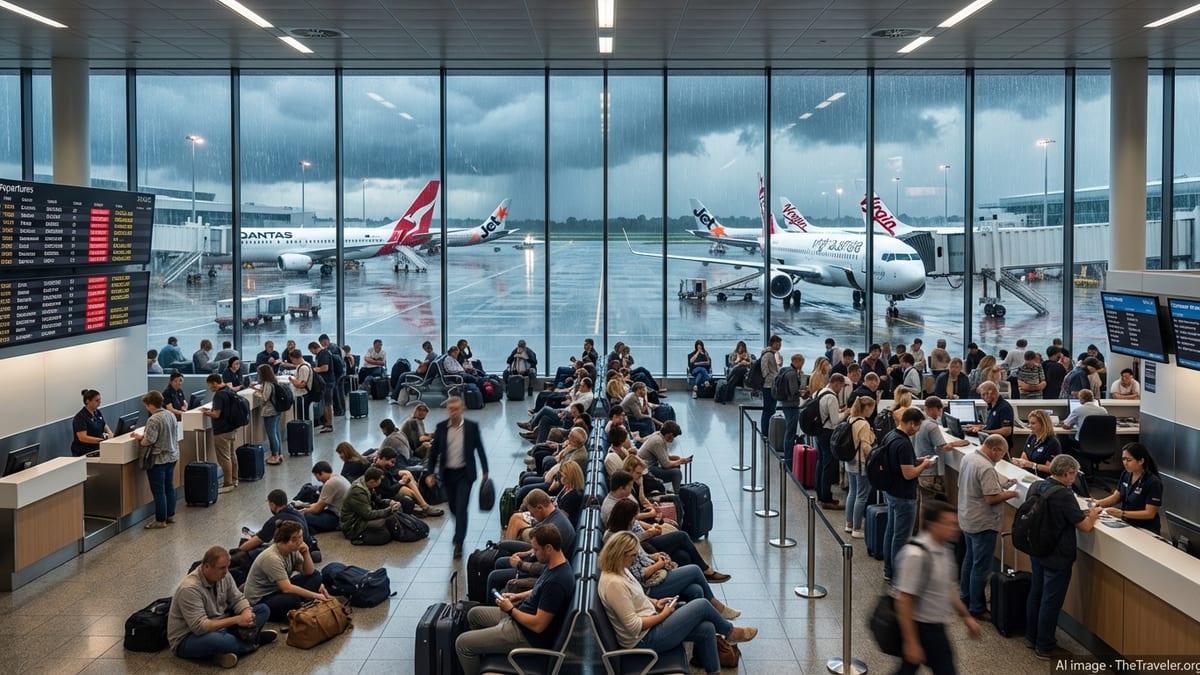
At Hong Kong International Airport, publicly available information showed that core operations remained open, although airlines warned of potential knock-on delays to arrivals and departures as aircraft were rerouted to avoid storm cells. Travellers were urged to allow extra time for journeys to and from the airport because of the risk of congestion on major expressways and airport buses.
Ferry services across Victoria Harbour and to outlying islands operated on limited schedules in periods of heaviest rain and thunderstorms. Harbour crossings were further complicated by gusty winds and reduced visibility, with operators advising passengers to monitor service notices throughout the day.
Schools Suspended and City Asked to Limit Nonessential Travel
The red rainstorm warning automatically triggered special arrangements for schools and child-care centres. In line with established protocols, classes were suspended for the morning, and parents were advised via official announcements and media broadcasts to keep students at home until conditions improved.
Workplaces across the city adopted a patchwork response. Many offices in core business districts remained open, but published guidance encouraged employers to show flexibility for staff facing flooded access roads or reduced public transport. Some companies advised employees to work remotely until the red signal was lowered.
Public information campaigns repeated standard advice that people who needed to travel should carefully consider weather and road conditions before setting out, especially in areas known to be vulnerable to flooding or landslides. Residents were also reminded to stay away from swollen streams, waterfront promenades and steep slopes where heavy rain can destabilize soil.
For visitors, the sudden change in conditions highlighted the importance of monitoring Hong Kong’s weather warning system during the late spring and summer months. Travel advisories recommended that tourists build additional time into itineraries, check attraction opening hours and be prepared for outdoor activities and hikes to be postponed at short notice.
Part of a Wider Pattern of Extreme Rain in the Region
The red rainstorm episode in Hong Kong unfolded as southern and central China grappled with a wider spell of severe weather. Regional coverage described torrential rains across multiple provinces, with reports of fatalities, landslides and large-scale evacuations as rivers swelled and urban areas were inundated.
Meteorologists have linked the recent wave of storms to a strong early-season monsoonal pattern, with warm, moisture-heavy air feeding into persistent frontal systems. In neighbouring mainland provinces, national forecasts warned of continued risks of mountain torrents, urban waterlogging and river flooding as the main rain belt edged gradually south and east.
In Hong Kong, climate scientists have previously noted that intense short-duration downpours are becoming more frequent, reflecting broader global trends of heavier rainfall events in a warming atmosphere. The city’s once-in-decades black rainstorm in 2023, and repeated red and amber warnings since, have fuelled public debate over drainage capacity, slope safety and the resilience of key transport infrastructure.
While Thursday’s red signal was lifted as conditions slowly improved, forecasters cautioned that showers and thunderstorms could return in the days ahead. Travellers and residents alike were advised to keep monitoring the latest advisories, as the territory moves deeper into a rainy season that appears increasingly volatile.