


More news on this day
Numerous flight cancellations at Huizhou Pingtan Airport in China’s Guangdong province on May 22 have disrupted domestic routes and left hundreds of travelers stranded in terminals and on grounded aircraft.
Get the latest news straight to your inbox!
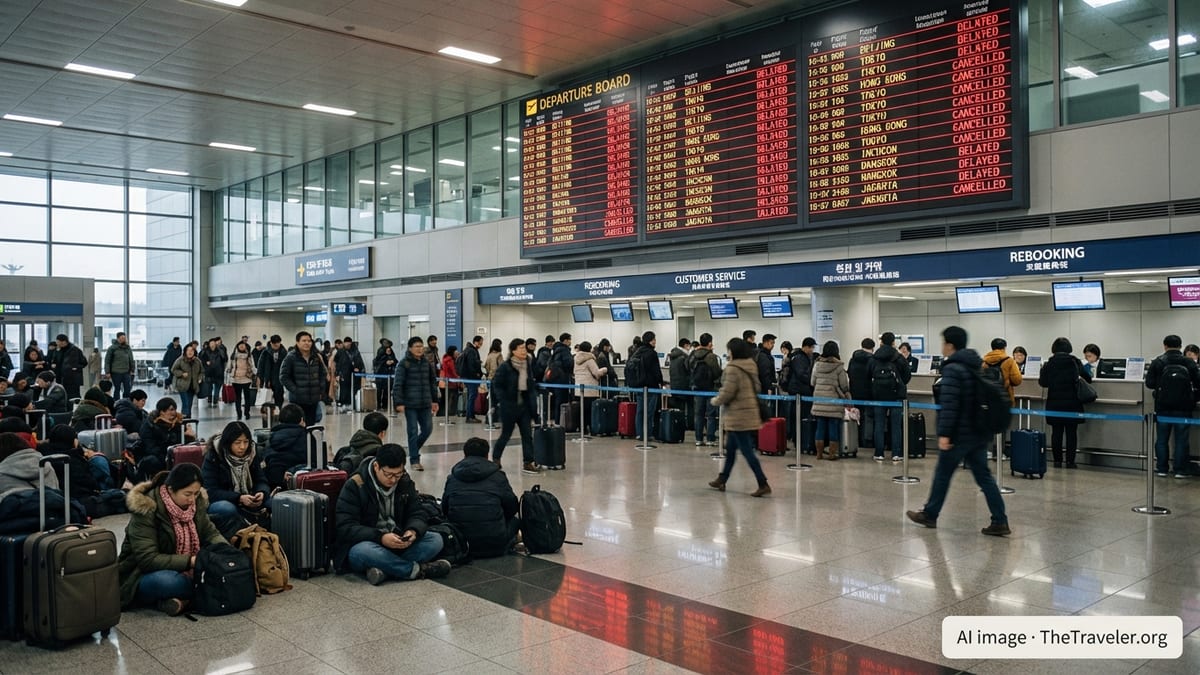
What is happening at Huizhou Pingtan Airport
Huizhou Pingtan Airport, a dual‑use military and civilian facility serving the fast‑growing city of Huizhou in south‑central Guangdong, has experienced an unusual spike in cancellations affecting multiple airlines and destinations. Real‑time flight boards on tracking platforms show a series of domestic departures and arrivals scrubbed across the day, sharply reducing capacity on several key routes.
Services operated by China Eastern Airlines, Chongqing Airlines and China Express Airlines between Huizhou and cities such as Chengdu, Chongqing, Tongren and Wuhan are listed as canceled, affecting both outbound and inbound rotations. Additional flights were delayed for extended periods before being removed from schedules entirely, adding to congestion as passengers sought alternative options at short notice.
The disruption comes at a time when Huizhou Pingtan has been expanding its role within southern China’s air network. In the most recent full year of data, the airport handled more than three million passengers and operated dozens of domestic routes, making a concentrated wave of cancellations especially disruptive across the region.
While no single official cause has been detailed in publicly available information, the pattern of same‑day cancellations across carriers suggests a localized operational or infrastructure constraint rather than a nationwide aviation issue.
How many passengers are affected
Publicly accessible schedules and seat maps indicate that individual flights between Huizhou and major inland hubs typically operate with narrow‑body aircraft capable of carrying more than 150 passengers. With multiple services in both directions canceled within hours, the total number of affected travelers likely reaches into the high hundreds, once both originating and connecting passengers are counted.
Travel patterns at Huizhou Pingtan suggest that many passengers are domestic business travelers, migrant workers returning to inland provinces, and leisure travelers using the airport as a lower‑cost alternative to Shenzhen or Guangzhou. For these groups, disrupted itineraries can mean missed train connections, lost hotel nights or delayed returns to work, intensifying the impact beyond the airport perimeter.
Because cancellations have occurred on routes that link Huizhou to other secondary cities, many stranded travelers face fewer same‑day alternatives than they might at a larger hub. Flight‑tracking data and airline booking engines show limited spare capacity on parallel services from nearby airports, forcing some travelers to replan entire journeys or consider switching to rail at short notice.
The ripple effects extend beyond Guangdong. When aircraft and crews are unable to complete scheduled rotations, later services from inland cities back to coastal regions can also be delayed or canceled, creating a secondary wave of disruption for passengers who never pass through Huizhou itself.
What this means for travelers booked via Huizhou
For travelers holding tickets into or out of Huizhou Pingtan today or in the coming days, the cancellations highlight the importance of checking flight status repeatedly rather than assuming that a confirmed booking will operate as planned. Airline and third‑party tracking tools show that several services were removed from schedules only a few hours before departure, leaving limited time to adjust plans.
Passengers connecting through Huizhou on separate tickets, particularly those trying to link domestic flights with high‑speed rail, are especially exposed. If an inbound flight is scrubbed or significantly delayed, onward segments purchased separately may be forfeited, and travel insurers may treat those losses differently depending on policy terms.
Travelers using Huizhou as a more affordable alternative to Shenzhen or Guangzhou may find that once disruption hits, those savings quickly evaporate. Same‑day walk‑up fares from neighboring airports, plus ground transport and last‑minute hotel costs, can substantially exceed the original ticket price, particularly during busy travel periods.
For visitors unfamiliar with China’s domestic network, the Huizhou situation also underscores how dependent many itineraries have become on smaller regional airports. When one of these nodes encounters problems, there may be fewer redundant routes available than in larger international hubs.
What stranded passengers can realistically do
Standard passenger guidance in China indicates that travelers whose flights are canceled are generally entitled to choose between rebooking on a later service from the same airline or receiving a refund of the unused segment. In practice, publicly available accounts from past disruptions across the country show that outcomes vary by carrier, cause of disruption and how quickly passengers act.
At the airport, the most immediate step is to confirm whether the airline has already processed an automatic rebooking, which sometimes appears in the carrier’s app or on the booking page even before ground staff announcements are made. If a viable alternative is visible online, securing that seat quickly can be crucial, as later departures often fill within minutes once a major cancellation is posted to departure boards.
Where same‑day flights from Huizhou are no longer available, some travelers may choose to reroute via nearby hubs such as Shenzhen or Guangzhou. That option typically requires purchasing a new ticket, though some airlines may agree to reroute passengers if they operate overlapping services from those airports and if seats remain available. High‑speed rail presents another fallback, but popular routes can themselves sell out rapidly when air disruptions occur.
Travelers are also encouraged by consumer advocates to keep detailed records of boarding passes, updated itineraries, and receipts for hotels, meals and ground transport. These documents can support later refund claims or insurance submissions, particularly when the original cancellation notice or revised schedule is no longer visible in airline systems.
How to plan if you are flying to or from Huizhou soon
The wave of cancellations at Huizhou Pingtan serves as a timely reminder for travelers with upcoming trips through the airport to build additional resilience into their plans. For those with critical time‑sensitive commitments, such as international connections or major events, choosing flights earlier in the day and avoiding tight self‑transfer windows can reduce the risk that a single disruption will derail the entire journey.
Experts in air travel planning often recommend booking on carriers that operate multiple daily frequencies on a route wherever possible. In the Huizhou context, that can mean selecting airlines and destinations that offer several departures spread throughout the day, improving the chances of same‑day reaccommodation if one flight is canceled.
Before departure for the airport, travelers are advised to review real‑time status on both the airline’s official channels and independent tracking platforms. A pattern of mounting delays or same‑day cancellations on related routes can signal broader operational issues and give travelers a chance to adjust plans a few hours earlier, when more alternatives may still be available.
Finally, those planning domestic trips through China’s regional airports may wish to check the flexibility of their tickets and the scope of their travel insurance coverage long before departure. Clear information on change fees, refund conditions and coverage for hotel or transport costs can make a significant difference when sudden cancellations, such as those currently affecting Huizhou Pingtan, upend carefully laid itineraries.