


More news on this day
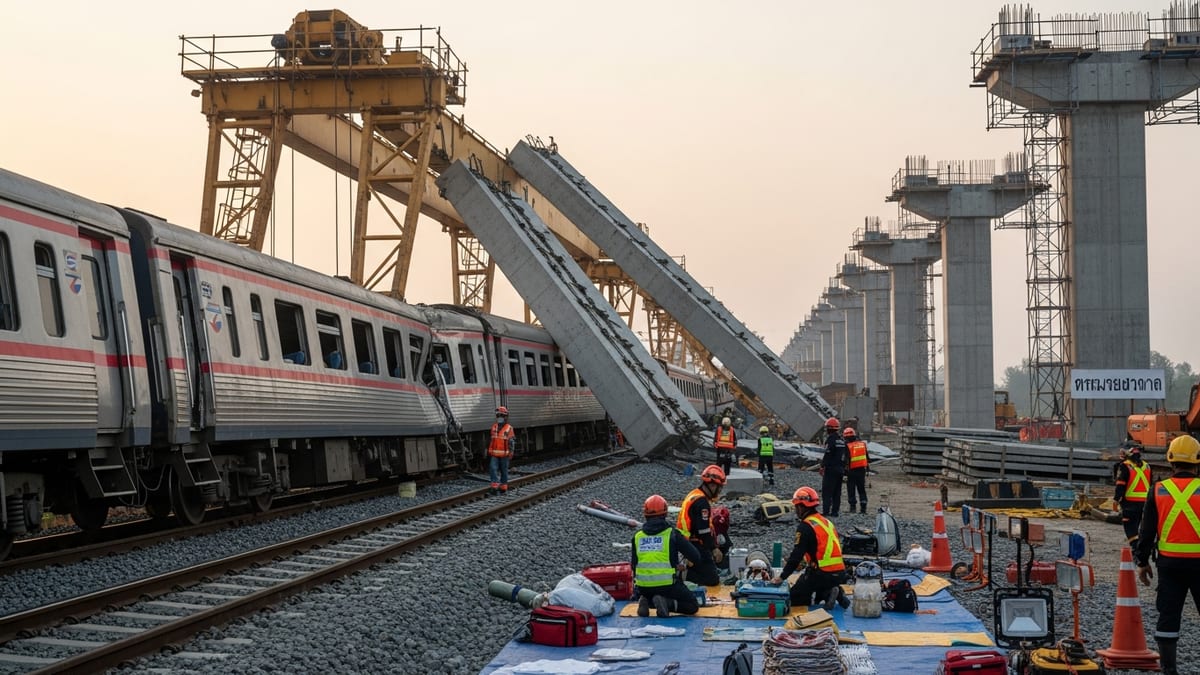
Across the United States, emergency responders and students are converging in large-scale casualty drills that turn campuses, training grounds and even mock cities into temporary disaster zones, reflecting a growing push to prepare both professionals and the public for mass-casualty emergencies.
Get the latest news straight to your inbox!
Universities Turn Campuses Into High-Pressure Training Grounds
On college campuses, emergency preparedness is moving far beyond tabletop exercises. Recent simulations have brought hundreds of medical, public health and allied health students together with local responders to triage mock victims, manage simulated chaos and practice life-or-death decisions under time pressure. Reports indicate that these events are designed to mirror the confusion and information gaps that follow natural disasters, transportation accidents or large public-event incidents.
At Texas A&M University’s Disaster City training complex, a sprawling 52-acre mock town has hosted what organizers describe as one of the largest student-led emergency response simulations in the country. Publicly available information shows that more than 600 students from disciplines such as medicine, nursing, pharmacy, veterinary science and public service recently worked side by side to care for staged victims with injuries ranging from gastrointestinal illness to severe limb trauma.
Similar interprofessional drills are being documented at other universities, including recent earthquake-response simulations in Nevada and weather-related exercises in the Midwest. These scenarios emphasize surge capacity, requiring students to prioritize care when there are more “patients” than resources, and to coordinate with fire, EMS and emergency management partners in real time.
Educators involved in these programs describe the goal as building both technical competency and psychological readiness. By exposing students to realistic sights, sounds and time pressures before they enter the workforce, training teams seek to reduce hesitation and improve performance when real emergencies occur.
Mass-Casualty Drills Focus on Bleeding Control and Triage
A core element in many of these trainings is advanced hemorrhage control. Recent course outlines from colleges and EMS training providers show students practicing the use of commercial tourniquets, wound-packing techniques and pressure dressings, along with rapid primary assessments built around frameworks such as the MARCH trauma protocol. The emphasis reflects widely cited data that uncontrolled bleeding remains a leading cause of preventable death following traumatic injuries.
At a recent mass-casualty incident training hosted by King’s College in Pennsylvania, published coverage describes students cycling through “Stop the Bleed” sessions where they learned to apply tourniquets and pack simulated wounds on training mannequins. Similar skills blocks are appearing in tactical emergency casualty care courses across the country, where participants rehearse immediate-action drills to control extremity bleeding before moving patients to safer zones.
These skills are being integrated into larger, scenario-based evolutions that require students and responders to work in unified teams. In many exercises, participants sort victims using standardized triage tags, assign treatment priorities, and coordinate transport while maintaining situational awareness of evolving hazards. The training often culminates in a full-scale mass-casualty or active-threat scenario, forcing participants to apply triage doctrines quickly while still delivering critical care.
Observers note that this practical focus is mirrored in updated trauma-education materials for law enforcement and civilian responders, which stress that timely bystander intervention with simple tools such as tourniquets or improvised bandages can significantly improve survival before advanced medical help arrives.
Federal and State Programs Expand Realistic Simulation
Alongside university initiatives, federal and state training centers are expanding programs that bring responders from multiple disciplines into shared casualty simulations. The U.S. Department of Homeland Security’s Center for Domestic Preparedness, for example, continues to run an Integrated Capstone Event in Alabama that places firefighters, law enforcement officers, EMS crews and hospital teams into an all-hazards mass-casualty environment.
Course descriptions for the Integrated Capstone Event indicate that participants move through a full incident timeline, from initial call-out and scene size-up to rescue, decontamination, prehospital treatment, evidence preservation and hospital surge. The exercises are designed to test interoperability across agencies while refining the technical steps required to move large numbers of patients through triage, treatment and transport.
Other programs bring high-fidelity simulation to local communities. University-led initiatives in states such as Iowa have invested in mobile simulation units that carry mannequins, monitoring equipment and full ambulance interiors to rural fire stations and hospitals. Public information shows that these units support small-town EMTs, nurses and physicians in rehearsing low-frequency, high-consequence events such as pediatric trauma, multi-vehicle collisions and hazardous-materials exposures.
The common theme across these offerings is repetition in realistic conditions. By recreating the noise, crowding and resource constraints typical of real incidents, trainers aim to give responders and students a safe space to make mistakes, refine communication and learn how their decisions affect the wider emergency system.
Military and Civilian Responders Share Casualty Care Lessons
Military-style casualty care techniques are increasingly crossing into civilian training environments. Tactical combat casualty care principles, originally developed for battlefield use, are being adapted by civilian agencies into tactical emergency casualty care curricula that emphasize care in hostile or unstable settings.
In Kentucky, recent reports from Fort Knox describe casualty evacuation drills where soldiers and medical personnel practice stabilizing simulated casualties and loading them onto aircraft for rapid transport. These exercises mirror the reality that, in many disasters or hostile events, responders may need to provide lifesaving interventions while simultaneously managing security concerns and complex logistics.
Civilian emergency services are adopting many of the same tools and concepts, from junctional tourniquets designed for difficult-to-treat groin injuries to coordinated responses that pair EMS providers with law enforcement inside warm zones. Training materials highlight strategies such as moving victims to designated casualty collection points, using litters and drag techniques to remove patients from danger, and maintaining clear radio communication even as scenes remain fluid.
The exchange of lessons between military and civilian communities is also influencing how students are prepared. Health-professions programs now frequently incorporate discussion of tactical considerations, including how to balance personal safety with duty of care, and how to operate within unified command structures during complex incidents.
From Classroom to Community: A Broader Culture of Readiness
Beyond formal responders, training organizations are investing in outreach that targets students and community members as potential first actors in an emergency. National campaigns around bleeding control, for example, encourage schools, workplaces and event venues to stock tourniquets and trauma kits alongside automated defibrillators, and to provide brief skills sessions to staff and volunteers.
Published guidance from trauma associations and EMS organizations notes that even basic familiarity with casualty care steps can make a difference, particularly in rural or congested urban areas where transport times may be prolonged. As a result, more universities are opening portions of their disaster exercises to non-medical students who volunteer as role-players or observe field operations, giving them insight into how large-scale emergencies unfold and what actions are most useful.
Travelers are beginning to encounter this shift in subtle ways, from airports and sports arenas that advertise public “Stop the Bleed” classes to tourist destinations that hold joint drills with local hospitals and emergency services. For destinations that host major festivals, marathons or outdoor adventure activities, reports suggest that visible preparedness efforts are increasingly seen as part of responsible tourism management.
Taken together, these developments point toward a broader culture of readiness in which responders and students train side by side, and community members are encouraged to see themselves as potential lifesavers. As mass-casualty drills grow more common and more sophisticated, organizers emphasize that the real measure of success will be quieter future headlines when well-practiced systems help turn potential tragedies into survivable events.