


More news on this day
Severe thunderstorms sweeping across southeast England have thrown operations at London Gatwick into turmoil, with hundreds of delays and dozens of cancellations rippling across the UK airline network and disrupting passengers on easyJet, Ryanair, British Airways and Wizz Air services.
Get the latest news straight to your inbox!
Storm Cells Force Air Traffic Restrictions at Gatwick
Publicly available flight tracking data and media coverage for Saturday 27 June and Sunday 28 June indicate that intense storm cells over southeast England triggered temporary air traffic restrictions around London Gatwick. Those controls slowed both arrivals and departures, sharply reducing the number of aircraft that could safely move through the region at any one time.
Reports describe thunderstorms bringing torrential rain, lightning and gusty winds, prompting air traffic managers to space aircraft further apart and reroute some flights around the most active storm systems. This effectively choked one of the UK’s busiest air corridors and produced knock-on delays for aircraft waiting to land and depart.
Gatwick, already operating close to capacity on peak summer weekends, saw its schedule quickly unravel as turnaround times lengthened and aircraft arrived out of sequence. What started as weather-related slowing early in the day evolved into widespread disruption across evening departures and early Sunday rotations.
easyJet, British Airways, Ryanair and Wizz Air Among Hardest Hit
Gatwick is the largest base for easyJet and an important hub for British Airways’ short-haul operation, while Ryanair and Wizz Air also run busy leisure and city routes from the airport. Publicly available delay tallies and airport departure boards show these four carriers prominently among the affected airlines, with dozens of their flights running late or being cancelled at short notice.
easyJet, which accounts for a significant share of Gatwick traffic, preemptively cancelled a number of flights in response to air traffic restrictions and subsequently faced rolling delays across much of its network as aircraft and crews fell out of position. British Airways’ Gatwick-based Euroflyer services also experienced a wave of late departures and diversions, compounding an already tight summer schedule.
Ryanair and Wizz Air, both heavily exposed to popular Mediterranean and Eastern European routes from the London area, saw aircraft held on the ground or forced to wait for new departure slots. Disruption at Gatwick coincided with delays at other major European hubs, leaving some aircraft unable to operate planned rotations and contributing to a growing backlog of stranded passengers.
Hundreds of Flights Affected Across the UK and Europe
Industry trackers and travel-news outlets report that more than 900 flights were delayed and dozens cancelled across Heathrow and Gatwick combined over the weekend, with Gatwick accounting for a significant portion of the disruption. Earlier in June, monitoring by travel-compensation specialists recorded hundreds of delays and cancellations in a single day, underlining the fragility of schedules when weather and airspace constraints collide.
The latest thunderstorm outbreak again exposed the sensitivity of the UK’s aviation system to short bursts of severe weather. Eurocontrol, Europe’s air traffic management body, has highlighted the airspace between southeast England and northwestern Europe as one of the most congested and operationally complex in the region, meaning even a temporary reduction in traffic flow can swiftly propagate delays across multiple countries.
Passengers flying not only to and from London but also through major hubs in France, the Netherlands, Germany and Spain reported missed connections and rerouted journeys as airlines attempted to recover their operations. Long-haul services were not immune, with some widebody departures delayed for hours as ground handlers and air traffic controllers prioritized arrivals trying to beat worsening weather conditions.
Passengers Face Long Queues, Rebookings and Overnight Stays
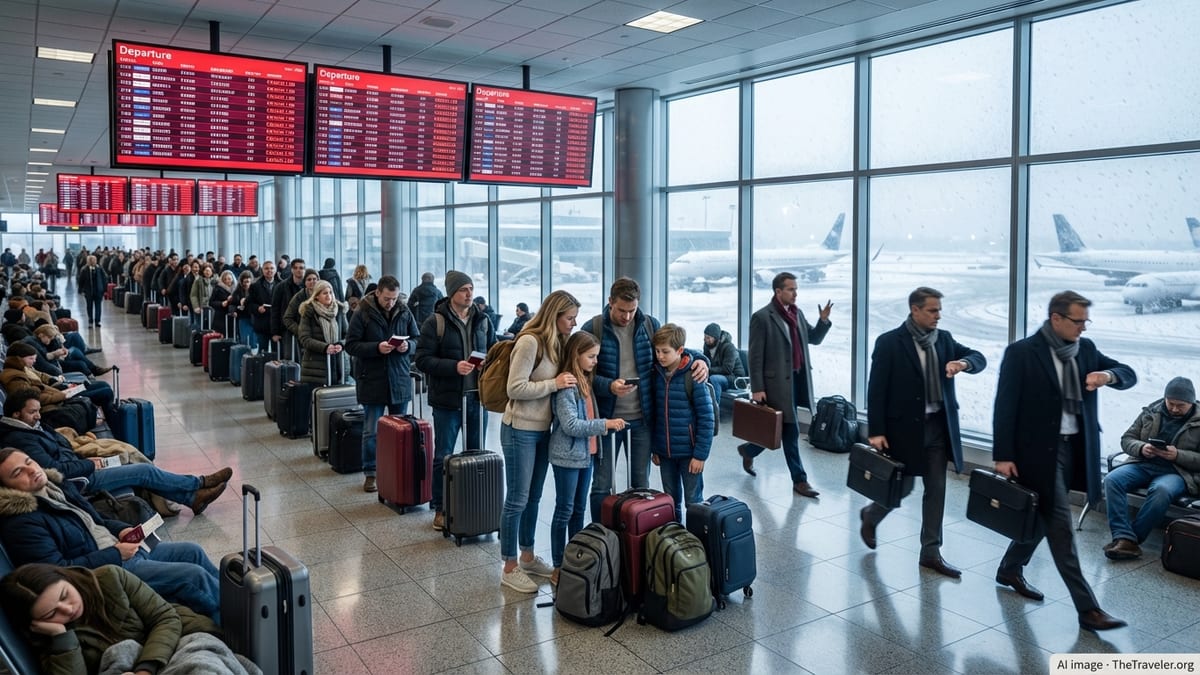
Photos and passenger accounts shared publicly over the weekend described long queues at check in, security and airline service desks, as travelers sought rebookings, hotel vouchers and information about their rights. With thunderstorms disrupting evening bank departures, many customers found that same-day alternatives were no longer available, forcing overnight stays around Gatwick and other UK airports.
Travel advice from consumer groups and specialist publications stresses that passengers whose flights are cancelled are generally entitled to a choice of re-routing or refund, while those heavily delayed may receive care such as meals and accommodation. However, compensation payments are often not offered when the primary cause is extraordinary circumstances such as severe weather, even when the practical impact for travelers is substantial.
The rapid build-up of delays also strained local hotel capacity. Reports from recent disruption events at Gatwick describe properties within a wide radius booking up quickly once late-night cancellations begin, leaving some passengers to seek alternative accommodation further from the airport or to wait in terminal areas until morning departures.
What Travelers Should Do if Flying Through Gatwick
Travel analysts and airport guidance consistently recommend that passengers treat summertime thunderstorms as a significant operational risk, particularly when flying on busy weekend days. During episodes like the latest Gatwick disruption, checking flight status directly with the airline before leaving home is considered essential, as airline systems often update more quickly than general flight-information portals.
Experts advise building extra time into airport journeys, especially when making self-connected itineraries, and avoiding tight connections that leave little margin for weather-induced delays. Passengers are also encouraged to keep essential items such as medications, chargers and a change of clothes in hand luggage in case they are unexpectedly separated from checked bags overnight.
With more unsettled weather forecast at times over the British summer, the Gatwick episode serves as a reminder that even brief thunderstorms can have far-reaching effects across the UK and European aviation network. For easyJet, Ryanair, British Airways and Wizz Air customers in particular, monitoring forecasts and airline updates closely may be the best defense against sudden bouts of flight chaos.