


More news on this day
Richmond International Airport has been thrust into the aviation spotlight after a wave of cancellations by regional carriers Republic Airways and Endeavor Air triggered hours of disruption, missed connections, and mounting frustration among passengers across the United States network.
Get the latest news straight to your inbox!
Regional Carriers at the Center of a Richmond Shock
Recent disruption at Richmond International Airport has drawn fresh attention to the role that regional airlines play in the wider U.S. aviation system. Publicly available schedules and airport planning documents list Republic Airways and Endeavor Air among key regional operators serving Richmond, primarily on behalf of major network airlines that market the flights under their own brands.
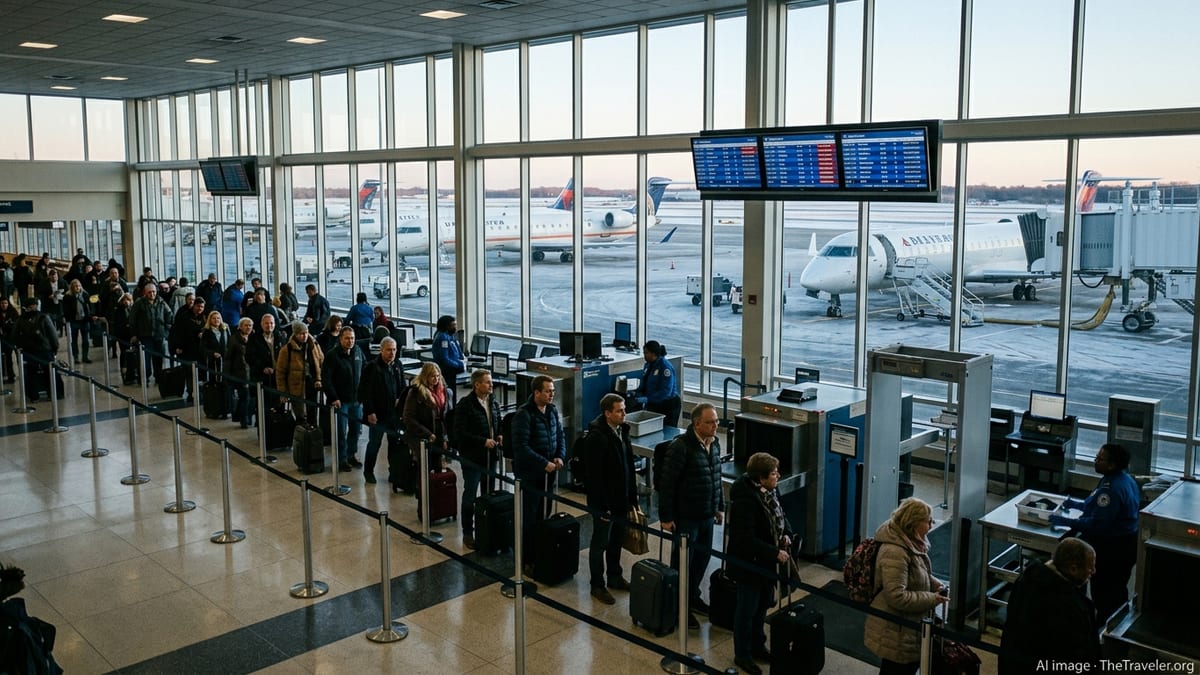
During the latest operational meltdown, large clusters of cancellations on Republic and Endeavor routes left travelers at Richmond facing abrupt itinerary changes and, in many cases, no same day alternatives. Reports from passenger tracking sites and social media posts describe long lines at ticket counters, crowded gate areas, and a rush for scarce seats on remaining departures as regional flights were removed from the board.
The pattern mirrors a broader trend across the United States in which regional carriers absorb a disproportionate share of cancellations when weather, staffing strains, or scheduling pressures collide. Federal data compiled in the Air Travel Consumer Report show that Endeavor and Republic have recently posted cancellation rates several times higher than those of the largest mainline airlines, underscoring how vulnerable these smaller operators remain during periods of stress.
For Richmond, which relies heavily on regional jets to connect travelers to larger hubs rather than offering a wide slate of nonstop routes, concentrated cancellations by just a few carriers can cascade quickly into what appears to be an airport wide breakdown.
How a Local Disruption Becomes a Network Wide Crisis
The turbulence at Richmond did not occur in isolation. Regional carriers such as Republic and Endeavor operate intricate schedules that link dozens of smaller and mid sized airports to a limited number of large hubs. When a group of flights is canceled at one spoke, the impact is felt far beyond the originating airport.
According to publicly available flight tracking data, Richmond’s cancellations translated almost immediately into missed connections at major hubs where regional passengers were due to transfer to long haul services. Travelers reported losing access to transcontinental and international flights after feeder services into the hubs were scrubbed, turning what appeared to be a local issue into an overnight stranding in multiple cities.
Network planners have long warned that the reliance on tight regional schedules leaves little slack when disruptions occur. If a crew becomes unavailable, an aircraft goes out of service, or airspace capacity around a single airport is reduced, a string of regional legs can be halted with limited options for substitution. Major carriers may prioritize keeping their mainline operations intact, which can push an even larger share of cancellations onto contract partners such as Republic and Endeavor.
In the Richmond episode, travelers described being rebooked via distant hubs, routed through multiple extra stops, or advised to wait a full day or more for the next available regional flight. The knock on effects rippled into nearby airports as displaced passengers raced to alternate departure points, intensifying congestion across the mid Atlantic corridor.
Passenger Fallout and the Search for Accountability
The human impact of the Richmond disruptions has been vividly documented in user generated accounts, which describe missed weddings and business meetings, overnight stays at personal expense, and hours spent navigating overburdened customer service channels. Many of these accounts also reflect deep confusion about which company is responsible when a regional flight is canceled.
Under the current model, travelers typically buy their tickets from a major carrier while the actual flight is operated by a regional partner. When schedules collapse, passengers may be directed back and forth between the mainline airline and the operating carrier. The U.S. Department of Transportation’s cancellation and delay dashboard is intended to clarify what compensation or accommodations travelers can expect during controllable disruptions, but it lists commitments only under the names of the marketing airlines, not the regional brands that often appear on airport monitors.
Consumer advocates argue that events such as the Richmond meltdown highlight the need for clearer, more uniform standards covering rebooking, meal vouchers, and hotel rooms during large scale cancellations involving regional operators. Federal reports already show that Republic and Endeavor sit near the higher end of the cancellation rankings among U.S. carriers, which raises questions about whether staffing levels, fleet utilization, or contractual obligations leave these airlines especially exposed when conditions deteriorate.
In the absence of consistent rules, passengers caught in the Richmond chaos have had to rely on a patchwork of airline specific policies, travel insurance coverage, and credit card protections to recover out of pocket expenses.
What Richmond’s Meltdown Reveals About U.S. Regional Aviation
Richmond’s experience is part of a wider pattern in which regional carriers shoulder a growing share of operational risk in the U.S. system. Across the country, recent disruptions at hubs such as Chicago O’Hare and New York area airports have seen regional airlines like Republic, Endeavor, SkyWest, and others cancel dozens of flights in a single day while mainline carriers maintain a higher proportion of their schedules.
Industry analysts point to a combination of pilot hiring challenges, aging regional fleets, and tight turnaround times as structural factors that make these operators more susceptible to cascading cancellations. When one flight is delayed or canceled, the aircraft and crew involved may have been scheduled to operate several subsequent legs, quickly multiplying the number of lost departures.
Richmond illustrates how this structure can convert a localized operational hiccup into a dramatic episode of airport gridlock. With relatively few alternative flights and limited long haul service of its own, the airport depends on regional partners to feed passengers into the national network. Once those links fail, replacement options are scarce and travelers often have no realistic way to complete their journeys the same day.
The incident also underscores that airport facilities and air traffic control infrastructure are only part of the resilience equation. Even when runways, terminals, and control towers are functioning normally, a surge of cancellations at one or two key regional operators can make an airport appear paralyzed.
Planning Ahead in an Era of Fragile Regional Operations
The turmoil surrounding Richmond’s recent meltdown serves as a warning sign for travelers who rely on regional routes operated by carriers such as Republic and Endeavor. While no itinerary is immune from disruption, publicly available performance data and recent patterns suggest that small and mid sized airports connected primarily by regional jets may face a higher risk of large scale cancellations during periods of stress.
Travel planners increasingly recommend building extra connection time into itineraries that begin or end at regional airports, and considering early morning departures that are less likely to be affected by rolling delays. Monitoring airline apps and independent flight tracking tools in the days leading up to departure can also help travelers spot thinning schedules or unusual waves of cancellations before arriving at the airport.
For policymakers and airline executives, the Richmond episode offers a case study in the limitations of the current hub and spoke system when regional partners come under strain. As demand continues to recover and major carriers fine tune their networks, the question of how to stabilize regional operations without sacrificing connectivity for smaller communities is likely to remain near the center of the aviation policy debate.
For now, passengers passing through Richmond and similar airports are left to navigate a landscape in which a sudden spike in cancellations at a single regional airline can rapidly escalate into hours of chaos, disrupted plans, and yet another reminder of how fragile the modern air travel experience can be.