

More news on this day
Passengers at a major U.S. airport faced extraordinary disruption when roughly 70 flights built up in a departure runway queue, creating a sprawling line of aircraft and leaving travelers confined to planes for hours during an already busy travel period.
Get the latest news straight to your inbox!
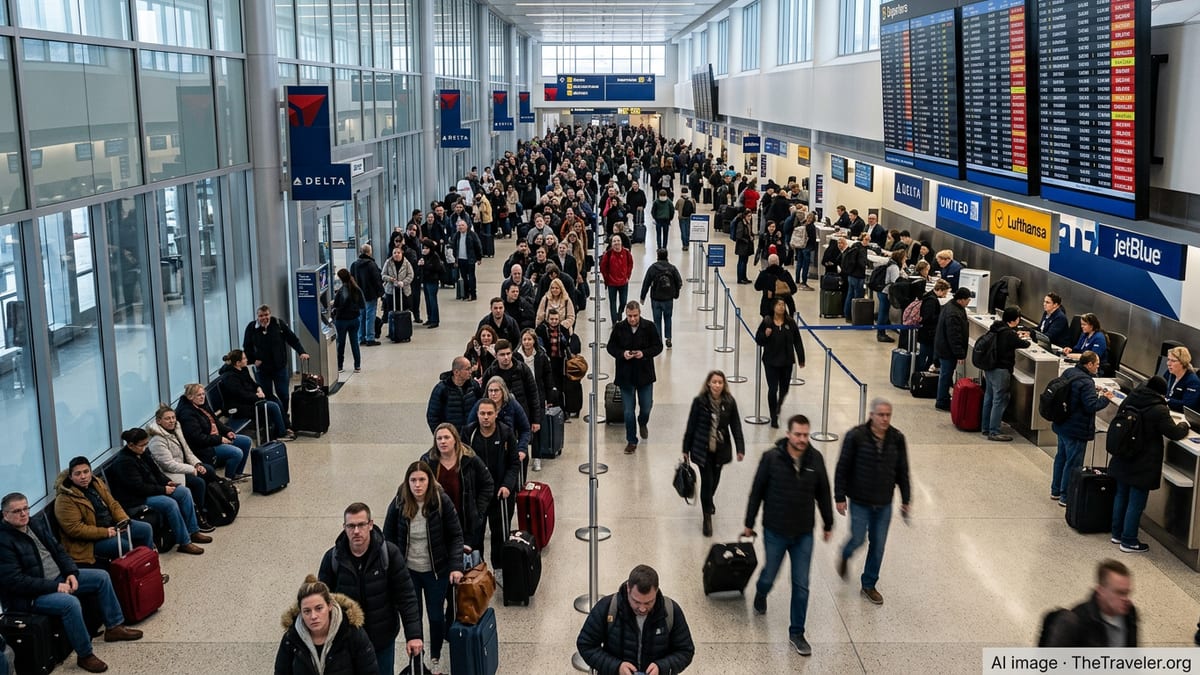
Unusual Departure Logjam Stuns Passengers
The extraordinary backlog unfolded when a combination of air traffic flow restrictions and weather-related constraints sharply reduced the rate at which departures could be cleared for takeoff. As fresh pushbacks continued from the gates, aircraft funneled toward the active runway faster than air traffic control could launch them, producing an extended tailback that observers described as a nearly continuous line of jets.
Publicly available flight-tracking data showed that dozens of departures were simultaneously listed as delayed on the ground, with wheels-up times repeatedly revised as the runway queue lengthened. Passengers reported sitting on board well past their scheduled departure times while pilots waited for updated release slots and takeoff clearances.
Travelers’ accounts on social media compared the scene to a traffic jam on a freeway, with aircraft creeping forward at walking pace before stopping again as controllers sequenced traffic. Many described watching flight after flight lift off ahead while their own aircraft remained in a static line, with limited information about how long the delay would last.
The incident highlighted how quickly conditions at a large hub can deteriorate once runway throughput is constricted. Even with only modest delays at first, the steady arrival of additional departures behind them can produce a cascading logjam that leaves dozens of flights waiting for their turn at the threshold.
Weather, Airspace Constraints And Runway Capacity
Operational details suggest that the primary trigger was a reduction in the airport’s departure rate after weather systems affected nearby airspace and destination hubs. When thunderstorms or low visibility conditions strike, air traffic managers often impose ground delay programs that meter how many aircraft can depart per hour toward constrained routes or airports, forcing outbound flights to wait for assigned slots before takeoff.
Runway capacity can also be curtailed by strong crosswinds or changing runway configurations. If arrivals must be prioritized on a particular runway due to wind or visibility, departures may be pushed to a secondary runway with less efficient layouts, lengthening the gaps between takeoffs. Construction or temporary closures that remove one runway from full use can have a similar effect, sharply reducing the number of departures the airport can handle in peak periods.
Industry analyses of major U.S. hubs show that once departure queues exceed about 20 to 30 aircraft, even minor disruptions can trigger outsized delays. Every go-around, wake turbulence separation requirement, or last-minute routing change for one jet can ripple down the line to all those waiting behind it. With roughly 70 flights in sequence, each additional minute of spacing compounds into more than an hour of total delay spread across the queue.
Aviation specialists note that airlines themselves play a role. Schedules that concentrate many departures into narrow time banks leave little slack when conditions deteriorate. When dozens of flights are timed to leave within the same hour and a weather or airspace constraint cuts the effective departure rate, a ground queue of the size seen in this incident can form surprisingly quickly.
What Passengers Experience During Extended Tarmac Delays
For travelers, the operational jargon of ground delay programs and runway capacity translates into a far more tangible problem: being stuck on an aircraft that is ready to go but cannot take off. Once a plane leaves the gate, passengers often have limited access to services, and the uncertainty of not knowing when the aircraft will move again can add to frustration.
U.S. rules set limits on how long passengers can be kept on a plane during a tarmac delay without an opportunity to return to the terminal, but those thresholds can still involve significant waits. Airlines typically update passengers in stages as estimated departure times shift, with crews balancing regulatory requirements, fuel considerations, and the need to remain ready to depart as soon as a takeoff slot becomes available.
In a queue of around 70 flights, some aircraft at the back of the line may face extended ground time even if those nearer the front move relatively quickly once conditions improve. This staggered experience means that different flights leaving the same airport can show vastly different delay durations on the same day, contributing to a sense of randomness and unfairness among passengers.
Cabin crews are trained to manage long ground delays, including distributing water and monitoring cabin conditions, but such situations can strain onboard supplies and staffing plans. Travelers stuck in the line during this episode reported concerns about making connections, missing events, and running out of time on tightly planned itineraries once they eventually arrived at their destination.
How Airlines And Airports Try To Prevent Runway Queue Spikes
Airports and airlines employ a range of tools designed to prevent departure lines from growing to the scale seen in this incident, though those measures can be overwhelmed during particularly constrained periods. Collaborative decision-making platforms share information among airlines, airport operators, and air traffic managers so that scheduled pushbacks can be adjusted to avoid flooding the taxiways with departures that cannot be cleared.
When ground delay programs are in effect, airlines receive specific target departure times that are meant to pace traffic into the national airspace system. Ideally, this allows them to keep aircraft at the gate until close to their assigned slots, where passengers have more freedom of movement and access to food and restrooms. However, when conditions change rapidly or when carriers push to keep their fleets positioned as close to the runway as possible, large queues can still materialize.
Some airports also modify runway use and taxi patterns in real time to alleviate bottlenecks. That can include temporarily dedicating additional taxiways to departure streams, revising hold-short procedures, or shifting some flights to alternate runways once winds and visibility allow. These adjustments are designed to squeeze more departures through constrained infrastructure while maintaining required safety margins.
Despite these efforts, aviation analysts point out that demand at the busiest U.S. hubs frequently presses against the upper limits of what current runway systems can handle, especially during holiday and peak travel periods. Events like a 70-strong departure line demonstrate how thin the margin can be between a busy but orderly operation and a highly visible breakdown that travelers experience as hours of immobility on the tarmac.
Implications For Busy Travel Seasons Ahead
The incident arrives at a time when U.S. air travel volumes are running at or above pre-pandemic records, with forecasts calling for continued growth in passenger numbers over the coming seasons. As more travelers pass through already congested hubs, the likelihood increases that rare but dramatic events like an outsized runway queue will recur, particularly during severe weather or airspace disruptions.
Airlines have been adjusting schedules, investing in newer aircraft, and refining crew planning to increase resilience, but they remain dependent on airport runway capacity and broader air traffic control constraints. Infrastructure projects to add or upgrade runways and taxiways take years to complete, meaning that capacity at many major airports will remain relatively fixed in the near term even as demand grows.
For travelers, the episode serves as a reminder to build extra time into itineraries that pass through the busiest hubs, especially when connections are tight or when traveling during peak days and hours. Travel planning tools that take historical delay patterns into account, along with real-time alerts from airlines, can help passengers anticipate when departure queues are likely to be longest.
While the specific circumstances that produced a 70-flight line for takeoff may have been unusual, aviation observers suggest that pressure on departure runways will remain a defining challenge for U.S. air travel. The sight of dozens of jets waiting their turn may continue to symbolize the fragile balance between surging demand and the finite capacity of airport infrastructure.