


Naples is a city of neighborhoods, and choosing where to stay can shape your entire experience. Two of the most talked‑about areas right now are Rione Sanità, just north of the historic center, and the Spanish Quarter (Quartieri Spagnoli), wedged between Via Toledo and the hillside of Vomero. Both were once considered no‑go zones and are now seeing a surge in visitors, boutique guesthouses, and creative projects. They offer very different atmospheres, and which one is right for you depends heavily on your travel style, comfort level, and what you want out of Naples beyond pizza and Vesuvius views.
Get the latest updates straight to your inbox!
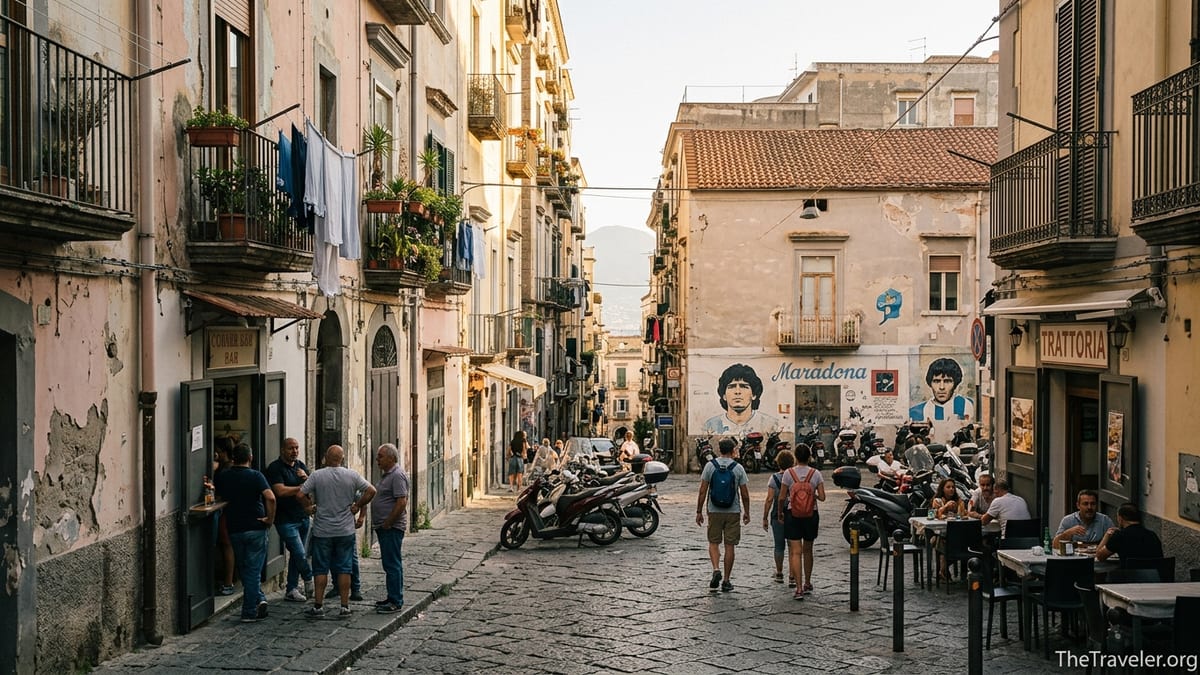
Getting Oriented: Two Former No‑Go Zones in Transformation
Rione Sanità sits in a valley just uphill from the historic center, roughly between the National Archaeological Museum and the Capodimonte hill. It is working‑class, dense, and deeply local, with laundry lines overhead, kids playing football in small piazzas, and scooters weaving through narrow streets. The neighborhood is increasingly known for community‑run projects, street art, and access to key sights like the Catacombs of San Gennaro and San Gaudioso, yet it still feels like a place where people live first and tourists are guests.
The Spanish Quarter, by contrast, climbs steeply up from elegant Via Toledo, one of Naples’ main shopping streets. Its tight grid of cobbled lanes was originally laid out in the 16th century for Spanish troops and later became synonymous with poverty and petty crime. In the last decade, tourism has transformed many ground‑floor apartments into B&Bs and small hotels. You will now find Maradona murals, street shrines, trendy aperitivo bars, and restaurants geared toward international visitors, often just a few doors down from long‑time residents.
Both neighborhoods are central in practical terms. From Rione Sanità, you can walk downhill to the Archaeological Museum in about 10 to 15 minutes and reach the historic heart of Spaccanapoli not long after. From the Spanish Quarter you can be on Via Toledo in a couple of minutes, at Piazza del Plebiscito or the seafront in roughly 15, and in funicular stations whisking you up to the Vomero hill in under 10. The question is less about geography and more about how “immersed” you want to feel in everyday Naples.
In short, Rione Sanità appeals to travelers seeking a raw, community‑driven atmosphere and strong cultural content, while the Spanish Quarter is ideal for those who want easy access to the city’s main sights, nightlife, and public transport, with a more obviously tourist‑friendly infrastructure. Understanding that distinction is the first step in choosing.
Atmosphere & Vibe: Authentic Immersion or Lively Nightlife Hub?
Rione Sanità is intense but surprisingly warm. Walk down Via Vergini on a weekday morning and you pass vegetable stalls spilling onto the street, older residents in plastic chairs chatting at doorways, and students heading to community music rehearsals. The atmosphere is more village than city, despite the urban density. Cultural spaces like Casa del Monacone and local associations promoting street art and music have helped to reframe the neighborhood’s identity from crime‑ridden to creative, without losing its working‑class soul.
In the evenings, Rione Sanità remains relatively low‑key. There are a handful of excellent trattorias and pizzerias, plus bars where locals gather for a spritz, but it is not a nightlife district in the club sense. Streets are active, especially near the main piazzas and churches, yet you are more likely to hear children playing or neighbors chatting than loud DJ sets. This quieter, residential feel can suit travelers who like to explore all day and sleep well at night, or families who prefer to avoid streets full of bar crawlers.
The Spanish Quarter, on the other hand, is loud, animated, and often buzzing late into the night. The narrow lanes off Via Toledo are packed with scooters and pedestrians, especially after sunset. You will find tiny wine bars with tables squeezed into alleyways, trattorias serving fried seafood and pasta until late, and informal spots where locals watch football under strings of lights. On a warm evening, it can feel like a city‑wide block party, and if your accommodation overlooks a busy vico you should expect noise until well after midnight.
If your ideal trip includes wandering from aperitivo to dinner to gelato without worrying about the last metro, the Spanish Quarter has the edge. If you prefer a slower, more neighborly rhythm where you can greet the same shopkeepers each day and step out of the tourist current, Rione Sanità is more likely to resonate.
Cultural Sights & Experiences: Deep Heritage vs Iconic Urban Energy
From a cultural standpoint, Rione Sanità punches far above its weight. The Catacombs of San Gennaro and San Gaudioso, located on the neighborhood’s edges, are among Naples’ most atmospheric sites, with guided tours that delve into early Christian history and underground burial traditions. Many tours are run in partnership with local cooperatives, so your ticket directly supports neighborhood employment. Just walking between these sites you pass baroque churches and palazzi like Palazzo dello Spagnolo, with its famous double staircase that has become a symbol of the area’s architectural heritage.
Rione Sanità also offers a window into contemporary Naples. Street art projects, community orchestras inspired by El Sistema‑style programs, and social enterprises have turned former stigmas into points of pride. Staying here, you might book a local guide for a neighborhood walk that explains how residents reclaimed piazzas previously dominated by cars, or how small B&Bs are owned by families who grew up in the same streets. For travelers interested in urban regeneration, social impact tourism, or photographing daily life rather than landmarks, this depth is a major draw.
The Spanish Quarter’s cultural appeal is more about energy and iconic imagery than specific monuments. Maradona murals, football flags hanging between balconies, and shrines to local saints give the streets a theatrical quality. Beyond the neighborhood itself, you are steps from major cultural institutions: Teatro di San Carlo, the Royal Palace, and historic cafés around Piazza Trieste e Trento are all within a 10 to 15 minute walk. It is easy to combine a morning at the seafront or Castel dell’Ovo with an afternoon wandering the Quarter’s lanes.
Experientially, the Spanish Quarter lends itself to food and nightlife‑focused itineraries: cooking classes in converted ground‑floor apartments, “family lunch” experiences in historic basso homes, and guided evening walks that end with limoncello tastings. Travelers who want Instagram‑friendly scenes and quick access to Naples’ most photographed spots often find this neighborhood more immediately gratifying, even if the history under the surface is less structured for visitors than in Rione Sanità.
Accessibility & Getting Around: Metro, Walking, and Hills
For Rione Sanità, the practical reference points are the Line 1 metro stations at Materdei and Museo. Materdei, known as one of Naples’ “art stations,” sits just above the neighborhood; from the station exit, it is about a 10 to 15 minute downhill walk into the heart of Sanità, and roughly the same uphill on the way back. Museo station is beside the National Archaeological Museum, from which you can walk into Rione Sanità along busy streets that remain active into the evening. Taxis will readily take you to major landmarks like the catacombs, and many tours include pick‑up points near the museum.
The walkability of Rione Sanità depends on your comfort with hills and irregular pavements. Streets can be steep and often lack wide sidewalks. If you are traveling with a stroller, heavy luggage, or mobility challenges, you may find the uneven surfaces and frequent steps tiring, especially in summer heat. That said, once you are based in the neighborhood, many key sights are within a short radius, and you can plan your days to minimize uphill climbs by using buses or taxis for the return journey.
The Spanish Quarter is extremely well positioned for public transport. Via Toledo is served by the Toledo metro station on Line 1, often cited as one of the most beautiful metro stations in Europe, with deep blue mosaics and striking light installations. Several funicular lines that connect to hilltop Vomero have lower stations just above the Quarter, so reaching Castel Sant’Elmo and panoramic viewpoints is quick and inexpensive. From most accommodations in the Quarter you can walk to the metro in 5 to 10 minutes and to the seafront in 15 to 20.
That said, the Spanish Quarter is also steep and stepped. Many guesthouses are reached via flights of external stairs, and streets can be slippery when wet. If you prefer flat, spacious avenues, you may find the constant climbing tiring. However, for travelers who value being able to step out and be immediately among shops, cafés, and transport links without needing taxis, the Spanish Quarter feels exceptionally convenient.
Safety, Comfort & Noise: What First‑Timers Should Know
Both Rione Sanità and the Spanish Quarter have reputations that lag behind reality. Historically they were associated with poverty and petty crime, and you will still find older guidebooks or online comments that advise avoiding them altogether. In recent years, however, both areas have seen increased visitor numbers, new businesses, and visible efforts to improve lighting and public space. For most tourists who exercise normal city awareness, they are no more problematic than other busy southern European neighborhoods.
Rione Sanità can feel confronting at first if you are not used to densely populated, highly local areas. Scooters pass close to pedestrians, and some smaller alleys can be poorly lit. At the same time, many visitors who stay in locally run B&Bs report feeling welcomed and looked after, with hosts advising them which streets to use at night and which shortcuts to avoid. As a cautious guideline, it is reasonable to stick to main routes like Via Vergini and the streets around the major churches after dark, avoid obvious displays of valuables, and use taxis or rideshares late at night rather than walking long distances back from the center.
The Spanish Quarter’s main safety concern is more about disorientation and petty theft than serious crime. Its grid of lanes can be confusing, and it is easy to turn a corner from a busy, well‑lit street into a much quieter back alley. For many visitors, staying close to well‑trafficked parts of the Quarter near Via Toledo, the Maradona murals, or larger piazzas feels comfortable, while they avoid exploring the uppermost, darker lanes late at night. As in any crowded urban area, keep an eye on your bag on public transport and in busy bars, and be prepared for assertive scooter traffic.
Noise is a key differentiator. If you are a light sleeper and your accommodation in the Spanish Quarter faces a popular vico, expect late‑night voices, music, and clattering scooters. Asking your host for an interior courtyard room or upper‑floor apartment can make a major difference. In Rione Sanità, noise is more episodic: church bells, daily markets, and family gatherings in courtyards rather than continuous nightlife. Neither area is “silent,” but the type of noise differs, and that alone may sway your decision.
Budget, Food & Accommodation Style: What You Get for Your Money
In general terms, Rione Sanità still offers slightly better value for money than the Spanish Quarter, which has become one of Naples’ more sought‑after central neighborhoods with strong demand from visitors. In Sanità, you can often find family‑run guesthouses or small B&Bs at prices that feel moderate for a European city center, while still being within walking distance of major attractions. Rooms tend to be in converted historic buildings with simple but characterful décor, and the atmosphere leans toward “you are staying in someone’s neighborhood” rather than in a pure tourist zone.
Food in Rione Sanità is one of its strongest assets. You will find classic Neapolitan dishes served to locals first and tourists second: generous plates of pasta with ragù, fried anchovies, stuffed peppers, and sfogliatelle from unpretentious bakeries where the line spills into the street. Prices are typically lower than in the most famous streets of the historic center. A pizza and drink at a neighborhood pizzeria will usually cost less than in more internationally famous spots, without sacrificing quality, and you are more likely to sit among families from the area than other travelers.
The Spanish Quarter, by contrast, now has a broad range of accommodation styles, from compact design B&Bs with stylish tiles and curated art to basic guesthouses aimed at budget travelers who want centrality above all. Because of demand, nightly rates can climb, especially for well‑reviewed properties close to Via Toledo or funicular stations. If you are traveling in peak months and want modern amenities like elevators, soundproofing, and 24‑hour reception, you will likely pay more here than in Rione Sanità for comparable space.
On the food front, the Spanish Quarter is a great option for travelers who enjoy trying multiple restaurants in a short stay. Within a few blocks you can sample fried street food, trattorias focused on seafood, and contemporary bistros putting a twist on Neapolitan classics. Some places are clearly geared to visitors, with multilingual menus and set‑price deals, while others remain local hangouts. Expect prices to range from affordable to mid‑range; it is rare to encounter luxury dining here, but you will often pay a small premium compared with quieter neighborhoods because of the central location and demand.
Who Each Area Suits Best: Matching Neighborhood to Travel Style
If you see yourself as an urban explorer more than a checklist tourist, Rione Sanità may be your natural home base. It suits travelers who like spending time in a single district, learning its rhythms over a few days, chatting with café owners, and visiting community‑run cultural sites. Photographers, writers, and those interested in social change often find inspiration in the contrasts between baroque architecture, contemporary street art, and everyday life unfolding in small piazzas. Families who prioritize daytime cultural activities and quieter nights may also feel more at ease here than amid the Spanish Quarter’s evening crowds.
The Spanish Quarter tends to work best for first‑time visitors to Naples who want to be in the thick of things and value convenience. If your priority is being able to walk to major shopping streets, the waterfront, and evening entertainment, this neighborhood delivers. It is especially appealing for couples and groups of friends who plan to eat out every night, hop between bars, and perhaps use public transport for quick trips up to Vomero or out toward the archaeological museum without relying heavily on taxis.
Solo travelers, especially women, often weigh atmosphere and perceived safety carefully. In both neighborhoods, staying in well‑reviewed, centrally located accommodations and arriving back before the very late hours can mitigate most concerns. The Spanish Quarter offers more constant foot traffic on main lanes, which some find reassuring, while others prefer the slower, community‑oriented feel of Rione Sanità where hosts sometimes know many of their neighbors personally.
If you are sensitive to gentrification and want your spending to support local initiatives, Rione Sanità currently has more visible community cooperatives linked to tourism, guided visits, and cultural events. The Spanish Quarter, while still home to many long‑term residents, is further along the path of transformation, with a higher concentration of short‑term rentals and businesses explicitly targeting visitors. Neither area is “right” or “wrong,” but being aware of these dynamics can help you choose in line with your values.
The Takeaway
Choosing between Rione Sanità and the Spanish Quarter is less about finding the “best” neighborhood in Naples and more about finding the one that aligns with how you like to experience a city. Rione Sanità offers deep cultural immersion, strong ties between tourism and local initiatives, and a calmer evening scene, at the cost of steeper walks and a more intense, sometimes rough‑around‑the‑edges streetscape. The Spanish Quarter offers immediate proximity to Via Toledo, lively nightlife, and excellent transport links, alongside higher noise levels, heavier tourist presence, and a more overtly gentrified feel.
If you picture yourself exploring underground catacombs in the morning, photographing baroque staircases in the afternoon, and sharing a home‑cooked meal in a courtyard where neighbors greet each other by name, Rione Sanità is likely to feel rewarding. If your vision leans more toward late‑night pizza, spontaneous bar‑hopping, and strolling home along busy streets after a concert near Piazza del Plebiscito, the Spanish Quarter will suit your rhythm.
In practice, many travelers benefit from treating the choice as an itinerary question rather than a permanent divide. You might stay in the Spanish Quarter for two or three nights to enjoy its energy and convenience, then spend a full day or evening in Rione Sanità on a guided walk and catacombs visit to experience a different side of Naples. Whatever you decide, approaching both neighborhoods with respect, curiosity, and realistic expectations will go a long way toward a memorable, nuanced stay in this endlessly complex city.
FAQ
Q1. Is Rione Sanità safe for tourists to stay in?
Rione Sanità is more visited today than in the past, and many travelers stay there without issues. It remains a busy, working‑class area, so use normal big‑city precautions: avoid deserted alleys at night, keep valuables out of sight, and follow local advice from your host about the best routes after dark.
Q2. Is the Spanish Quarter safe at night?
The Spanish Quarter’s main streets near Via Toledo and popular murals are usually lively and well frequented into the evening. As in any dense nightlife area, be aware of your belongings, avoid very quiet side alleys late at night, and consider taking a taxi if you are returning very late or feel uncomfortable walking.
Q3. Which area is better for first‑time visitors to Naples?
For many first‑timers, the Spanish Quarter feels more straightforward thanks to its proximity to Via Toledo, the metro, and major sights. Rione Sanità can be ideal if you are comfortable in less touristy areas and particularly interested in the catacombs, local culture, and community projects.
Q4. How do I get from Rione Sanità to the historic center?
From most of Rione Sanità you can walk downhill to the National Archaeological Museum in about 10 to 15 minutes and then continue into the historic streets of Spaccanapoli. Alternatively, you can use the metro from Materdei or Museo stations or take a short taxi ride directly to central squares.
Q5. How do I reach the Spanish Quarter from the airport or train station?
From Naples Central Station or the airport, taxis are the most straightforward option and can drop you near your specific street. If you prefer public transport, you can take Line 1 of the metro toward Toledo station and walk a few minutes uphill into the Quarter, though narrow streets and steps can make heavy luggage challenging.
Q6. Which neighborhood is more budget‑friendly?
On average, accommodation and everyday dining in Rione Sanità still tend to be slightly cheaper than in the Spanish Quarter, which has strong demand from visitors. However, prices vary widely by property and season, so it is worth comparing specific options rather than relying solely on neighborhood reputation.
Q7. Where will I find better food, Rione Sanità or the Spanish Quarter?
Both areas offer excellent Neapolitan food, but with different focuses. Rione Sanità leans toward traditional, family‑run places serving residents, often at slightly lower prices. The Spanish Quarter has a denser mix of trattorias, street‑food spots, and bars aimed at both locals and tourists, with more choice within a short walk.
Q8. Which area is quieter for sleeping?
In general, Rione Sanità is calmer late at night, with noise concentrated around markets and family life rather than bars. The Spanish Quarter can be noisy into the early hours, especially on popular streets. In either area, ask for a room facing an inner courtyard or on a higher floor if you are sensitive to sound.
Q9. Is public transport better from Rione Sanità or the Spanish Quarter?
The Spanish Quarter has an edge for transport convenience, being close to Toledo metro station and several funicular lines. Rione Sanità is reasonably connected via Materdei and Museo metro stations and buses, but you may rely slightly more on walking uphill or using taxis, especially at night.
Q10. If I only have one day, which neighborhood should I prioritize visiting?
If you have just one day and want a strong sense of Naples’ deeper history, prioritize Rione Sanità for its catacombs, churches, and community projects. If you prefer a snapshot of Naples’ street life, football culture, and nightlife near major monuments and the seafront, the Spanish Quarter might be the better choice.