


More news on this day
Soaring jet fuel prices and a sharp slide in airline profits are reshaping the economics of flying in 2026, with new data suggesting travelers face a mix of higher base fares, more fees, and shifting route networks as carriers work to protect thin margins.
Get the latest news straight to your inbox!
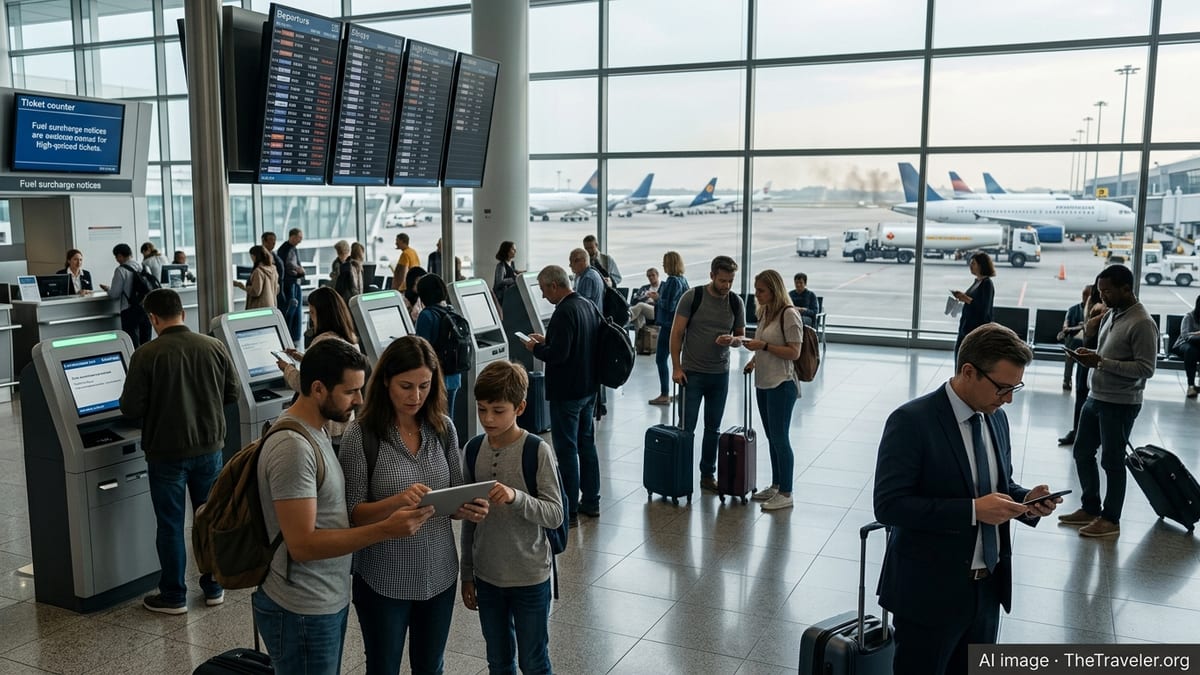
Fuel Shock Squeezes Airline Profitability
Publicly available industry forecasts show airlines heading into one of their most challenging profit years since the pandemic recovery, largely because of fuel. The International Air Transport Association’s June 2026 financial outlook projects global net profit of about 23 billion dollars this year, roughly half the level estimated for 2025, with net margins narrowing to around 2 percent. Reports indicate that fuel is expected to account for more than 31 percent of airline operating expenses in 2026, up sharply from about a quarter of costs last year.
This pressure is being driven by a steep jump in jet fuel prices linked to conflict in the Middle East and Iran, which has pushed up crude benchmarks and refined products. IATA’s fuel monitoring data, compiled using S&P Global Energy pricing, shows global jet fuel prices more than doubling between spring 2025 and their peak in 2026, although not every carrier faces the same increase due to varying hedging strategies and fleet efficiency. Analysts note that even modest movements in fuel prices can quickly erase profits in an industry where margins rarely exceed 5 percent.
For North American airlines, federal statistics and news reports point to billions of dollars in additional monthly fuel spending in 2026 compared with a year earlier. U.S. carriers spent about 6.5 billion dollars on fuel in April and a similar amount in May, according to government data cited in recent coverage, with average per gallon prices roughly 80 percent higher than in 2025. Those jumps arrive on top of rising labor and maintenance costs, leaving carriers with limited room to absorb shocks without passing at least some of the burden to passengers.
How Higher Fuel Costs Flow Into Fares
Travelers are already seeing the impact in ticket prices. Figures from the U.S. Bureau of Transportation Statistics show the average domestic airfare in the first quarter of 2026 reached about 428 dollars, up 4.7 percent from the final quarter of 2025 after adjusting for inflation. At some airports with limited competition, average fares are notably higher; recent analysis of federal data found first quarter domestic fares above 520 dollars at several regional hubs.
Industry coverage notes that airlines typically respond to fuel spikes in stages. In the immediate term, many carriers attempt to raise base fares across markets, often through a series of relatively small increases. In 2026, multiple U.S. airlines have signaled that they implemented several rounds of fare hikes since late winter as fuel prices climbed following the outbreak of conflict in Iran. Executives cited in earnings coverage argue that as long as demand remains strong and planes remain full, the market has been willing to bear higher prices.
There is also evidence that airlines are relying more heavily on ancillary revenue to offset fuel bills. Reports indicate that higher checked bag fees, seat selection charges, and changes to basic economy rules are contributing an increasing share of passenger revenue. Because many of these charges are not regulated as strictly as base fares, they can rise more flexibly as costs increase. For travelers, the headline ticket may only tell part of the story, with the total cost of a trip climbing faster once optional extras and fees are included.
Demand, Capacity and the Role of Competition
Fuel costs are not the only factor determining what travelers pay. Strong demand and changing competitive dynamics are amplifying the impact of higher energy prices. Travel search data and airline commentary suggest that leisure demand has remained resilient in 2026 despite geopolitical tensions and broader economic uncertainty. High load factors give carriers more pricing power, helping them maintain elevated fares even when fuel prices show short term declines.
At the same time, capacity and competition have shifted. The shutdown of Spirit Airlines in the United States earlier this year removed a major ultra low cost competitor on many domestic routes. Coverage by national news outlets notes that the carrier’s exit has reduced fare pressure in markets where it once provided the lowest price option, allowing remaining airlines to sustain higher prices. Similar patterns are appearing at individual airports where secondary or foreign carriers have cut service, leaving a dominant airline with greater control over pricing.
Route choices also reflect the new cost environment. Some airlines are trimming marginal overnight flights or thinner routes where higher fuel costs make profitability harder to achieve, while redeploying aircraft to more lucrative transatlantic or leisure markets. Industry analyses describe carriers prioritizing routes that can support higher yields through premium cabins and ancillary sales. For travelers, this can translate into fewer nonstop options from smaller cities and more need to connect through major hubs, sometimes at higher total fares.
Why Losses Do Not Guarantee Cheaper Tickets
The gap between airline financial strain and traveler expectations is widening. Many passengers reasonably assume that if carriers report shrinking profits or quarters of losses, ticket prices should fall. However, public financial and economic data suggest the relationship is more complex. As long as demand exceeds available seats and competitors are not aggressively discounting, airlines often maintain or even increase prices despite profit pressures.
Analysts point out that most major carriers exited the pandemic recovery period with elevated debt and ambitious fleet renewal and sustainability plans. In this context, the priority is often to protect revenue per seat rather than stimulate demand with lower fares, especially when planes are already flying near capacity. Industry forecasts for 2026 still project passenger traffic to reach more than 5 billion journeys globally, with average load factors at or near record highs. Under those conditions, deep fare cuts are unlikely even if net profit margins narrow or turn negative in specific regions.
Moreover, there can be a lag between movements in fuel prices and ticket pricing. Airlines typically set fares and revenue management strategies months in advance based on fuel assumptions, and they may use short term spikes as an opportunity to reset the pricing baseline. Later reductions in fuel costs do not automatically translate into lower fares if demand remains strong and investors expect airlines to rebuild balance sheets after earlier losses.
What Travelers Can Do in a High Cost Era
For travelers, the current environment rewards flexibility and planning. Data from federal fare reports show significant variation among airports and cities, with some hubs seeing average fares far above the national mean. Where possible, comparing nearby departure points or adjusting dates to avoid peak weekends and holidays can still yield meaningful savings, even when overall price levels are elevated.
Watching how airlines adjust their networks may also help. As carriers consolidate capacity on key hub to hub and popular leisure routes, competitive pressure can remain relatively strong on those corridors, especially where multiple global airlines operate. On the other hand, travelers from smaller markets may need to budget more for connecting flights or consider low cost carriers that still serve their region, recognizing that service frequency and amenities may differ from legacy airlines.
Finally, paying close attention to fees and fare classes is becoming more important as fuel costs continue to reshape airline economics. Choosing bundled fares that include checked baggage or seat selection, or using co branded credit card benefits, can sometimes reduce the total trip cost compared with buying a bare bones ticket and adding extras later. With industry forecasts indicating that fuel will remain a structurally larger share of airline costs in 2026, these tactical choices may be the most immediate tools travelers have to manage what they pay.
Sources: IATA June 2026 airline industry financial outlook; U.S. Bureau of Transportation Statistics Q1 2026 airfare data; CBS News analysis of 2026 airfare and fuel trends; Associated Press coverage of 2026 airline fuel spending; IATA Jet Fuel Price Monitor