


More news on this day
River cruising on Europe’s great waterways and Egypt’s Nile is entering a new growth phase, with Germany, France and Egypt emerging as pivotal markets in a global surge of inland waterway travel fueled by changing traveler profiles, expanded capacity and a renewed focus on destination‑rich, low‑impact itineraries.
Get the latest news straight to your inbox!
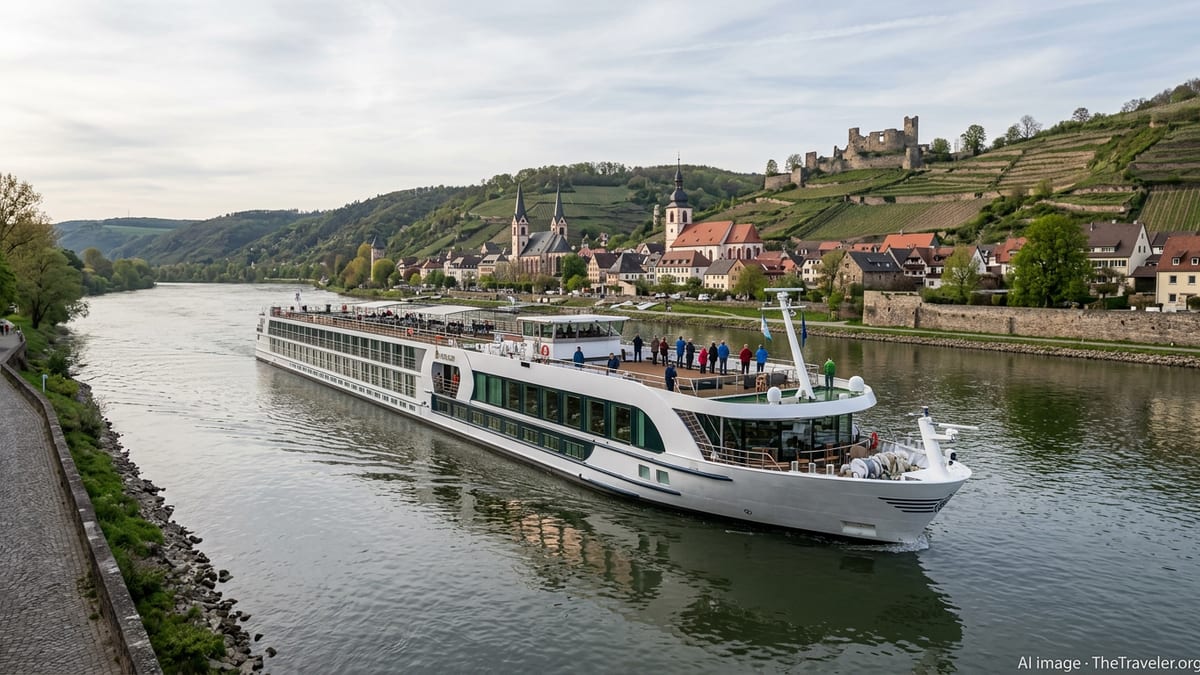
European River Cruise Demand Surges Past Pre‑Pandemic Levels
Industry data compiled for 2024 and early 2025 indicate that river cruising has moved beyond recovery into expansion, with passenger numbers in Europe and on the Nile now exceeding pre‑2020 levels. Market studies cited in recent trade coverage estimate that global river cruise passenger volumes surpassed 4 million travelers in 2023, with Europe accounting for the majority of that total and continuing to grow in 2024. On the Rhine–Danube corridor, monitoring by European inland navigation bodies shows rising vessel movements and occupancies, underscoring a clear rebound in leisure traffic on inland waterways.
One recent European market report highlighted an 8 percent rise in river cruise passengers in 2024 to nearly 1.5 million travelers, alongside revenue growth of around 5 percent to more than 3.7 billion euros. Analysts describe this as “sustainable” rather than speculative growth, supported by higher booking lead times, more repeat customers and a diversified mix of source markets that now extends well beyond the traditional German‑speaking core.
Fleet statistics compiled by the Central Commission for the Navigation of the Rhine show that the active European river cruise fleet remained broadly stable at just over 400 vessels in 2024, with new capacity largely focused on technologically updated ships rather than sheer volume. Market observers note that this balance between modest capacity additions and robust demand is helping support high load factors on key rivers, including the Rhine, Danube, Seine and Rhône.
At the same time, river cruise operators are reporting fuller sailings earlier in the season and lengthening shoulder‑season programs, particularly on itineraries that combine marquee capitals with smaller heritage towns. This has reinforced the role of inland waterways as year‑round tourism corridors, rather than purely summer products.
Germany’s Inland Waterways Anchor Europe’s Source Market
Germany remains the single most important source market for global river cruising, according to recent cruise association reports tracking European passenger origins. The latest Europe market overview from a major international cruise trade body shows Germany retaining its position as the continent’s largest cruise source market in 2024, supplying millions of travelers to both ocean and river products and feeding a dense network of Rhine, Main and Danube departures.
Domestic infrastructure is a major factor behind the surge. Data released by Germany’s Federal Statistical Office and summarized by the inland navigation industry show that freight volumes on the country’s rivers and canals in 2024 rose by about 1.2 percent to more than 170 million tonnes, reversing a previous decline. While these figures refer to cargo rather than passengers, sector analysts say they demonstrate a renewed policy and investment focus on inland waterways that indirectly benefits the cruise segment through improved locks, dredging and port facilities.
Market research on German water transport published by Euromonitor in early 2025 estimated industry turnover at around 32.8 billion US dollars in 2024 across all waterborne segments, with inland tourism and cruising highlighted as an expanding niche. German travelers are also increasingly present on foreign rivers, from Portugal’s Douro to the Mekong, reinforcing the country’s role as both a destination and an export market for river cruise demand.
Demographically, publicly available survey data show that German, Austrian and Swiss passengers still form a strong base for standard and premium river products in Europe, while higher‑priced luxury itineraries draw proportionally more guests from the United Kingdom, Ireland and long‑haul markets. This layered demand is encouraging operators to base more ships year‑round on German‑linked rivers, including the Rhine Gorge and Main–Danube Canal, to capture different customer segments without over‑reliance on any single country.
France Emerges as a Growth Hotspot on the Seine and Rhône
France is reasserting itself as a strategic growth market for river cruising, both as a destination and as a source of passengers. The European river cruise study that reported 8 percent overall growth in 2024 singled out France as having “important growth opportunities,” reflecting increasing deployment on the Seine, Rhône and Saône as operators chase strong interest in food‑ and culture‑led itineraries.
Traffic data published by Voies Navigables de France for the Rhône–Saône basin show rising flows of cruise and hotel barge tourism in 2023, with indications of further gains in 2024 as more vessels reposition to the south of France. This follows similar trends on the Seine, where extended Paris‑Normandy routes and themed sailings aligned with major cultural events are attracting both first‑time river cruisers and experienced guests seeking more immersive experiences.
On the source‑market side, the Cruise Lines International Association’s most recent European report lists France among the top five cruise source markets on the continent, contributing more than half a million passengers in 2024 across ocean and river segments. Industry observers note that French travelers historically favored Mediterranean coastal routes, but are now showing greater interest in domestic river sails that pair shorter travel distances with high levels of comfort.
The French river product is also benefiting from investment in shore power and low‑emission infrastructure at key quays, enabling operators to advertise quieter overnight stops and reduced local pollution. This has become a selling point for younger and more environmentally aware clientele, and is helping French cities reconcile the economic benefits of river cruise tourism with urban sustainability goals.
Nile Cruising in Egypt Rebounds as Tourism Hits Records
On the southern flank of the inland waterway boom, Egypt’s Nile has reemerged as one of the most dynamic river cruise markets worldwide. Official tourism statistics summarized in international reporting show that Egypt welcomed a record 15.7 million visitors in 2024, up from 14.9 million in 2023 and well above the levels recorded in 2019. Nile cruise capacity has been ramping up in response, particularly on the classic Luxor–Aswan stretch, where multi‑day sailings are once again operating at high occupancies during peak months.
Transport data compiled in reference sources indicate that Egypt has around 3,500 kilometers of navigable waterways, including the Nile, Lake Nasser and a network of canals in the Nile Delta. While the Suez Canal dominates headlines for global trade, tourism specialists point out that it is the Nile cruise corridor that channels much of Egypt’s higher‑value cultural tourism, linking major archaeological sites with resort infrastructure and domestic air networks.
Reports from international tour operators and travel media describe a broadening of the Nile cruise customer base beyond traditional retirees from Europe and North America. Growing numbers of travelers from the Gulf, India and Latin America are booking premium ships, often combining a cruise with stays in Cairo and Red Sea resorts. At the same time, more mid‑range and locally marketed vessels are attracting regional tourists and younger backpackers seeking bundled packages that include guided excursions.
The surge in Nile traffic has also sharpened attention on safety and river management, after a series of widely reported accidents on Egyptian waterways in recent years. Policy measures under discussion, according to local press coverage, include stricter vessel inspection regimes, enhanced crew training and improved monitoring of passenger boat traffic, all of which could influence future capacity and pricing on the Nile.
Evolving Demographics and Sustainability Shape the Next Wave
Across Germany, France and Egypt, the profile of the typical river cruise passenger is changing. Industry compilations of recent survey data suggest that while guests over 60 still form the single largest age group, the share of travelers in their 40s and 50s has risen steadily since 2022. Couples remain the dominant travel party type, accounting for well over half of bookings, but there is growing representation from multi‑generational families, groups of friends and solo travelers, particularly on themed and wellness‑oriented sailings.
Market observers credit several structural drivers for this demographic shift, including the rapid expansion of online booking platforms, targeted social media marketing and a focus on shorter, more flexible itineraries that can be combined with independent city stays. The ability to visit multiple countries without repeated packing and unpacking remains a central selling point on European rivers, while in Egypt the combination of slow travel on the Nile with bucket‑list heritage experiences is resonating with time‑poor but experience‑driven customers.
Environmental considerations are also becoming more prominent in purchase decisions. European regulators have accelerated emissions standards for inland waterway vessels, prompting investments in hybrid‑electric propulsion, shore‑power connectivity and cleaner fuels. Recent analysis from European transport observatories notes that a growing share of river cruise ships operating in Germany are now equipped to plug into shore power at major ports, significantly reducing noise and air emissions while docked.
Analysts expect these sustainability upgrades, coupled with ongoing demographic diversification and record tourism flows in markets such as Egypt, to underpin further expansion of inland waterway travel over the rest of the decade. For the river cruise industry, Germany, France and Egypt now form a strategic triangle linking Europe’s mature but evolving riverscape with one of the world’s most storied waterways, positioning inland cruising as a central pillar of global tourism growth rather than a niche sidelines product.