


More news on this day
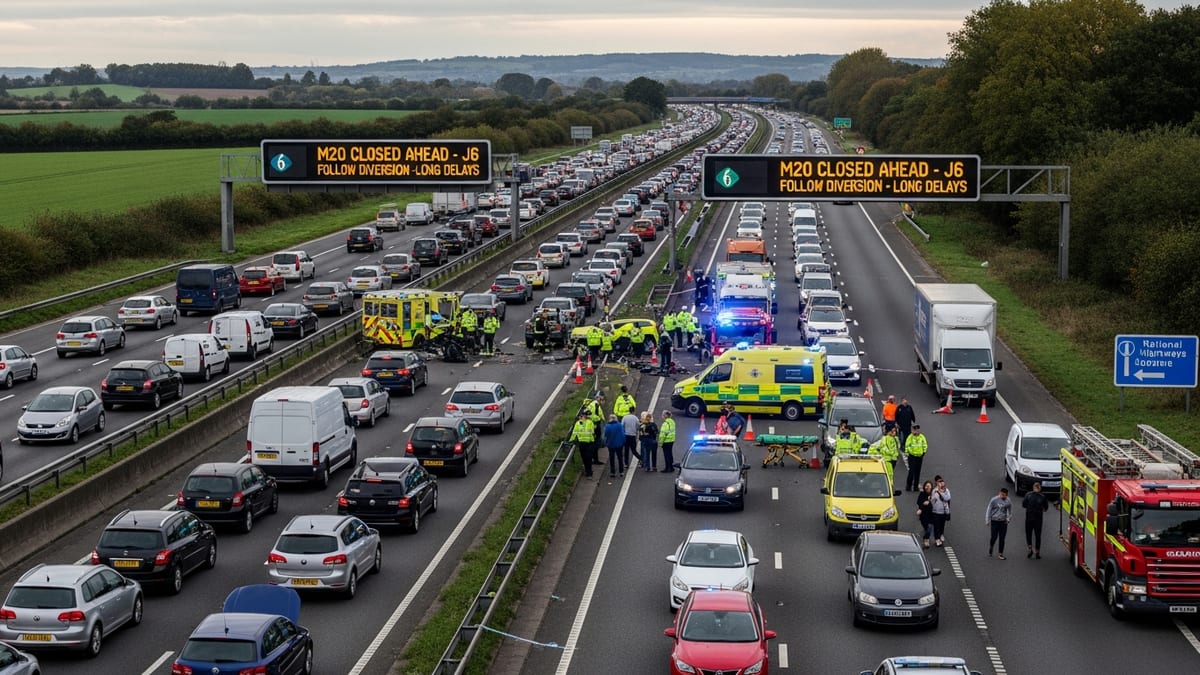
A rollover crash on Interstate 44 in southwest Oklahoma City near OKC Will Rogers International Airport caused major delays for drivers, briefly choking off one of the primary routes to the terminal and backing up traffic in both directions.
Get the latest news straight to your inbox!
Crash near key airport interchange disrupts traffic
Reports indicate that the crash occurred along Interstate 44 in the busy corridor that links south Oklahoma City to OKC Will Rogers International Airport, a stretch already known for congestion and frequent bottlenecks. Early information from local coverage describes a vehicle overturning on the interstate, blocking travel lanes and sending debris across the pavement.
The rollover took place close to the complex web of ramps that funnel traffic between I-44, Airport Road and nearby surface streets that serve the terminal and surrounding businesses. Publicly available traffic maps and cameras showed heavy backups building quickly as vehicles stacked up behind the crash site.
Drivers heading toward the airport faced extended delays as emergency responders and tow crews worked to stabilize the scene and move the damaged vehicle out of the travel lanes. Inbound airport traffic on I-44 and connecting roads was forced to slow or reroute, adding uncertainty for travelers trying to reach flights on time.
Northbound and southbound traffic on I-44 in the immediate area also experienced slowdowns, as onlookers reduced speed and lane closures compressed vehicles into fewer open lanes. The combination of peak-period demand and a blocked segment of interstate produced stop and go conditions across a wide swath of southwest Oklahoma City.
Delays ripple through southwest Oklahoma City commute
According to publicly available traffic data, congestion spread well beyond the immediate crash location as motorists searched for alternatives. Drivers leaving neighborhoods south and west of the airport encountered longer than usual travel times, particularly on routes feeding into I-44 and Airport Road.
The interchange that serves the airport is a critical node in the city’s transportation network, carrying not only airline passengers but also commuters accessing industrial areas, logistics hubs and business parks clustered around the airfield. When a major incident occurs on this stretch of interstate, delays can quickly propagate into adjacent corridors and surface streets.
Reports from local traffic services showed that queues extended back toward key cross streets, creating delays at on ramps and forcing some motorists to loop through residential areas to avoid the standstill. For those unfamiliar with the area, limited signage and rapidly changing traffic patterns added to the challenge of finding efficient detours.
Travelers heading to the terminal were advised in public updates to build in extra time, as shifting lane closures and intermittent stoppages made it difficult to predict how long it would take to pass the scene. Rideshare drivers and ground transportation services also had to adjust routes on short notice, further compounding delays for airport-bound passengers.
Ongoing safety concerns on I-44 near the airport
The corridor where the rollover crash occurred has long been identified in transportation planning documents as a high stress segment of the regional network. State planning studies describe the interchange complex at I-44 and I-240, as well as nearby access ramps to the airport, as recurring bottlenecks where heavy traffic, frequent merging and limited shoulders can contribute to elevated crash risk.
Local drivers have frequently highlighted the challenges of navigating this section, citing short weaving distances between ramps, rapid speed changes and heavy truck volumes serving the freight and warehouse operations clustered around the airport. When unexpected incidents such as rollovers or disabled vehicles occur, there is often little room for motorists to maneuver around the obstruction.
In past years, transportation agencies have advanced improvements such as new turnpike connectors and extension projects intended to relieve pressure on the south and southwest approaches to Oklahoma City and to provide additional options for reaching the airport. However, the I-44 mainline near the airfield remains one of the most heavily used pieces of infrastructure in the metro area, carrying a mix of local, regional and long distance traffic.
Safety advocates often point to rollover crashes as indicators of underlying issues that can include excessive speed, sudden lane changes, distracted driving or unsuitable loads in larger vehicles. While the specific causes of the latest incident have not been detailed in early public reports, the crash adds to a pattern of high impact events that periodically close or partially block the interstate near the airport.
Travel advice for drivers and air passengers
The latest disruption underscores the importance for travelers of checking real time traffic conditions before heading to OKC Will Rogers International Airport, particularly when using I-44 on the south and west sides of the city. Publicly available mapping tools, traffic cameras and local media traffic segments can provide early warnings of crashes or lane closures along preferred routes.
Transportation planners generally recommend that drivers bound for the airport leave earlier than usual whenever there is a significant crash or construction activity reported on I-44 or I-240 near the terminal. Having extra time reduces the stress of encountering sudden backups and allows for a more orderly search for alternate routes if needed.
Motorists who regularly commute through this corridor are also encouraged in safety campaigns to maintain moderate speeds, allow generous following distance and avoid abrupt lane changes in the weaving zones near major interchanges. During heavy congestion, remaining patient and resisting the urge to dart between lanes can reduce the risk of secondary crashes around an existing incident.
Public information campaigns in Oklahoma City have increasingly emphasized that rollover crashes and serious incidents on busy interstate segments can have outsized impacts on the broader region, from missed flights to delayed deliveries. The episode near the airport illustrates how a single crash at the wrong place and time can temporarily reshape travel patterns for thousands of people across southwest Oklahoma City.
Longer term pressure on a critical gateway
The crash and resulting delays add to ongoing conversations about how to manage growth and safety on the approaches to OKC Will Rogers International Airport. Continued development in surrounding communities, combined with rising passenger volumes and freight activity, is expected to place additional strain on the I-44 corridor in the coming years.
Regional transportation plans have flagged the need for upgraded interchange designs, added capacity in some locations and improved incident management strategies to keep traffic flowing when crashes occur. Ideas under discussion in planning documents include better separation of local and through traffic, enhanced signage to reduce last minute lane changes and coordinated signal timing on surface streets that serve as detour routes.
Emergency management agencies and transportation operators also review major incidents such as rollover crashes to refine response playbooks. Faster detection, rapid dispatch of clearance crews and clear public communication about lane closures and expected delays can shorten the duration of disruption after an event on the interstate.
For now, the latest rollover near the airport serves as a reminder of how dependent Oklahoma City remains on a handful of key freeway segments to connect residents, businesses and travelers. As traffic volumes grow, ensuring that these gateways remain safe and resilient will remain a central challenge for planners and policymakers across the metro area.