


More news on this day
Royal Caribbean is accelerating a multi-ship transformation in 2026, using extended drydock projects to add higher-end staterooms, refreshed dining venues and expanded casinos across key vessels in its global fleet.
Get the latest news straight to your inbox!
Ovation of the Seas Leads a New Luxury Push
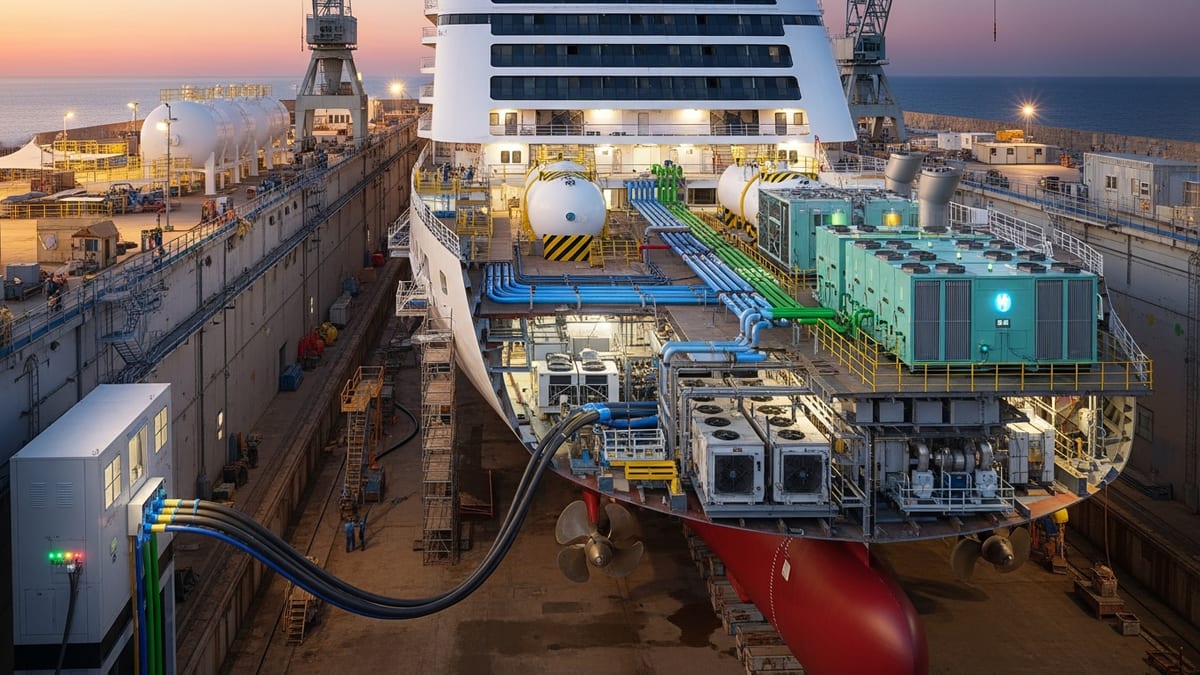
One of the highest-profile makeovers in Royal Caribbean’s current drydock lineup centers on Ovation of the Seas, which is undergoing a roughly $100 million refurbishment in Singapore in early 2026. Publicly available coverage indicates that the work is part of the line’s broader Royal Amplified program, a multi-year initiative designed to bring older ships closer in look and feel to its newest, most premium vessels.
Reports highlight a stronger emphasis on upscale accommodations aboard Ovation, with new and reconfigured stateroom categories that introduce a more clearly defined step up from standard cabins. Industry analysis describes this as a “premium economy” shift at sea, with enlarged and better-appointed rooms targeted at guests who are willing to pay more for space and comfort without moving all the way into top-tier suites.
The refurbishment scope on Ovation is also understood to include enhancements to restaurants and lounges, with upgraded décor and menus intended to align more closely with the food-and-beverage concepts appearing on recently delivered ships. Observers note that this approach lets Royal Caribbean test new dining ideas on a ship that already sails popular itineraries in Asia and Alaska, potentially informing concepts on future newbuilds.
According to multiple cruise industry reports, Ovation is scheduled to return to service in April 2026, positioned as a ship that delivers a “new build” feel while remaining competitively priced against the latest entrants in the large-ship segment.
Harmony and Liberty Get Capacity and Cabin Refinements
Ovation’s upgrade is part of a trio of Royal Amplified projects scheduled across 2026 that also includes Harmony of the Seas and Liberty of the Seas. Cruise-focused publications tracking the drydock calendar report that both ships are in line for significant work that combines interior refreshes with tangible capacity gains through additional staterooms.
Harmony of the Seas, one of the largest cruise ships in the world, entered a major refit this month in Europe. Coverage from cruise industry outlets indicates that the ship is receiving extra cabins, updated interiors, and new or reimagined public spaces, reflecting Royal Caribbean’s strategy of increasing berth count on existing hardware rather than relying solely on new ship deliveries. Observers point out that even a relatively small percentage increase in staterooms on a ship of Harmony’s size translates into substantial additional revenue potential.
Liberty of the Seas, a Freedom-class vessel, is also slated for an Amplification in 2026, with travel trade reporting suggesting that part of the existing youth and activity space will be converted into new accommodations. These added staterooms are expected to skew toward higher-value categories, such as spacious ocean-view and balcony cabins, which command premium pricing while leveraging the existing hull and propulsion platform.
Analysts note that shifting interior real estate toward revenue-generating cabins fits a wider pattern across the industry in 2025 and 2026, as cruise lines balance robust demand with the high capital cost and long lead times associated with newbuild orders.
Luxury Stateroom Concepts Move Fleetwide
Beyond the headline projects on Ovation, Harmony and Liberty, Royal Caribbean’s recent and upcoming drydocks are collectively tilting the fleet toward a higher proportion of upscale accommodations. Trade press reports on the line’s 2026 drydock schedule describe a mix of brand-new cabins and “stealth” interior upgrades that bring older rooms closer to the standard of the newest Icon- and Oasis-class ships.
On refreshed ships like Mariner of the Seas, which completed a 2026 touch-up, published accounts detail small but visible changes such as improved lighting, modernized thermostats and refined finishes in existing staterooms. While short of a full structural rebuild, these updates are designed to make long-serving vessels feel more contemporary, with a particular focus on attracting guests who have grown used to more spacious, apartment-style cabins on land.
Other scheduled drydocks highlighted by industry trackers show Royal Caribbean carving out new clusters of ocean-view and balcony cabins in areas that previously housed lower-yield facilities. By adding or upgrading these staterooms, the line is aiming to raise the average per-cabin revenue, while giving frequent cruisers more opportunities to book “affordable luxury” categories on ships they already know.
Analysts following the company suggest that this strategy also supports Royal Caribbean’s loyalty program, since repeat guests who might otherwise seek suite experiences on competitor brands can instead move up within the same fleet to newly enhanced premium staterooms.
Dining Venues Evolve Alongside Refits
While added cabins and luxury-focused staterooms are central to the current drydock wave, dining is another major pillar of Royal Caribbean’s refurbishment blueprint. Coverage in cruise blogs and trade publications shows that recent Amplified ships have introduced refreshed poolside bars, updated specialty restaurants and expanded quick-service options, and similar patterns are expected on the 2026 projects.
For Harmony and Liberty of the Seas, reports anticipate new or rebranded eateries in high-traffic zones, mirroring successful concepts already deployed on ships such as Oasis and Wonder of the Seas. This can include the relocation or resizing of certain venues to free up space for additional cabins while still offering a comparable or improved food-and-beverage lineup.
Industry observers note that Royal Caribbean tends to use drydock periods to standardize core restaurant offerings across classes, so that guests can expect familiar favorites regardless of ship age. As part of the 2026 work, this is likely to mean updated décor packages, refreshed menus and improved kitchen equipment intended to support higher covers as overall passenger capacity grows.
Published commentary from cruise analysts suggests that dining enhancements, while less visible than an entirely new waterslide or top-deck attraction, can play an outsized role in guest satisfaction scores, making them a logical focus for capital spending alongside stateroom investments.
Bigger Casinos Reflect Demand for Onboard Entertainment
The casino experience is emerging as a quieter but significant beneficiary of Royal Caribbean’s latest drydock activity. Online discussion and industry reporting around the 2026 Amplification projects for Ovation and other ships indicate that casino floor space is being expanded or reconfigured to accommodate more tables and modern electronic gaming.
Commentary from cruise-focused communities, some of which reference company announcements, points to larger gaming areas as part of a broader strategy to capture incremental onboard spending. Expanded casinos allow for a wider mix of play levels, from casual slot guests to higher-stakes table players, and give the line more flexibility to host casino-focused promotions and charter events.
There are also signs that technology upgrades are accompanying the physical expansions. Coverage of supplier agreements notes that Royal Caribbean has been evaluating new-generation electronic tables and casino management systems, which can help tailor offers to individual guests and tie onboard play more closely to the company’s loyalty ecosystem.
For Royal Caribbean, the combination of more luxury staterooms, upgraded dining and a bigger, more sophisticated casino footprint positions its refreshed 2026 fleet as a stronger competitor in the global mass-premium cruise segment. As these ships reenter service from spring 2026 onward, their performance will offer an early test of how effectively targeted drydock investments can reshape the onboard economy without the costs of building entirely new vessels.