


More news on this day
Royal Caribbean has delayed the return of one of its cruise ships after severe weather disrupted its planned itinerary, according to recent industry and travel-agency reports.
Get the latest news straight to your inbox!
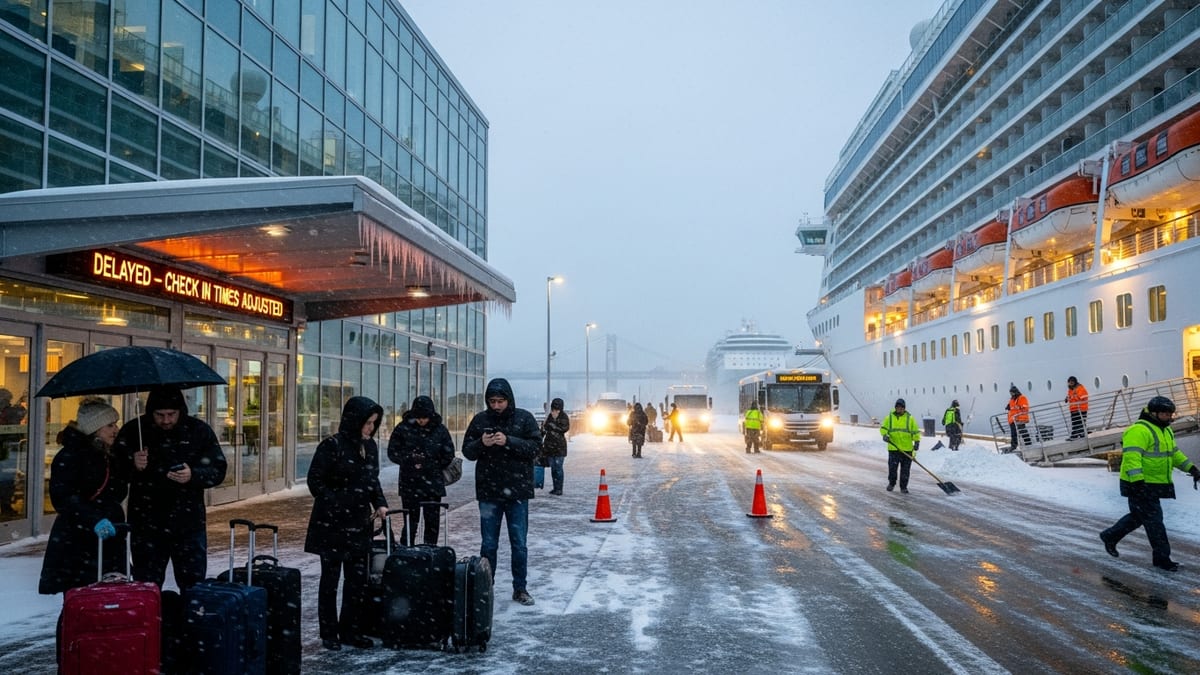
Storm Disrupts Scheduled Return to Home Port
Recent coverage from cruise-tracking platforms and travel agencies indicates that a Royal Caribbean voyage was unable to return to its home port on the originally scheduled date after encountering strong winds and rough seas along its route. Publicly available information describes the ship reducing speed and adjusting course to avoid the worst of the conditions, which extended the sailing time and delayed arrival.
Weather monitoring data cited in industry reports point to a fast-moving system in the wider region affecting multiple cruise itineraries, with heightened winds and heavy swells making it difficult for large vessels to maintain standard speeds. In situations like this, cruise lines typically prioritize calmer routes and slower transits to reduce motion on board and lessen strain on propulsion and navigation systems.
While the exact number of guests affected on this particular sailing has not been detailed in official notices, Royal Caribbean vessels often carry several thousand passengers and crew, meaning even a single delayed return can have a significant ripple effect on travel plans, including flights, hotel reservations, and onward connections.
The delay also underscores how quickly conditions at sea can change. Forecasts may show a generally favorable outlook, yet local systems and shifting storm tracks can still create pockets of severe weather that force last-minute changes to established timetables.
Itinerary Changes and Operational Adjustments
According to published coverage, the impacted voyage faced itinerary modifications alongside the delayed return. Ports scheduled for the latter portion of the cruise were either shortened, reordered, or, in some cases, replaced with additional time at sea as the ship maneuvered to stay clear of the most severe marine conditions.
Publicly accessible Royal Caribbean travel notices explain that adverse weather, including strong winds, heavy rain, and high seas, can require changes to port calls when local authorities close harbors or when captains determine that docking maneuvers would be unsafe. In such scenarios, ships may wait offshore for conditions to ease or proceed to an alternate destination that can accommodate arrivals more safely.
Operationally, sailing at reduced speed is a common response to heavy seas. Slower speeds can improve stability, reduce fuel consumption in difficult conditions, and give bridge teams more options for re-routing around the most intense parts of a system. However, the trade-off is often a later-than-planned return to the ship’s home port, especially when the weather event spans several hundred miles.
Industry analysis notes that modern cruise ships are designed to handle rough weather, but schedule reliability still depends heavily on sea state and port availability. Even when ships remain fully functional, the combination of safety protocols and local port restrictions can force delays lasting many hours or, in rare cases, longer.
Guest Impact and Compensation Policies
Travel blogs and cruise news outlets report that guests on the delayed Royal Caribbean sailing faced potential complications with air travel, hotel reservations, and work commitments after the ship’s revised arrival time. Some passengers chose to rebook flights and extend stays at their own expense, while others looked to travel insurance or cruise line assistance for support.
Royal Caribbean’s published policies and recent case studies from earlier disruptions show that when weather affects itinerary timing, the company may provide credits or partial refunds for missed ports, onboard spending offers, or assistance with rebooking air travel, depending on the circumstances. Weather is generally categorized as a factor beyond the control of cruise operators, meaning compensation often focuses on practical support rather than full fare refunds.
Consumer travel advocates advise affected passengers to retain receipts for additional expenses such as hotel nights, meals, and transportation, and to review both cruise contract terms and third-party travel insurance coverage. Some policies specifically address delays caused by severe weather, offering reimbursements up to defined limits when travelers are prevented from returning home on time due to confirmed transportation disruptions.
Reports also highlight the emotional impact of extended trips at sea. While some guests welcome extra time on board, others may experience uncertainty when itineraries change quickly. Clear and frequent public updates on schedule changes and expected arrival windows are often cited as key factors in helping travelers adjust their plans with minimal stress.
Weather Risks and Cruise Planning in Peak Storm Seasons
The delayed Royal Caribbean return comes at a time of year when severe weather is more common in several major cruising regions, including parts of the Caribbean, North Atlantic, and South Pacific. Meteorological agencies and cruise analysts note that peak storm seasons bring an increased likelihood of itinerary changes, with lines frequently monitoring forecast models and satellite data to anticipate route adjustments.
Public information from cruise planning resources emphasizes that large vessels can often navigate safely around storms by taking wider routes or modifying port sequences, but this flexibility cannot always preserve the original schedule. Delays on the final leg of a voyage are particularly disruptive because they overlap with guests’ return travel and the turnaround for the ship’s next sailing.
Experts who follow the industry suggest that travelers booking during higher-risk weather periods consider flexible flight options, additional buffer days before critical events at home, and comprehensive travel insurance. These steps can help mitigate the impact if a voyage is extended or re-routed due to storms or heavy seas.
Longer term, analysts point out that cruise lines continue to refine their weather-monitoring systems and operational playbooks, aiming to reduce the likelihood of major delays while maintaining a strong safety focus. Even with these advances, the latest Royal Caribbean disruption illustrates that severe weather at sea remains a variable that cruise operators and guests must continue to factor into trip planning.