


More news on this day
Royal Caribbean is sharpening its strategy for Europe cruises while doubling down on next-generation ships and artificial intelligence, signaling how the world’s largest cruise brand plans to grow through the late 2020s.
Get the latest news straight to your inbox!
Stronger focus on Europe as Icon class heads to the Med
Public deployment information for 2026 and 2027 shows Royal Caribbean putting more of its newest hardware into European waters, particularly in the Western Mediterranean. The highlight is Legend of the Seas, the third Icon-class vessel, which is scheduled to debut in summer 2026 with itineraries from Barcelona and Rome. These sailings position one of the line’s most advanced ships on marquee seven night routes at a time when demand for Europe cruising remains robust.
Legend of the Seas is planned to become the first Icon-class ship to offer regular Europe cruises, a shift from the initial strategy of homeporting the earliest Icon vessels year round in the Caribbean. According to deployment summaries and promotional materials, the ship will operate a Mediterranean season from July through late October 2026 before transitioning to North America for winter cruises.
Other Royal Caribbean ships are also slated to maintain or expand their Europe presence over the next few seasons, including familiar names in the Oasis, Quantum and smaller classes. Schedules for ports such as Barcelona, Civitavecchia, Southampton and select Eastern Mediterranean gateways indicate that the brand continues to see Europe as a key pillar of its summer business and a way to showcase new onboard concepts to an international audience.
Industry coverage notes that this emphasis on Europe comes as the company reports healthy onboard spending and strong pricing for warm weather itineraries, making the Mediterranean a logical candidate for the deployment of larger, high-yield ships. The decision to debut an Icon-class vessel in Europe underscores management’s confidence that demand in the region can support the brand’s biggest ships outside the Caribbean.
Seven-ship Icon class pipeline defines future fleet
Recent fleet updates outline an ambitious Icon-class build program that effectively defines Royal Caribbean’s growth plan through the end of the decade. After Icon of the Seas and Star of the Seas, the line has confirmed Legend of the Seas for 2026 and Hero of the Seas for 2027, with three additional Icon-class vessels contracted or optioned for delivery in 2028, 2029 and 2030.
Trade publications and cruise industry news reports describe Icon class as the backbone of Royal Caribbean’s future fleet, combining LNG propulsion, fuel-cell readiness and a neighborhood layout that concentrates revenue-generating venues. Each ship is designed to carry more than 5,000 guests at double occupancy, with maximum capacity significantly higher, supporting the company’s strategy of achieving economies of scale.
Royal Caribbean has also indicated that the Icon-class design will continue to evolve with each successive ship, incorporating lessons learned from guest feedback and operational data. Analysts following the brand interpret this as an incremental approach, allowing new entertainment concepts, waterpark features and accommodation categories to be tested on earlier ships before being rolled out, refined or retired on later vessels.
For Europe, the extended Icon pipeline suggests that more of these mega-ships could rotate through Mediterranean or Northern Europe seasons later in the decade. While detailed itineraries for the 2028 to 2030 ships have not yet been published, comments in financial presentations and deployment guides make clear that the brand intends to use its newest hardware as a differentiator in key global markets, including Europe.
Oasis and smaller classes still matter for European ports
Even as the spotlight falls on Icon class, Royal Caribbean continues to invest in Oasis-class hardware and maintain a role for smaller ship classes that can access ports where the largest vessels cannot berth. Publicly available information shows new deployments for Oasis-class ships in both North America and Europe, alongside the construction of another Oasis-class newbuild later this decade.
For European itineraries, these large ships are complemented by Radiance, Vision and other smaller classes that can reach destinations with draft, pier length or congestion limitations. Cruise deployment charts for 2025 through 2027 illustrate a mixed strategy in the region, pairing blockbuster calls at marquee ports with more intimate stops that appeal to repeat cruisers seeking variety.
Industry commentary suggests that this balance is critical in Europe, where historic port infrastructure and local regulations limit how many very large ships can visit on a given day. By spreading capacity across different ship sizes, Royal Caribbean can keep offering established marquee itineraries while testing new routes in the Eastern Mediterranean, Greek Islands and Adriatic that may not suit the Icon or Oasis classes.
Refurbishment plans also point to the importance of keeping older ships competitive for Europe. Modernization work on vessels such as Harmony of the Seas, along with periodic updates to smaller ships, aims to align older hardware with newer guest expectations, particularly in areas like dining, technology and connectivity that resonate with European and international travelers.
AI reshapes pricing, marketing and onboard experience
Alongside its hardware plans, Royal Caribbean is steadily expanding the use of artificial intelligence across its business, including on Europe cruises. Public earnings transcripts and investor presentations describe a broad push into machine learning tools that support revenue management, itinerary planning and personalized marketing.
In pricing, the company is reported to be using AI-driven models to refine how it adjusts cruise fares and onboard product pricing in response to demand, competitor moves and booking patterns. For Europe, where air costs, seasonality and geopolitical headlines can affect demand, more granular forecasting is intended to help the company protect yield while minimizing last-minute discounting.
Royal Caribbean is also applying AI to targeted marketing, using customer data to tailor offers based on preferred regions, loyalty status and onboard spending history. For Europe cruises, that can translate into personalized promotions highlighting specific itineraries, pre- and post-cruise land stays, or onboard experiences tied to destinations such as Mediterranean food, wine or cultural programming.
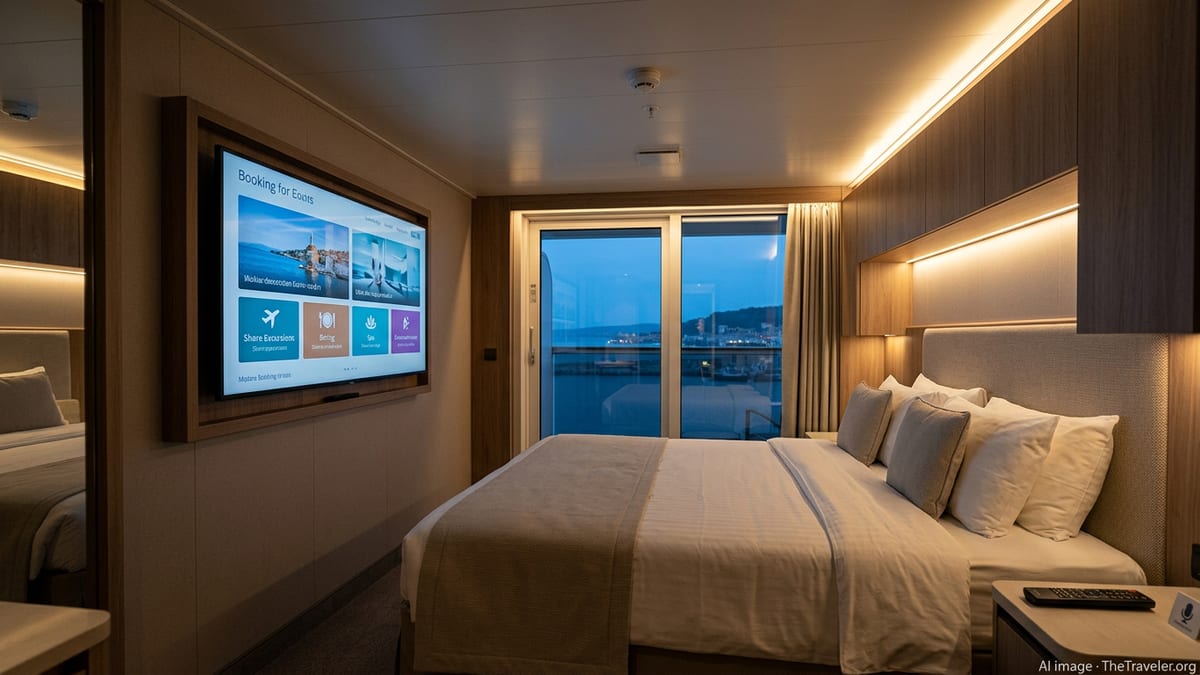
Onboard, AI tools are being incorporated into guest service applications, mobile app features and operational systems. Reports indicate that these technologies include enhanced chat assistance, smarter recommendations for dining and entertainment, and behind-the-scenes optimization of housekeeping, staffing and food preparation, all of which can be particularly valuable on large ships operating complex European port schedules.
Operational changes to handle bigger ships and complex ports
The combination of larger ships, expanded Europe deployment and AI tools is driving operational changes across Royal Caribbean’s network. Planning documents and industry analysis highlight how the company is working with ports, tour operators and logistics providers to manage the movement of thousands of guests through historic cities and constrained terminals.
In Europe, where port calls often involve tender operations, narrow harbors or strict local regulations on traffic and emissions, Royal Caribbean is positioning technology as a key enabler. AI-supported systems can help optimize arrival and departure windows, fine tune shore excursion capacities and predict bottlenecks in security or embarkation lines, reducing delays for guests moving between ship and shore.
Environmental and regulatory considerations are also shaping how and where the largest ships operate. The LNG and next-generation power systems built into Icon-class ships, as well as shore power connectivity where available, are designed to help the company meet evolving European emissions standards. Public commentary from port authorities and cruise analysts notes that compliance with these regulations is increasingly a prerequisite for access to high-demand berths in Europe’s busiest cruise hubs.
For travelers evaluating Europe cruises over the next several years, these developments together mean more sailings on Royal Caribbean’s latest ships, a growing role for AI in both pricing and onboard experience, and a network of ports that are gradually adapting to handle some of the largest passenger vessels ever built.