


More news on this day
Travellers heading through Dubai and other major Middle East hubs at the start of the summer peak are still facing an unsettled picture, as regional airspace restrictions, route suspensions and rolling schedule changes continue to disrupt flights months after the initial shutdowns across the Gulf and Levant.
Get the latest news straight to your inbox!
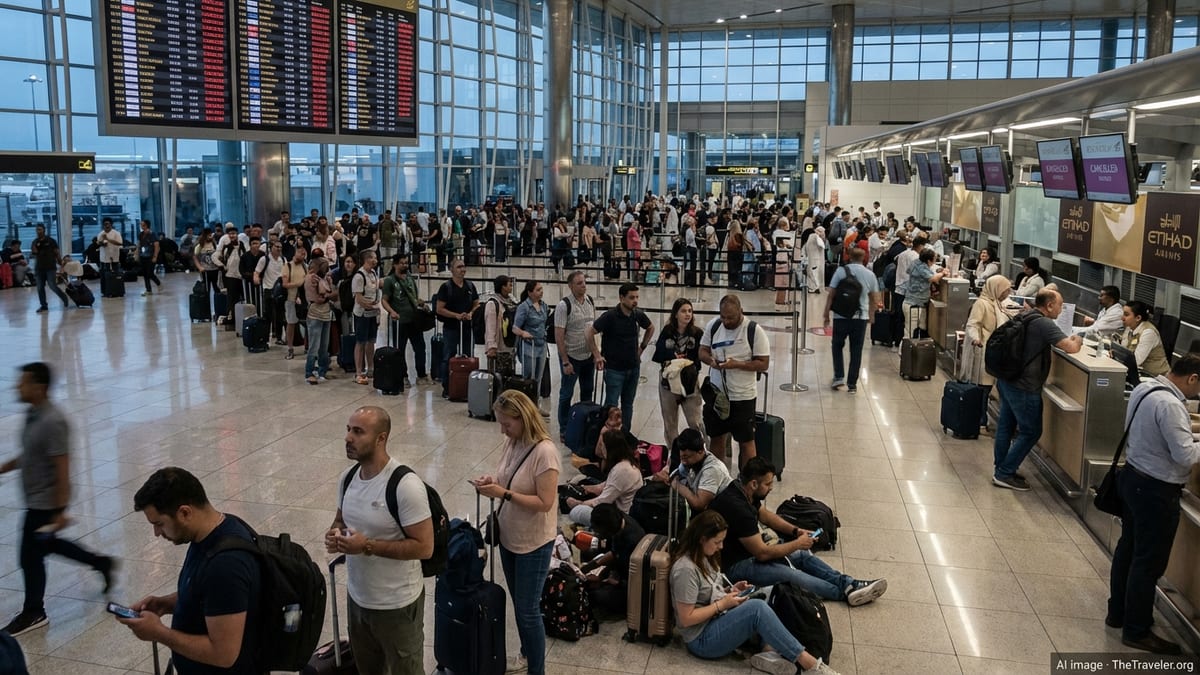
Regional airspace constraints still shaping summer schedules
Months after large parts of Middle East airspace were curtailed following the escalation of conflict involving Iran, the United States and Israel, airlines are still operating within narrow routing corridors that affect punctuality and capacity across Dubai and neighbouring hubs. Publicly available aviation briefings show that airspace over Iran, Iraq and sections of the Gulf has been subject to rolling restrictions since late February 2026, forcing carriers to reroute long haul services between Europe, Asia and Africa through longer paths that add time and complexity to operations.
Analysis of recent traffic data indicates that Dubai International Airport remains fully open but is still recovering from earlier shutdowns and capacity constraints. An industry report on first quarter performance shows passenger volumes at Dubai down by more than 20 per cent year on year, underlining the scale of the interruption that hit one of the world’s busiest international airports just ahead of the main booking period for summer travel.
Across the wider region, travel advisories and airline notices describe a network that is technically operating but heavily fine tuned. Flights are concentrated into specific time windows and routings that fit around restricted airspace, leaving less room to absorb additional weather disruptions, technical issues or crew shortages during the busiest months of the year.
Dubai hub operations: largely restored but still vulnerable
For passengers connecting through Dubai, the picture entering July is of a hub that has substantially restored its global network but has not yet returned to completely normal operations. Public information from Dubai Airports and major Gulf carriers indicates that most scheduled routes are back in the timetable, though some are operating with reduced weekly frequencies compared with pre crisis levels.
Several travel advisories note that Emirates and other carriers based in the United Arab Emirates have rebuilt the majority of their networks and are now focused on fine tuning schedules and restoring on time performance. One widely circulated update describes Emirates as operating close to its full global network, though individual flights may continue to experience extended block times and altered departure slots as they avoid sensitive airspace and adjust to congestion along alternative corridors.
Recent consumer coverage from regional outlets highlights that Dubai passengers are still encountering day to day disruption in the form of delayed departures, aircraft swaps and last minute re timings, particularly on routes intersecting with other constrained hubs such as Doha, Kuwait City and Bahrain. Travellers are being encouraged through public updates to monitor flight status closely and to allow additional time for connections, especially when itineraries involve tight transfer windows of less than two hours.
Route suspensions and reduced frequencies across the Middle East
Beyond Dubai, a series of route suspensions and schedule reductions continues to ripple through the region. Coverage of airline timetables for the summer season shows that some European and Asian carriers have extended pauses on services to certain Gulf and Levant cities, even as others cautiously return. British Airways, for example, has pushed back the resumption of its Dubai route until late October, citing ongoing regional disruption and the need to keep crews and aircraft on less exposed routings.
Reports from European and Middle Eastern travel media also point to continued suspensions on flights to destinations including Tel Aviv, Amman, Bahrain and parts of Iran, limiting options for travellers who previously relied on one stop connections via these cities. Other carriers such as Lufthansa and Air France have been operating reduced schedules into the Gulf after earlier suspensions, with published timetables indicating a gradual ramp up that still falls short of pre conflict capacity as the summer begins.
Within the Gulf, regional airlines have been adjusting their networks to prioritise reliable high demand corridors. Publicly available information on Gulf Air, Qatar Airways and low cost operators such as Flynas and Flydubai shows a focus on key trunk routes connecting the Gulf to Europe, South Asia and select Asian leisure destinations, while some secondary city pairings remain on hold or operate only a few times per week.
Knock on effects for long haul travellers and tour operators
The continuing disruption across Dubai and Middle East hubs is being felt most acutely by long haul travellers who depend on smooth connections across the region. Travel industry commentary notes that delayed and cancelled flights in the Gulf have produced knock on impacts across Europe, Africa and Asia, as aircraft and crews arrive late into subsequent sectors and schedules are rebalanced to protect priority routes.
Tour operators and travel agencies are responding by building in longer minimum connection times and steering customers towards itineraries with greater resilience. Trade advisories describe a shift away from very tight overnight connections in Dubai, Doha or Abu Dhabi in favour of slightly longer layovers that provide a buffer against rolling schedule amendments. Some agencies are also recommending daytime arrivals into hubs where possible, to reduce the risk of missed last onward departures of the day.
There is also evidence that the pattern of summer travel demand is changing. Industry analysis suggests that some leisure travellers are opting for routings that avoid the most affected airspace altogether, favouring connections through Istanbul, major European hubs or Asian gateways when prices and timings are competitive. At the same time, demand for essential travel via Dubai and other Gulf hubs remains strong, with capacity constraints and rerouting combining to keep loads high on many departures.
Practical advice for travellers heading into the summer peak
With the northern hemisphere school holidays beginning, travel organisations and airlines are using public advisories to reiterate practical guidance for anyone flying via Dubai or other Middle East hubs. The consistent message across these updates is that conditions are improving compared with the height of the airspace closures, but the situation remains fluid and passengers should be prepared for change.
Travellers are being urged by publicly available advisories to check their flight status repeatedly in the 24 hours before departure, use airline apps or online portals to keep contact details up to date, and complete online check in as early as possible. Where disruptions do occur, many Gulf based carriers are offering flexible rebooking options, including complimentary date changes within specified windows for tickets issued before key cut off dates.
Consumer bodies and travel experts also emphasise the importance of understanding passenger rights and entitlements, which differ depending on the airline and the jurisdictions involved. For flights departing the European Union or operated by EU carriers, established compensation rules may apply in cases of significant delay or cancellation that are not directly caused by extraordinary circumstances. On routes wholly outside Europe, compensation frameworks are more varied, and passengers are encouraged through publicly available guidance to review airline conditions of carriage and consider travel insurance that explicitly covers disruption linked to airspace closures.
For now, the expectation from industry analysts is that Dubai and the wider Middle East aviation network will continue to stabilise over the course of the summer, but with an elevated risk of operational hiccups. Travellers who build in flexibility, stay informed and allow additional time for connections are likely to navigate the season more smoothly as the region works through the aftershocks of an unprecedented airspace crisis.